Musée Bourdelle, its works, his studio, his home, his garden
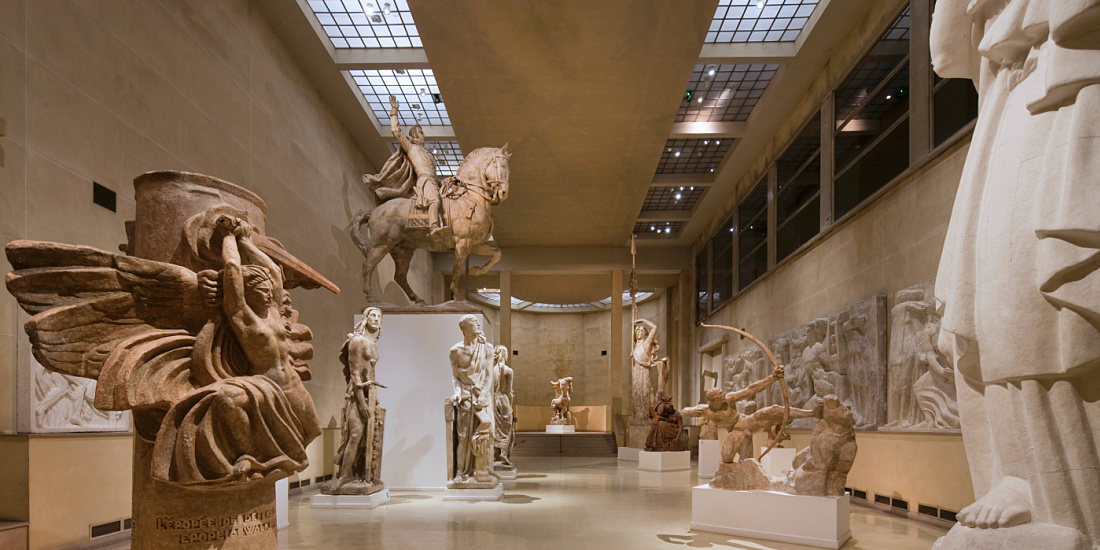
Discover the Musée Bourdelle, a hidden gem in Paris where art and history intertwine in an intimate and poetic setting.
Nestled in the 15th arrondissement, this museum-studio pays tribute to Antoine Bourdelle (1861–1929), one of France’s greatest 20th-century sculptors and a disciple of Auguste Rodin.
Here, time seems to stand still: you’ll wander through his preserved studio, family home, and a sculptural garden, all steeped in a unique creative atmosphere.
This place is more than just a museum—it’s a journey into the world of a visionary artist.
Unlike the bustling grand museums of Paris, the Musée Bourdelle offers an immersive and serene experience, perfect for art lovers seeking authenticity. Ready to explore this hidden treasure? Follow the guide!
Location and access: a peaceful haven in the heart of Paris
The Musée Bourdelle is located at 18 Rue Antoine Bourdelle, in the 15th arrondissement of Paris, a quiet, residential neighborhood far from the tourist hustle and bustle. Yet it remains easily accessible from the city’s main attractions. Its location makes it an ideal stop for a cultural day trip off the beaten path.
To get there, you have several options:
Metro: Take line 12 and get off at Falguière station (5-minute walk) or Montparnasse-Bienvenüe (10-minute walk).
Bus: Lines 28, 58, 82, 89, and 91 serve the area.
Vélib’: Several self-service bike stations are available nearby.
On foot: If you’re near the Eiffel Tower or Les Invalides, a 30-minute stroll along the Seine will take you straight to the museum.
The museum is also wheelchair accessible, with ramps and elevators available. Once there, you’ll be immediately charmed by its lush setting and preserved architecture, a refreshing contrast to the lively Parisian atmosphere.
A Bit of History: Bourdelle, Rodin’s Heir
Antoine Bourdelle was born in 1861 in Montauban, in southwestern France. From a young age, he was passionate about sculpture and enrolled at the École des Beaux-Arts in Toulouse before moving to Paris in 1884. There, he became a student and later an assistant to Auguste Rodin, whose influence would deeply shape his work.
Yet Bourdelle did not simply imitate his master: he developed a powerful and expressive style, blending classicism with modernity. His often monumental works celebrate the human body, mythological heroes, and raw emotions. Among his most famous creations are Hercules the Archer (1909) and France (1922), which became a symbol of victory after the First World War.
In 1885, Bourdelle settled into a studio in the 15th arrondissement, where he lived and worked until his death in 1929. It is this studio, along with his home and garden, that now house the museum. After his passing, his second wife, Cléopâtre Sevastos, and his daughter Rhodia Dufet-Bourdelle worked to preserve his legacy and transform the site into a museum, inaugurated in 1949.
The Spaces to Explore: A Journey Through Time
The Musée Bourdelle comprises three main spaces, each offering a unique experience. Allow at least 1.5 hours to explore everything, or longer if you are an art enthusiast.
1. Bourdelle’s Studio: The Museum’s Beating Heart
This is where it all began. Bourdelle’s historic studio, where he created some of his most iconic works, has been preserved in its original state. Here, you will discover his tools, sketches, plaster casts, and sculptures in progress, as if the artist had just stepped out for a break.
Among the major pieces on display in this space, do not miss:
Hercules the Archer (1909): A bronze sculpture depicting the Greek hero Hercules drawing a bow. Its dynamism and muscular tension make it one of Bourdelle’s most famous works.
The Dying Centaur (1914): A marble sculpture of rare intensity, symbolizing the struggle between man and beast.
Head of Apollo (1900–1909): A masterful study of the Greek god, where Bourdelle explores ideal beauty.
The studio is also punctuated by photographs and archival documents, which immerse you in the artist’s daily life and his relationships with other major figures of the time, such as Rodin, Monet, or Maillol.
2. Bourdelle’s house: a preserved interior
A short walk from the studio, the artist’s family home has been restored to its early 20th-century appearance. Here, you can discover the artist’s private apartments, furnished with personal objects, works of art, and mementos from his life.
Among the most moving rooms:
The living room: Decorated with paintings and sculptures, this is where Bourdelle received his artist friends and patrons.
The bedroom: An intimate space displaying portraits of his family and everyday objects.
The study: A place of work and reflection, where Bourdelle prepared his projects and corresponded with his peers.
This tour offers an exclusive insight into Bourdelle’s personal life, far from the image of the solitary sculptor. You will also see works by his contemporaries, such as drawings by Rodin or paintings by Monet, which bear witness to his artistic friendships.
3. The sculpture garden: an oasis of calm
The museum garden is a true haven of peace, where Bourdelle’s sculptures converse with nature. Designed as an extension of his studio, this garden houses several of his monumental works, as well as pieces by his students and friends.
Among the sculptures not to be missed:
La France (1922): An allegory of victory, commissioned to commemorate the end of the First World War. Its serene face and majestic posture make it a powerful symbol.
Le Monument à Mickiewicz (1929): An imposing work dedicated to the Polish poet Adam Mickiewicz, installed in the garden after Bourdelle’s death.
Les bas-reliefs: Scattered along the paths, these bronze or stone works illustrate mythological or historical scenes.
The garden is also a place for contemporary creation: since 2012, the museum has been hosting temporary exhibitions that bring together Bourdelle’s works with those of modern and contemporary artists. A way of showing that his legacy remains alive.
Must-see works: a thematic tour
The Musée Bourdelle houses more than 500 works, including sculptures, paintings, drawings, and archives. To help you find your way around, here is a thematic tour of the pieces you absolutely must not miss.
1. The monumental masterpieces
Bourdelle was a master of monumental sculpture, and the museum displays several of his most impressive creations:
Hercules the Archer: As mentioned earlier, this bronze sculpture is a masterpiece of dynamism. Bourdelle captures the precise moment when Hercules draws his bow, with palpable tension in every muscle.
The Dying Centaur: This marble work, of great dramatic intensity, depicts an injured centaur—a symbol of the struggle between man and untamed nature.
The Montauban War Memorial (1929): A public commission for his hometown, where Bourdelle pays tribute to the soldiers who fell during the First World War.
2. Portraits and Studies
Bourdelle was also a talented portraitist, capable of capturing the essence of his models in just a few strokes. Among his most striking portraits:
Portrait of Rodin (1909): A bronze bust where Bourdelle captures the strength and wisdom of his master and friend.
Portrait of Cléopâtre Sevastos (1910): A tribute to his second wife, where tenderness and admiration shine through.
Self-Portrait (1925): A plaster study where Bourdelle portrays himself with great honesty, without concessions.
3. Religious and Mythological Works
Inspired by Antiquity and mythology, Bourdelle created numerous works with a religious or mythological character:
The Virgin and Child (1909): A marble sculpture of great tenderness, where the Virgin and Child seem to float in a graceful movement.
Penelope (1905–1912): A representation of Odysseus’ wife, a symbol of fidelity and patience.
The Fruit (1906): A sensual allegory of fertility, where a nude woman holds a fruit against her chest.
4. Drawings and Sketches
The museum also features a rich collection of drawings and sketches, which reveal Bourdelle’s creative process. These works on paper, often overlooked by the general public, are of great beauty and spontaneity. Do not miss:
His preparatory sketches for Hercules the Archer or The Dying Centaur.
His nude studies, where he explores the movements and proportions of the human body.
His travel sketchbooks, filled with drawings made during his stays in Italy or Greece.
Why visit the Musée Bourdelle? What makes it unique
With so many museums in Paris, why choose the Musée Bourdelle? Here’s what makes it a unforgettable experience:
1. An immersion in a genius’s studio
Unlike traditional museums, where works are presented in a sanitized manner, the Musée Bourdelle plunges you into the heart of the creative process. You’ll see the artist’s tools, his sketches, his mistakes, and his successes, as if you had traveled through time. It’s a rare opportunity to understand how a work of art comes to life.
2. An intimate and preserved setting
The museum is housed in the very places where Bourdelle lived and worked. Nothing has been reconstructed: everything is authentic, from the studio walls to the furniture in the house. This authenticity creates a unique atmosphere, where one feels close to the artist.
3. A varied and accessible collection
The Musée Bourdelle is not limited to sculpture: it also features paintings, drawings, photographs, and archives. This diversity allows visitors to discover all facets of Bourdelle’s talent, as well as his era and influences. Moreover, the explanations are clear and accessible, even for those unfamiliar with art.
4. An enchanting sculptural garden
The museum’s garden is a place of relaxation and contemplation, where sculptures blend with nature. It’s the perfect spot for a meditative pause after exploring the indoor spaces. In summer, concerts and readings are sometimes held here, adding a poetic dimension to the experience.
5. A free and uncrowded museum
Unlike other Parisian museums, the Musée Bourdelle offers free admission to its permanent collections. Additionally, it is far less crowded than the Louvre or the Musée d’Orsay, allowing you to enjoy the artworks in complete tranquility. A true luxury in Paris!
Practical information: prepare your visit
To make the most of your visit, here are some practical tips:
Opening Hours
Tuesday to Sunday: 10 AM to 6 PM (ticket office closes at 5:30 PM).
Closed: Mondays, January 1st, May 1st, and December 25th.
Nearby Attractions
Montparnasse Tower – The 56th floor is currently closed for renovation.
Mineralogy Museum located on the 2nd floor of the École des Mines
Musée de Cluny - Book Musée de Cluny tickets (Not available)
Notre-Dame de Paris - Book Notre-Dame de Paris tickets (Free entry but reservation recommended to avoid queues)
Archaeological Crypt of the Île de la Cité - Book Archaeological Crypt of the Île de la Cité
Sainte-Chapelle - Sainte-Chapelle - Book Sainte-Chapelle tickets
Conciergerie - Conciergerie - Book tickets for Conciergerie (Sainte-Chapelle Combo)
Musée Eugène Delacroix - Book your entry to the Eugène Delacroix Museum – No reservation required
Bonus: 5 essential tips to help you plan and enjoy your stay in Paris
Have you noticed that our website provides you with tools to help you easily organize your trip to Paris so that your stay is a stress-free success?
1. Phrasebook Translator for those who don’t speak French fluently
Do you struggle to find the right word or phrase in French? Click here on PHRASEBOOK – or in the top right corner of your screen. It’s a lexicon of 100 useful words and/or phrases for a tourist visiting Paris. You’ll feel at ease in restaurants, hotels, shopping, the metro, greetings, asking for directions, and more. Eight languages are available. And guess what? You can also listen to each word and phrase in French.
2. The VPBY Trip Generator
There’s so much to see and do in Paris. A well-organized stay is highly recommended. To help you, we offer our Trip Generator—FREE OF CHARGE.
In just 5 minutes and 5 clicks, you’ll get your half-day-by-half-day sightseeing itinerary. Plus, all reservations—if you want, with no obligation—for the sites you’d like to visit. Flight, train or car transport, and accommodation bookings are also included. Even thoughtful gift suggestions for you, your friends and your family.
How does it work?
Click on the Paris Trip Organizer—completely free—that will save you the hassle of cramming in as much as possible in the shortest time. Then you’ll need to choose:
1/ Select your "general interests" by clicking on the list (Museums, Churches, Monuments, Parks, etc.);
2/ The VPBY Stay Generator then suggests all relevant listings;
3/ You select by clicking on the names of the museums, monuments, parks, or activities you wish to include;
4/ The organizer returns a day-by-day itinerary for your stay;
5/ with geographically optimized daily visits—if you so choose—to avoid tiring and tedious travel.
It takes just 5 clicks and 3 minutes. And it’s completely free. To use it, click on "Paris Stay Organizer"
Note: Want to see what users of the VPBY Stay Generator think of their experience? Click on "They planned their trip with VPBY"
3. List of Reservations to Make
To avoid wasting time waiting in line, we recommend making your reservations online a few days in advance. All official reservations are available and can be made on our website:
Reservations to enter museums, monuments, shows, and Seine River cruises
Reservations for your arrival in France: flights, trains, and cars
Reservations for your accommodation: hotels, apartments, guesthouses – in Paris or the immediate vicinity
You’ll find links to all these reservations directly in the articles about the attractions that interest you or in the self-guided itineraries of our walks. By clicking on "Reservations" in the header bar, you’ll have access to all the reservations you’ll need during your stay. For example:
4. Collectible Paris Photo Souvenirs
These are high-definition collectible photos available in digital format or as long-lasting prints (75 to 100 years). Their size ranges from postcard to large format (1 meter or more on a side). A lifelong keepsake to decorate your home. Quality souvenirs (unlike plastic Eiffel Towers or snow globes). At very affordable prices. Click on:
5. Take home a personalized photo reportage of your stay in Paris
Professional photographers will capture your moments in Paris at your chosen locations or ones we recommend. A "family" reportage, wedding, or other events. From 1 hour to a full day. The best value for money. Click on:


