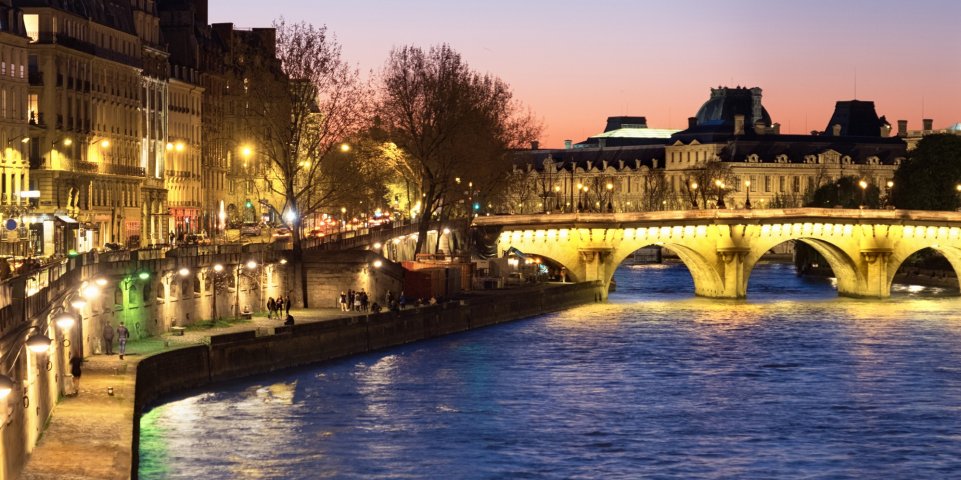
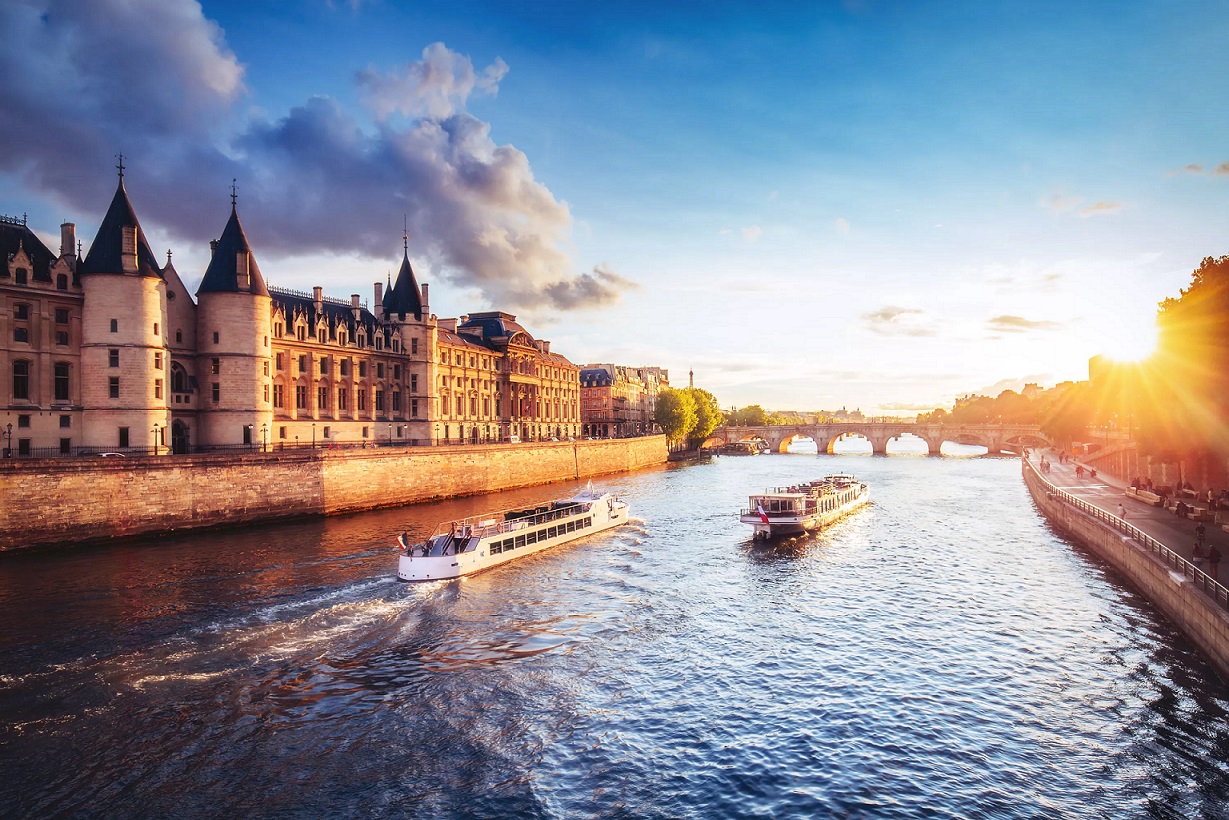
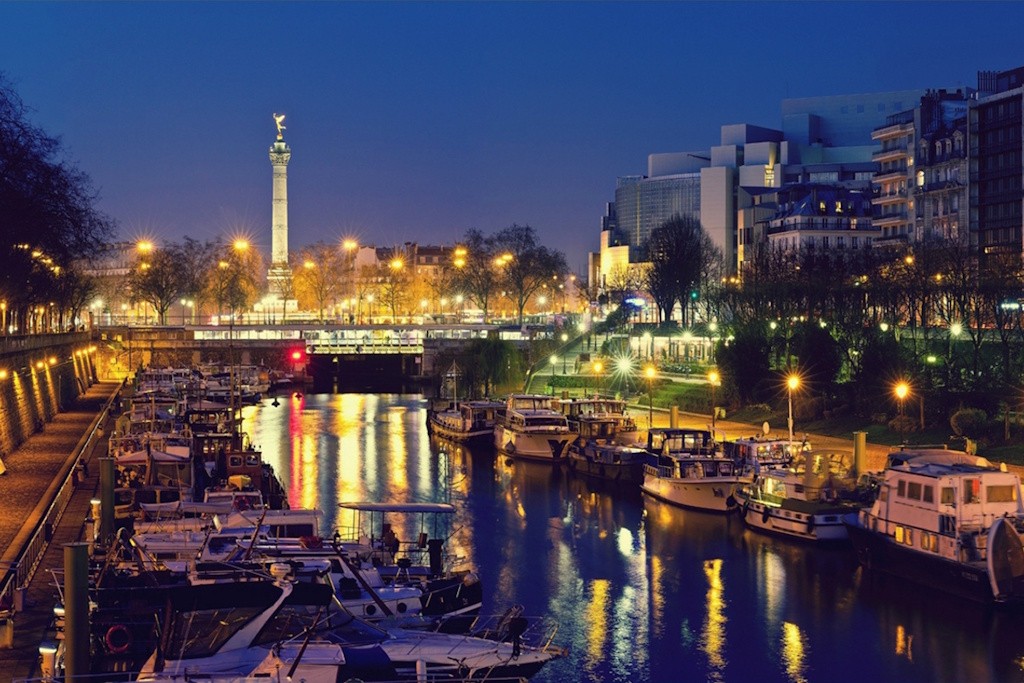
Paris, the city of light, of love and of the arts
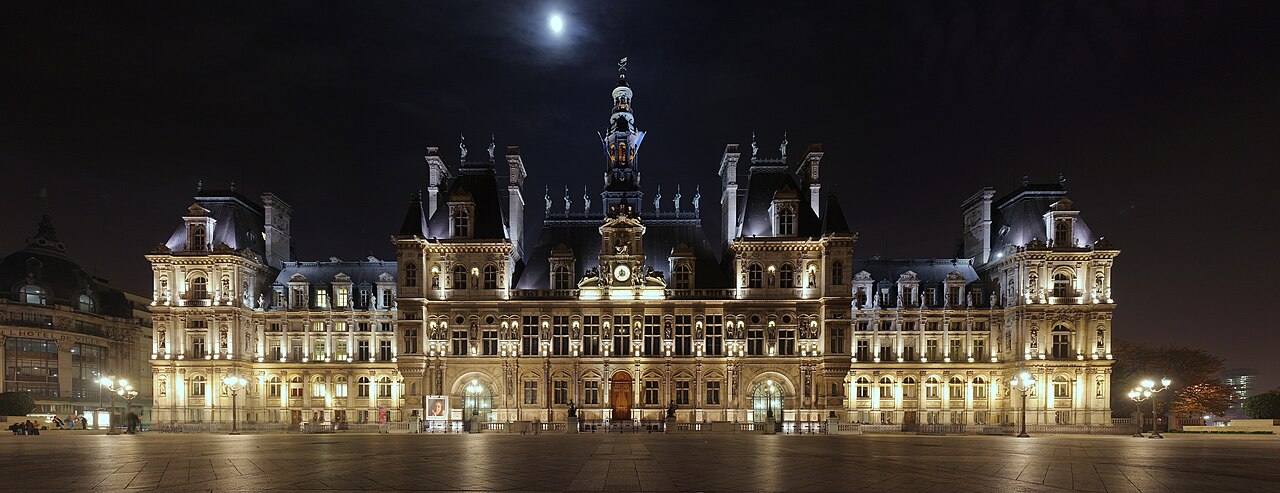
Paris is the capital of France, located at the heart of the Paris Basin, along the Seine. With a unique administrative status, it is divided into twenty arrondissements and serves as the center of the Île-de-France region as well as the Greater Paris metropolis, and of course, the capital of France.
Occupied as early as the 3rd century BCE under the name of Lutetia by the settlements known as the Parisii, it became the capital in the 6th century under Clovis, of the Merovingian dynasty and the first king of all the Franks. Thanks to its strategic position and the fertility of its territory, it rapidly developed as a political, religious, and economic hub.
In the Middle Ages, Paris established itself as a major intellectual and artistic hub, notably with the creation of its university. Its importance continued to grow, and from the 16th century onward, with the rise of the French monarchy, it became a world-renowned metropolis and the capital of a vast colonial empire. Today, it ranks among the world’s great cities, recognized for its role in the arts, culture, research, economics, and finance.
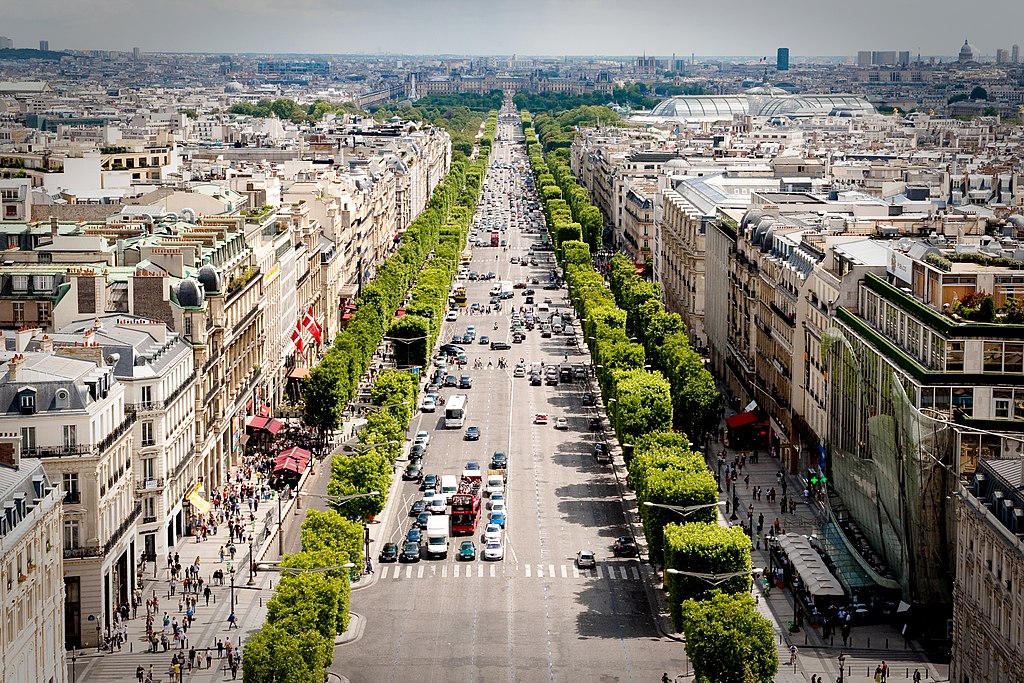
Its urban landscape bears the mark of 19th-century transformations led by Georges-Eugène Haussmann (and Emperor Napoléon III), which gave rise to the grand boulevards and Haussmannian architecture. In the 20th century, the city continued to evolve with the metro, the large housing developments on its outskirts, and modern projects like the Centre Pompidou.
With over 2 million inhabitants and a metropolitan area of nearly 11 million in Île-de-France, Paris is the largest urban area in Western Europe. It is also a major economic hub, renowned for luxury, haute couture, and gastronomy, though it faces challenges such as pollution and the high cost of living.
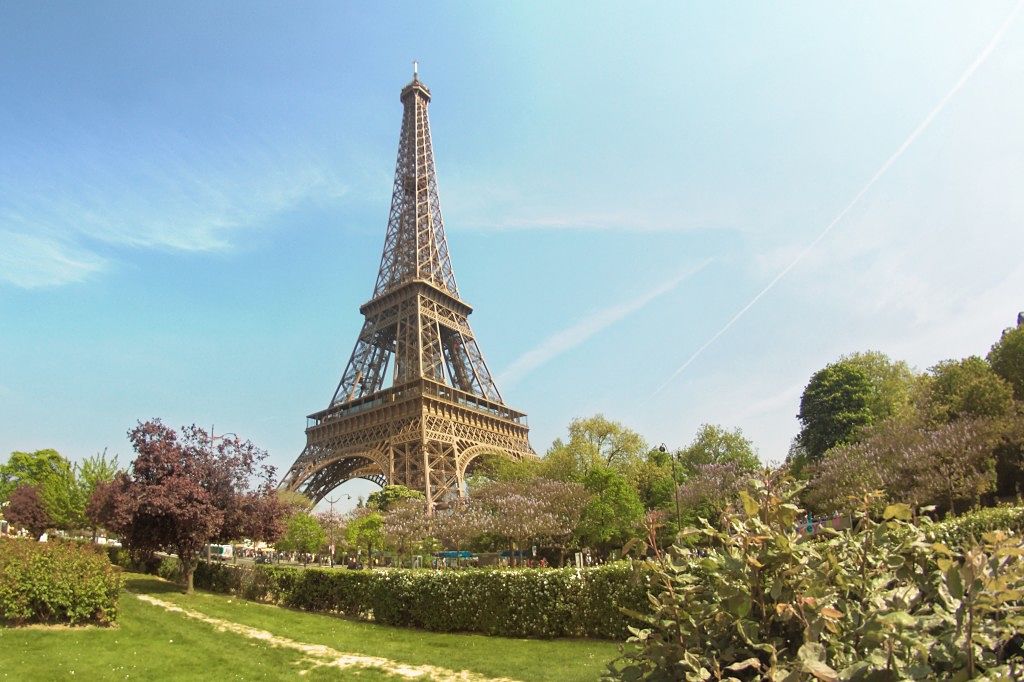
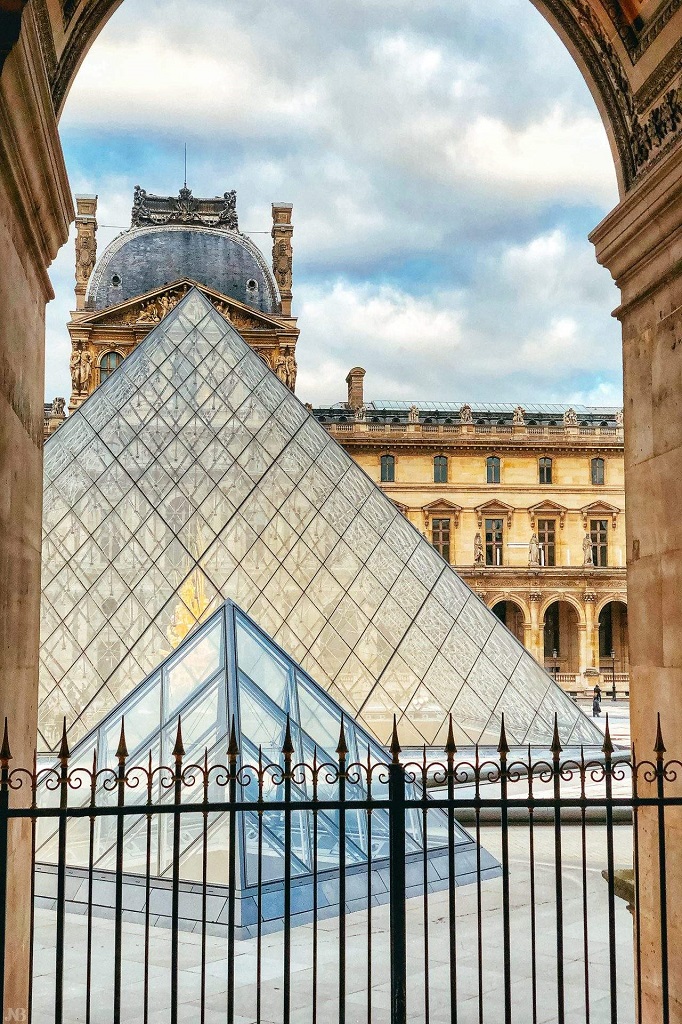
As a premier tourist destination, it draws millions of visitors thanks to its iconic landmarks like Notre-Dame de Paris, the Eiffel Tower, and the Louvre Museum, as well as its numerous cultural and sporting events.
A tip you’ll love:
This site offers a completely free "Paris Trip Organizer" that will save you the hassle of trying to see as much as possible in as little time as possible.
1/ You enter your "general" preferences (museums, churches, monuments, parks, etc.),
2/ the organizer then suggests all relevant listings,
3/ you select what you’d like to visit,
4/ the organizer generates a day-by-day itinerary for your stay,
5/ with optimal geographic routing of daily visits—if you choose—to avoid tiring, time-consuming travel.
It takes just 5 clicks and 3 minutes. And it’s completely free. To use it, click on "Paris Trip Organizer"
Topography of Paris
Paris developed around two islands on the Seine, the Île de la Cité and the Île Saint-Louis, which form its historic heart. The city then extends along both banks of the river, with a larger area on the right bank than on the left.
Bounded in the 19th century by the Thiers wall, then expanded in 1860 by annexing neighboring communes, Paris is today surrounded by the boulevard périphérique, a 35-km ring road marking the boundary with its suburbs. Access to the capital is via the gates of Paris and major roads.
The city also boasts two vast green spaces laid out during the Second Empire by Georges-Eugène Haussmann: the Bois de Boulogne to the west and the Bois de Vincennes to the east. Covering 105 km², Paris forms a large, densely populated urban area whose symbolic heart lies near Notre-Dame.
The Seine, stretching 774.76 km, winds through the city in a sweeping arc, entering in the southeast and exiting in the southwest. More than thirty bridges span its waters; paradoxically, the oldest one still standing is called the Pont Neuf.
The Paris area spreads out around a wide valley that encompasses the current course of the Seine. This valley is surrounded by hills known as buttes-témoins; on the right bank of the Seine, these include Montmartre (131 m), Belleville (128.5 m), Ménilmontant (108 m), the Buttes-Chaumont (103 m), Passy (71 m) and Chaillot (67 m), as well as, on the left bank, Montparnasse (66 m), the a Butte-aux-Cailles (63 m) and the Montagne Sainte-Geneviève (61 m).
Climate, temperatures, pollution
Paris enjoys a modified oceanic climate (type Cfb according to the Köppen classification), marked by a dominant oceanic influence and continental variations. Temperatures are moderate, with averages of around 15 °C in summer and 3 °C in winter, for an annual average close to 9 °C.
In 2012, the highest recorded temperature was 38.4 °C on 18 August and 38.1 °C on 19 August. The average minimum temperature in January ranges between 2.7 °C and 3 °C. The lowest temperature ever recorded was -23.9 °C in 1879.
Rainfall is regular throughout the year, with about 111 rainy days, but remains relatively low (637 mm), especially compared to coastal regions. The weather is often changeable, with occasional heatwaves in summer or cold snaps in winter.
Growing urbanization in the city impacts the local climate, leading to a rise in temperatures (by 2 to 3 °C) and a decrease in the number of foggy days.
Air pollution is a public health issue in Paris, which led to the creation of the Airparif monitoring network in 1984. Since 2001, recorded levels have driven policies to reduce car traffic, particularly for the most polluting vehicles. Emissions linked to human activity decreased between 2000 and 2018 for most studied pollutants: sulfur dioxide emissions, stemming from industry, were cut by a factor of five thanks to the development of renewable energy and stricter regulations, while nitrogen oxide emissions fell by 54%, mainly due to the renewal of the automotive fleet.
The transport system in Paris
Walking
In Paris, walking is the main mode of transport, accounting for around 40% of daily trips and up to 75% of surface travel.
Public transport
Public transport ranks second, with the Paris metro in the lead, accounting for around 20% of all trips. Inaugurated in 1900, it has sixteen lines and stands as an iconic symbol of the city, particularly thanks to its Art Nouveau style.
This network is complemented by the RER, which connects Paris to its suburbs, as well as major train stations like Gare du Nord and Gare de Lyon, offering national and international links, including via the TGV.
Finally, the transport offering also includes a nearly circular tram network and an extensive bus network of around one hundred lines, regularly modernised.
All public transport in Paris is managed by the RATP (Régie autonome des transports parisiens).
Paris, champion of transport in figures
Paris is Europe’s second-busiest airport hub for passenger traffic in 2015, behind London, and the fifth worldwide that same year. The two airports that handle the bulk of the traffic — Orly and especially Roissy-Charles-de-Gaulle — carried 108 million passengers and 2.2 million tonnes of freight in 2019. A third airport, Beauvais (50 km north), is primarily used by certain low-cost carriers.
Charles de Gaulle Airport is the second-largest airport hub in Europe (after London Heathrow Airport in the United Kingdom) and the ninth-busiest airport worldwide in 2019, with 76.15 million passengers.
The Paris-Le Bourget Airport is Europe’s leading business aviation airport, ahead of Geneva, Nice, London (Luton, Farnborough), Rome and Zurich.
Paris-Nord station is Europe’s busiest railway station and the third-busiest in the world (after Shinjuku Station in Tokyo), when including metro ridership. According to another ranking, it is the 24th busiest worldwide, with the top 23 all located in Japan.
RER line A in Île-de-France is Europe’s (2015 data) and the world’s busiest railway line (2009 data).
Paris Metro is the world’s densest metro system.
The population of Paris
Paris, overcrowded and unable to accommodate the significant influx of provincial immigrants, saw its surrounding communes absorb the overflow of demographic expansion. This began with the rural exodus before World War II and the city’s economic growth after the war.
In the Paris metropolitan area, social distribution reflects trends inherited from the 19th century. The wealthiest populations are concentrated mainly in the west and southwest, while working-class residents are more prevalent in the north and east.
The intermediate areas are predominantly occupied by the middle classes. However, some exceptions exist depending on the history and location of the communes, such as Saint-Maur-des-Fossés in the east or Enghien-les-Bains in the north, which are home to more affluent populations.
“Priority neighborhoods” can be found in the northern and eastern arrondissements of Paris, particularly around the Goutte-d’Or and Belleville districts.
Brief history of Paris
Prehistory and Antiquity
In Gallo-Roman times, Paris—then known as Lutetia—was a modest city of around 10,000 inhabitants, far smaller than Lyon (Lugdunum), the great regional capital and capital of the Gauls (the “ancestor” territory of France). It nonetheless enjoyed a certain prosperity thanks to river trade.
Tradition credits its Christianization to Saint Denis in the 3rd century, and an important council was held there in 361 under the leadership of Hilary of Poitiers.
Thanks to its strategic location, the city welcomed emperors such as Julian and Valentinian I in the 4th century, a period when it took the name of Paris. Facing invasions, the population retreated to the Île de la Cité, which was reinforced.
In 451, Saint Genevieve convinced the inhabitants to stay despite the threat posed by Attila’s Huns, who ultimately spared the city.
Middle Ages
After the reign of Charlemagne (742–814), Paris lost much of its political importance and suffered numerous Viking attacks, notably in 845. The population then retreated to the Île de la Cité. Despite the siege of 885–886, the city held firm, strengthening its prestige and that of Count Odo, who had organized its defense.
Under the early Capetians (the first being Hugh Capet), Paris gradually grew in significance: Robert II the Pious restored buildings, while Louis VI and Louis VII established their power there. The construction of Notre-Dame de Paris began, and the city became a major commercial and intellectual hub.
With Philip II Augustus, Paris became the kingdom’s capital and expanded rapidly, reaching around 200,000 inhabitants by the 14th century.
But the city is struck by the plague of 1348 and the upheavals of the Hundred Years' War (1337 to 1453). Occupied by the English and then retaken by Charles VII, it emerges weakened, with a reduced population.
From the Renaissance to the 18th century
During the Renaissance, Paris is less favored than the Loire Valley, where the court resides. However, Francis I establishes his residence there in 1528, enhancing its intellectual influence with the creation of the Collège de France. The city then becomes the most populous in the Christian world.
But it is marked by violent religious conflicts, including the St. Bartholomew's Day Massacre (24 August 1572), and the political turmoil opposing the Catholic League to Henry IV, who only retakes the city in 1594.
In the 17th century, despite strong population growth, Paris remained a poor and dangerous city. Reforms were implemented by Gabriel Nicolas de La Reynie to improve safety. Louis XIV turned away from Paris in favor of Versailles.
In the 18th century, Paris became once again a major intellectual hub with the Enlightenment (a European philosophical, literary and intellectual movement that emerged in the second half of the 17th century, at the origin of today’s society) and experienced rapid growth, reaching 640,000 inhabitants before the French Revolution.
Paris during the French Revolution and the Empire
The French Revolution begins in 1789 and takes a decisive turn in Paris, marked by the storming of the Bastille (July 14, 1789). Facing economic crisis and the influence of the Enlightenment, Parisians play a central role. King Louis XVI is forced to move to the Tuileries, and the monarchy is overthrown in 1792.
The period is marked by the Reign of Terror, led by the Committee of Public Safety, and numerous executions, including those of Louis XVI, Marie Antoinette, and Maximilien Robespierre. The city suffers from rationing and a slowdown in its development.
Under Napoleon Bonaparte, crowned in 1804, Paris becomes the capital of the Empire and undergoes significant urban transformations, marked by the construction of monuments and infrastructure.
In 1814, after Napoleon’s defeat at the Battle of Paris, the city is occupied by foreign armies, signaling the end of the Empire and the start of the Restoration.
From the Restoration to the Paris Commune
Following Napoleon Bonaparte’s downfall in 1815, Paris is occupied by foreign armies, while Louis XVIII (brother of Louis XVI) restores the monarchy. During the Restoration and the July Monarchy, the city remains largely unmodernized, and its rapidly growing working-class population lives in dire conditions, fueling epidemics and revolts. The insurrections of 1830 and 1848 successively topple Charles X (another brother of Louis XVI) and Louis-Philippe I (a second-degree cousin of Louis XVI).
Under the Second Empire, Napoleon III (nephew of Napoleon I) profoundly transforms Paris through the grand works led by Georges-Eugène Haussmann, modernizing the city. In 1860, Paris expands by annexing neighboring communes and is divided into twenty arrondissements.
During the Franco-Prussian War (1870, which led to the fall of Napoleon III), the city was besieged. In 1871, after the defeat, the Paris Commune erupted (an insurrectional movement), violently suppressed during the "Bloody Week" (from Sunday, May 21 to Sunday, May 28, 1871), marking the last major civil war in Paris.
From the Belle Époque to World War II
During the Belle Époque, Paris experienced strong economic growth and became a major industrial, financial, and cultural hub. Iconic landmarks such as the Eiffel Tower were built (1889), notably for the 1889 and 1900 World's Fairs, which further enhanced its international prestige. The city attracted countless artists and became a leading center of creativity.
In the early 20th century, Paris was marked by significant events like the great flood of 1910 and the limited impact of World War I. Between the two wars, the city faced social crises, high population density, and chaotic suburban expansion.
Political life was unstable, with social tensions and major protests, such as those in 1934 and 1935.
During the Second World War, Paris was occupied by the German army in 1940. The Resistance organized itself, and the city was liberated in August 1944 by Allied forces and the French Resistance. Despite the occupation, Paris was relatively spared and resumed its role as the capital at the end of the conflict.
The contemporary Paris
After the Second World War, Paris became part of a European cooperation dynamic, notably with its twinning with Rome in 1956. Under the presidency of Charles de Gaulle, the capital was marked by major events, such as the violent repression of the 17 October 1961 demonstration and the large-scale mobilizations of May 1968, which triggered a political and social crisis before calm returned.
In the following decades, Paris modernized and evolved administratively, with the creation of an autonomous municipality and the election of mayors such as Jacques Chirac, then Bertrand Delanoë and Anne Hidalgo. The city also showcased its heritage, notably with the listing of the Seine quays as a UNESCO World Heritage Site in 1991.
In the 21st century, Paris has faced significant terrorist attacks, including in 2015 with the Charlie Hebdo and Bataclan attacks, as well as the fire at Notre-Dame Cathedral in 2019.
The city remains a major global hub and will once again host the Summer Olympic Games in 2024, confirming its international importance.
Status and administrative organization
Map of the arrondissements of Paris.
After having been both a commune and a department, Paris has been a local authority with special status since 1 January 2019, exercising the powers of both a commune and a department.
She is divided into arrondissements, like the cities of Lyon and Marseille, twenty in number (the first four forming a single district). She is also the central local authority of the Metropolis of Greater Paris, established in 2016. Since the 2026 elections, the mayor has been directly elected by voters, whereas previously the mayor was chosen by indirect suffrage by the arrondissement mayors.Luxury, haute couture, jewelry and accessories
Paris is a global capital of fashion and luxury, with a long tradition of haute couture. The Lanvin house, founded in 1889 by Jeanne Lanvin, is the oldest still in operation.
Over time, the number of haute couture houses has evolved significantly, from around twenty in 1900 to over a hundred after the Second World War, before declining at the start of the 21st century. Prestigious houses such as Chanel, Dior or Yves Saint Laurent continue to play a major role here, alongside contemporary designers.
Paris is also an important center for luxury fragrances and accessories, with brands like Hermès or Louis Vuitton.
Despite competition from cities like New York or Milan, Paris remains in the 21st century the world capital of fashion. Its Fashion Week is the most prestigious, and the status of "haute couture" is uniquely its own, reinforcing its central role in the luxury industry.
Gastronomy
Paris is recognized as a world capital of gastronomy. The French gastronomic meal was inscribed on the UNESCO Intangible Cultural Heritage list in 2010, underscoring the cultural importance of this tradition.
The city is home to many of the world’s finest restaurants, as well as renowned chefs such as Alain Ducasse and Guy Savoy, and continues a long culinary history exemplified by figures like Marie-Antoine Carême (June 8, 1783–January 12, 1833).
Paris is also the headquarters of major gastronomy and pastry houses of international renown, such as Fauchon, Ladurée, and Pierre Hermé.
Finally, the Paris region hosts the Rungis Market, the world’s largest agricultural produce market, further solidifying Paris’s central role in gastronomy.
Monuments, tourist attractions, and population
The Île-de-France region welcomed a total of around 44 million tourists per year as early as 2022, and as far back as 2009, the top fifty cultural sites in the city had recorded 71.6 million visits—a slight increase compared to 2008. The city also attracted 17.5 million foreign visitors in 2018. It boasts the largest hotel capacity in Europe and offers significant advantages for business travel (trade shows, events, etc.). It includes several Parisian monuments listed as World Heritage, such as the Notre-Dame Cathedral of Paris, the most visited monument in Europe and one of the most visited, if not the most visited, in the world.
Paris intra-muros, covering an area of 105 km², had a population of 2,103,778 on 1 January 2023, making it the most populous municipality in France. Its functional urban area, which now extends over 18,941 km² and 1,929 communes, had a population of 13,064,617 on 1 January 2018, thus making it the most populous functional urban area in France and the European Union.
Paris has a relatively young population: in 2008, according to Insee, 46% of residents were under 35. Like all major cities, Paris attracts more students, young working adults and elderly people than the national average; families are therefore underrepresented.
Cultural events and festivities
Throughout the year, Paris hosts numerous festivities: at the end of January, the streets of the 13th arrondissement come alive with celebrations for the Chinese New Year; in February-March, the traditional parade of the Paris Carnival and that of Mid-Lent take place; at the end of February, the International Agricultural Show is held; in March, the Paris Book Fair, the Spring of Poets, and the Sacred Music Festival take place; at the end of April or early May, the
Paris Fair evokes the great medieval gatherings.The Paris Half Marathon and the Paris Marathon take place in March and April, along the city’s streets; the Grande Course du Grand Paris, from Paris-Centre to the Stade de France in May, the French Open tennis tournament at Roland-Garros from late May to early June; the Pride Walk in June, the Fête de la Musique on 21 June; the Paris Jazz Festival from late June to late July; Classique au Vert from mid-August to early September at the Parc Floral de Paris; FNAC Live Paris in front of and inside the Hôtel de Ville in early July; the Traversée de Paris at the end of July; the
Paris l’été Festival from early July to early August ; the Gay Games in early August ; the arrival of the final stage of the Tour de France cycling race in late July ; from late August to mid-September, Jazz à la Villette, the Techno Parade and La Parisienne in September, the Paris Autumn Festival from early September to late December.Several film festivals take place throughout the year; Cinéma en Plein Air at La Villette, from mid-July to mid-August.
Since 2002, the festive character of the city has been enhanced by the Paris Plages initiative, held for two months between July and August. This event transforms a section of the Seine riverbanks into a beach complete with sand, deck chairs, and activities. Another highlight is Nuit Blanche, which offers the public free access to various contemporary art expressions across the city during the night of the first Saturday to the first Sunday in October. The traditional Foire du Trône takes place in April and May.
Bastille Day on the Champs-Élysées is marked by the traditional military parade, the Concert de Paris on the Champ-de-Mars, and the fireworks display launched from the gardens of the Trocadéro.
October is the month of the Paris Motor Show, held in even-numbered years, alternating with the Motorcycle World Expo in odd-numbered years. The same month also hosts the International Contemporary Art Fair (FIAC). On the second Saturday of October, Montmartre revives its winemaking past with the Montmartre Grape Harvest Festival. One of Paris’s oldest art events is the Paris Biennale, founded in 1959 by André Malraux.
Religious
Parisians have access to numerous places of worship, including Buddhist, Catholic, Jewish, Orthodox, Muslim and Protestant faiths.
Buddhist worship
The Vincennes Pagoda, inaugurated in 1977 and home to the French Buddhist Union, is located on the edge of Daumesnil Lake in the 12th arrondissement. Two other pagodas can be found in the main Asian quarter of Paris, in the 13th arrondissement.
Catholic Worship
Notre-Dame Cathedral is the seat of the Archdiocese of Paris. Paris has been a diocese since the 3rd century and was elevated to an archdiocese on October 20, 1622.
Paris is home to the headquarters of four other dioceses of the Catholic Church: the French Armed Forces Diocese at the Saint-Louis-des-Invalides Cathedral, the Ukrainian Catholic Eparchy of Saint Vladimir the Great of Paris at the Saint Vladimir the Great Cathedral, the Maronite Catholic Eparchy of Our Lady of Lebanon of Paris at the Notre-Dame-du-Liban Cathedral and the
Armenian Catholic Eparchy of Paris at the Armenian Catholic Cathedral of the Holy Cross in Paris.In 2005, the city had one hundred and six Catholic parishes welcoming the faithful, as well as twenty-four foreign missions and 730 priests, along with around 220 religious communities (140 women’s and about 80 men’s). Paris is home to several places of pilgrimage, including the five sites where the bodies of saints are visible.
Jewish worship
Paris has ninety-six synagogues. The Great Synagogue of Paris, inaugurated in 1867 and home to the Central Consistory of French Jews, is located on Victory Street in the 9th arrondissement. The Copernic Street Synagogue, founded in 1907, is the headquarters of Jewish Renewal.
Muslim worship
Paris is home to seventy-five mosques or prayer rooms, most of which are located in residential buildings. The Great Mosque of Paris has welcomed worshippers since 1926 over more than an acre of land in the 5th arrondissement. The Mosque of Mercy opened in 2003 in the 15th arrondissement, and the Institute of Islamic Cultures in 2006 in the 18th.
Orthodox worship
The Greek Orthodox Cathedral of Saint-Étienne, consecrated in 1895, is the seat of the Greek Orthodox Metropolis of France of the Greek Orthodox Church. The Cathedral of Saint John the Baptist, consecrated in 1904, is the seat of the Armenian diocese of France of the Armenian Apostolic Church.
The Cathedral of Saint Sava, consecrated in 1904, is the seat of the Eparchy of Western Europe of the Serbian Orthodox Church. The Cathedral of the Holy Trinity, consecrated in 2016, is the seat of the Patriarchal Exarchate in Western Europe of the Russian Orthodox Church.Protestant Worship
Paris has twenty-five parishes of the United Protestant Church of France, which brings together Reformed and Lutherans. Since 1811, its largest temple has been the Oratoire du Louvre, located on Rue Saint-Honoré in the 1st arrondissement.
Paris has around seventy-two evangelical Protestant churches of various denominations.
Other Faiths
Two Hindu temples are dedicated to Ganesh
The economic weight of Paris
The city, together with its suburbs, is the economic and commercial capital of France, as well as its leading financial and stock market hub. For example, it hosted the European Banking Authority in 2019 in preparation for the United Kingdom’s withdrawal from the European Union.
In 2018, Paris was, according to the OECD, the largest metropolitan economy on the European continent ahead of London, with a GDP of 901 billion dollars. The Paris region hosts more international institutions and headquarters of major corporations than New York and London. Paris was the most expensive city in the world in 2018, 2019, and 2020, and ranked second in 2021 behind Tel Aviv.
Paris has more office space than London (including demand from banks), despite being five times smaller. The real estate dynamism of its business district of La Défense is the second largest in the world, after Singapore.
A greater number of Fortune 500 companies have their headquarters here. The French capital files more patents each year than London and has a higher proportion of researchers in its workforce.
The largest economic sector is leisure tourism (cafés, hotels, restaurants and related services) and professional tourism (trade shows, conferences, etc.). In the 2000s, Paris attracted nearly 30 million visitors a year, making it one of the world’s most visited capitals, a figure that reached 38 million in 2019.
The city of Paris has seen a growing shift toward a service-based economy, with the proliferation of service companies. In autumn 2016, Paris counted around forty startup incubators, including Station F in the former Freyssinet warehouse, which is the world’s largest startup campus.
The Paris-La Défense business district, which encompasses the western part of the Right Bank in Paris and nine municipalities in the Hauts-de-Seine department, is the leading business hub in the Île-de-France region. The City of Paris and the La Défense district, located in the western suburbs, form the largest business district in Europe in terms of office space.
In central Paris, a business district stretches over a fairly large area around the Opéra and Gare Saint-Lazare. Other business districts are also taking shape elsewhere: Paris Rive Gauche, in the 13th arrondissement, is the most advanced of the ongoing development projects. In the suburbs, new hubs are emerging in areas where real estate prices are lower or near strategic hubs (Paris-Charles-de-Gaulle Airport).
Monuments and tourist sites
Modern tourism in Paris developed from the 19th century with the railway and the World's Fairs, which gave rise to iconic monuments such as the Eiffel Tower. These transformations, particularly during the Second Empire, turned the city into a major attraction.
Paris boasts an exceptional heritage with over 1,800 historic monuments, concentrated mainly along the Seine, a UNESCO-listed river that is home to famous sites such as the cathedral Notre-Dame de Paris, the Louvre and the Hôtel des Invalides.
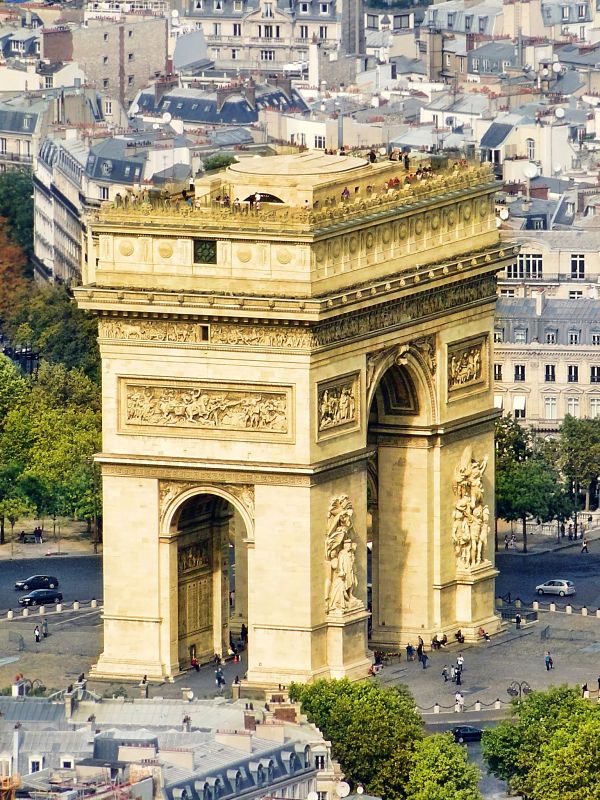
Its architecture reflects every era: medieval monuments (Notre-Dame, Sainte-Chapelle), classical ones (Louvre, Panthéon), 19th-century landmarks (Arc de Triomphe, Opéra Garnier) and contemporary structures (Centre Pompidou, Louvre Pyramid).
Finally, the city is shaped by iconic ensembles such as the historic axis linking the Louvre to La Défense, and marked by visible landmarks like the Sacré-Cœur or the Montparnasse Tower.
Parks and gardens
Paris boasts numerous green spaces, with 463 parks and gardens, including the vast Bois de Boulogne and Bois de Vincennes. By 2024, they cover around 1,905 hectares—nearly 9 m² per resident.
Some historic gardens, such as the Tuileries Garden, the Luxembourg Garden or the Jardin des Plantes, date back to the 16th and 17th centuries.
However, much of the current landscape dates from the Second Empire, with developments led by Adolphe Alphand to improve living conditions. Large parks such as Monceau, Parc Montsouris or the Buttes-Chaumont were created at that time.
Since the 1980s, new green spaces have been developed on former industrial sites, such as Parc de la Villette, further enhancing the presence of nature in the city.
Cemeteries and memorial sites
In Paris, the main cemeteries were established in 1804 under Napoleon I, on the outskirts for sanitary reasons. The old parish cemeteries were closed, and their remains were transferred to the Paris Catacombs.
As the city expanded, these sites are now integrated into urban life and appreciated for their tranquility. The Père-Lachaise Cemetery is the most famous, alongside those of Montmartre, Montparnasse and Passy.
In the 20th century, new cemeteries were created outside Paris, such as those in Pantin or Ivry, managed by the City of Paris.
The Shoah Memorial also commemorates the history of French Jews during the Second World War.
Cultural heritage
The city boasts over 200 cultural venues, including 143 museums, as well as iconic landmarks. A global hub for conferences, fashion, luxury, and gastronomy, it also stands out for the diversity of its architecture. Paris offers a vibrant cultural life with numerous shows, theaters, operas, and a varied film program.
The main areas for nightlife are the Champs-Élysées, from the Champs-Élysées roundabout to the Arc de Triomphe, Bastille and rue de Lappe, the Halles district and the Marais, the Latin Quarter up to Saint-Germain-des-Prés, Montparnasse, Pigalle, rue Oberkampf, famous for its bars, rue Mouffetard, Butte-aux-Cailles, Place de la République, or the banks of the Canal Saint-Martin.
In Las Vegas, a casino has recreated at half scale the Eiffel Tower, the Arc de Triomphe, and the Opéra Garnier. Following the same concept, a Chinese developer built a “Little Paris” in the suburbs of Hangzhou, China.
Museums
Paris and the Île-de-France region boast the greatest concentration of museums in France, with over 140 museums in the capital and more than 110 in the region. Beyond their sheer number, it is above all the diversity of their collections that makes them significant, covering all periods and artistic and scientific disciplines.
Among the most prestigious is the Louvre Museum, the largest art museum in the world and one of the most visited. Other major institutions also enjoy international renown, such as the Centre Pompidou, dedicated to modern and contemporary art, or the Musée d'Orsay, specializing in 19th-century art. Nearby, the Palace of Versailles, a UNESCO World Heritage Site, also attracts millions of visitors each year.
Parisian museums operate under various statuses. National museums, owned by the state, include the Louvre, Orsay, the Cluny Museum, the Quai Branly Museum, and the Cité des Sciences. Others are managed by different ministries, such as the Army Museum at Les Invalides or the National Museum of Natural History.
Some iconic sites, such as the Panthéon, serve a memorial function by honoring the great figures of the nation.There are also museums run by institutions or private entities, such as the Musée Jacquemart-André or the Musée des Arts Décoratifs, which further enrich this cultural offering. Finally, the City of Paris manages several important municipal museums, including the Musée Carnavalet, dedicated to the history of the capital, as well as the Petit Palais and the Musée d’Art Moderne de la Ville de Paris.
Thus, Paris stands out for its exceptional museum offering, both in terms of quantity and diversity, making the capital a major cultural hub on a global scale.
Libraries and Media Libraries
Paris boasts a very rich network of libraries and media libraries, primarily public. The oldest is the Mazarine Library, opened as early as 1643. The Bibliothèque nationale de France, spread across sites such as Richelieu and François-Mitterrand, is one of the world’s most important, with over 30 million documents, and has been responsible for legal deposit since the time of François Ier. The Public Information Library at the Centre Pompidou is another major institution.
The City of Paris manages numerous municipal libraries, freely accessible, offering book loans and a variety of resources. Some specialize in specific fields, such as the historical library of the City of Paris, the music media library, or the François-Truffaut cinema library.
There are also private, association-run, and university libraries open to the public, including the prestigious Sainte-Geneviève Library. Together, they make Paris a leading documentary hub.
Operas, theatres, venues and performance spaces
Paris is a major hub for opera, theatre, and music. The capital is home to three major opera institutions: the Opéra Garnier, the Opéra Bastille and the Opéra-Comique, complemented by venues such as the Théâtre du Châtelet or the Théâtre des Champs-Élysées, offering a varied repertoire ranging from classical to contemporary works.
Theatre also plays a central role in Parisian culture. With over 200 venues and 70,000 seats, the city boasts a wide variety of performances. Among the iconic theatres are the Comédie-Française, the Odéon Theatre and the Chaillot Theatre. Some venues, such as Mogador or the Gaîté-Montparnasse, also host musicals and popular shows.
Paris is also a major musical capital. Many legends like Édith Piaf, Charles Aznavour or Jacques Brel were discovered in iconic venues such as the Olympia or Bobino. Today, venues like Salle Pleyel, the Philharmonie de Paris, and Maison de Radio France offer a rich program, ranging from classical to contemporary music.
The capital also boasts numerous modern, large-capacity concert halls, such as the Zénith, the Accor Arena, and the Paris La Défense Arena, hosting international concerts and shows.
Finally, Parisian nightlife is steeped in a long tradition, from old guinguettes and café-concerts to today’s clubs. While historic venues like Le Palace left their mark, Paris remains a dynamic hub for clubbing, particularly in electronic music, attracting artists from around the world.
Cinemas
Paris boasts an exceptional film offering, with nearly 100 cinemas and around 430 screens, giving it the highest density in the world per capita. Each week, 450 to 500 films are screened, ranging from blockbusters to auteur films, making the capital a unique place for cinematic diversity. Attendance is high, with over 28 million moviegoers per year.
However, major groups like UGC, Pathé, and MK2 dominate the market, weakening independent cinemas. Many multiplexes have been built since the 1990s.
The largest cinema is the Grand Rex, with 2,800 seats. Additionally, the Cinémathèque française, located near the Bibliothèque nationale de France, plays a key role in preserving and promoting cinematic heritage.
Cafés, restaurants, and brasseries
Cafés and restaurants hold a central place in Parisian culture. As early as the 17th century, establishments like Café Procope and Café de la Régence became major meeting spots. In the 18th century, the cafés of the Palais-Royal popularized the first terraces, which truly flourished in the 19th century with the development of the boulevards.
The modern concept of the restaurant was born in Paris. Ancient establishments like La Tour d'Argent (founded in 1582) preceded the appearance of the first true restaurant in 1765 by Boulanger, the inventor of the menu. In 1782, Antoine Beauvilliers opened the Grande Taverne de Londres, considered the first grand refined restaurant. After the French Revolution, the number of restaurants exploded: from a few hundred, they grew to around 3,000 in just a few decades.
Paris then became a major hub of French gastronomy, home to prestigious establishments like Maxim's, Le Grand Véfour or Lasserre. This culinary richness is also explained by the arrival of people from all over France in the 19th century, bringing their regional specialties. International immigration later further enriched this diversity, making Paris a global gastronomic capital offering cuisines from all five continents.
Hotels and palaces
Another consequence of the increase in the number of tourists in the capital was, as early as the late 19th century, the presence of numerous hotels, partly linked to the World's Fairs. Among the most luxurious are:
the Hôtel Meurice, Paris’s oldest luxury hotel, opened in 1835;
the Grand Hôtel Intercontinental, from 1862;
the Hôtel Ritz, which opened on Place Vendôme in 1898;
the Hôtel de Crillon, which opened on the north side of Place de la Concorde in 1909;
the Hôtel Lutetia, the first luxury hotel on the Left Bank, which opened in 1910;
the Plaza Athénée hotel, which opened in 1911.
In the 1920s, during the Roaring Twenties, many new establishments were created:
the Hôtel Bristol, in 1925;
the Hôtel Raphael, in 1925;
the Hôtel George V, in 1928;
the Hôtel Prince de Galles, in 1928;
the Royal Monceau, in 1928.
More recently, major groups—often foreign—have opened numerous luxury hotels:
the Marriott Champs-Élysées hotel (1997);
the Mandarin Oriental hotel (2011);
the Shangri-La Hotel Paris (2012);
the hotel The Peninsula Paris (2014).
Paris, literary and intellectual hub
As early as the 12th century, Paris established itself as a major intellectual center thanks to its university and the adoption of the Parisian dialect by the Court. During the Renaissance, it became a key hub of humanism, and in the 17th century, the heart of French literary life, particularly with salons such as the one at the Hôtel de Rambouillet. Despite the prominence of Versailles under Louis XIV, intellectual activity remained vibrant, driven by figures like Molière.
In the 18th century, Paris once again became the cultural heart of the kingdom, enlivened by salons and writers such as Voltaire, while Jean-Jacques Rousseau maintained a more critical relationship with the city.
After the Revolution, Paris remained the epicenter of intellectual life and attracted foreign authors. In the 19th and 20th centuries, it became the stage for major literary movements: Romanticism and Realism with Victor Hugo or Honoré de Balzac, Naturalism with Émile Zola, Symbolism with Charles Baudelaire, and Surrealism with André Breton.
In the 1920s, many foreign writers, including Ernest Hemingway, settled there. After 1945, Saint-Germain-des-Prés became a hub of intellectual life with Jean-Paul Sartre and Simone de Beauvoir. Even today, Paris remains a major center of literature and publishing.
As a result, Paris is present in literature, painting and sculpture, music and song, photography, cinema, as well as in popular culture and even in video games and comics.