Saint-Germain-des-Pres
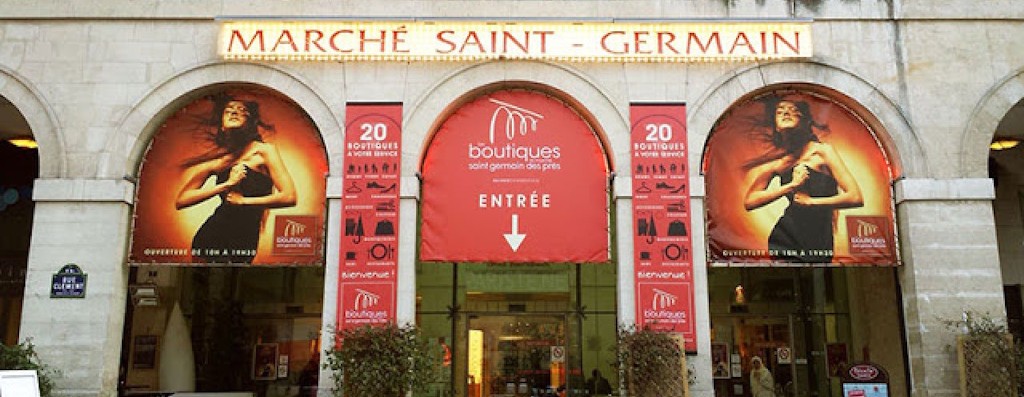
Welcome to Saint-Germain-des-Prés, one of Paris’s most iconic neighborhoods! Nestled in the 6th arrondissement, this place breathes history, culture, and French elegance. Between its cobbled streets, legendary cafés, and bohemian vibe, Saint-Germain-des-Prés is far more than just a district: it’s a living legend.
Whether you’re a history buff, a literature lover, a music enthusiast, or simply in search of a romantic stroll, this neighborhood will captivate you. Ready to dive into the soul of Saint-Germain? Follow the guide!
But first, take advantage of the exclusivity on our site, which is worth its weight in gold:
This site features a free "Paris Trip Organizer" that will save you the hassle of trying to see the maximum number of things in the minimum amount of time.
1/ You input your "general" preferences (Museums, Churches, Monuments, Parks, etc.),
2/ the organizer returns a set of relevant listings,
3/ you click on what you want to visit,
4/ the organizer provides a day-by-day itinerary for your stay
5/ with optional geographical optimization of daily visits to avoid tedious and tiring travel.
It takes just 5 clicks and 3 minutes. And it’s completely free. To use it, click on "Paris Trip Organizer"
A rich and eventful history
Saint-Germain-des-Prés owes its name to the Benedictine abbey founded in the 6th century by King Childebert I, son of Clovis. At the time, the area was a vast meadow ("prés" in French) outside the walls of Paris. The abbey, one of the oldest in France, became a major religious and intellectual center.
Over the centuries, the district becomes urbanized and attracts artists, writers and philosophers. In the 17th century, it becomes a hub of the Enlightenment, with figures such as Diderot or d’Alembert frequenting its salons. Later, the French Revolution marks a turning point: the abbey is looted and transformed into a prison, then into a factory.
Today, the church of Saint-Germain-des-Prés (place Saint-Germain-des-Prés) is the last remnant of this abbey. Its Romanesque bell tower, one of the oldest in Paris, has overlooked the district for more than a thousand years. A must-see for history lovers!
The Golden Age of the Post-War Era: Jazz, Literature, and Bohemian Life
If Saint-Germain-des-Prés is today a symbol of Parisian culture, it is largely thanks to its golden age in the 1940s–1950s. After World War II, the neighborhood became the pulsating heart of intellectual and artistic life.
Literary cafés have become essential meeting places. Les Deux Magots (6 place Saint-Germain-des-Prés) and Café de Flore (172 boulevard Saint-Germain) have welcomed the greatest minds of the era: Jean-Paul Sartre, Simone de Beauvoir, Albert Camus, Boris Vian… Here, existentialism, philosophy, and literature are debated over coffee or a glass of wine.
These cafés, still in operation today, have preserved their old-world charm. Their terraces are perfect spots to observe Parisian life while imagining the fiery debates that once took place here 70 years ago.
But Saint-Germain-des-Prés is also the birthplace of French jazz. In the cellars of the neighborhood, such as at the Club Saint-Germain (now gone), musicians like Django Reinhardt, Sidney Bechet or Boris Vian (who was also a trumpeter) revolutionized the music scene. The Caveau de la Huchette (5 rue de la Huchette), though located in the 5th arrondissement, continues this jazz tradition.
An area where culture reigns supreme
Saint-Germain-des-Prés is a true open-air museum. Between its art galleries, historic bookshops, and monuments, every street corner tells a story.
Among the must-see cultural spots:
The Musée national Eugène-Delacroix (6 rue de Furstenberg): housed in the former apartment of the Romantic painter, this museum features a collection of his works as well as his studio.
The Shakespeare and Company bookstore (37 rue de la Bûcherie, on the edge of the district): although technically located in the 5ᵉ arrondissement, this legendary bookstore, founded in 1951, has welcomed writers such as Ernest Hemingway and James Joyce.
The École nationale supérieure des Beaux-Arts (14 rue Bonaparte): founded in 1648, this institution has trained generations of artists, including Monet, Degas and Seurat.
Don’t miss the chance to stroll along the pedestrian streets like rue de Buci or rue de Seine, where art galleries, vintage shops and artisan workshops line the way.
The church of Saint-Germain-des-Prés: a medieval gem
No discussion of Saint-Germain would be complete without mentioning its namesake church. A listed historic monument, it is the oldest church in Paris. Its Romanesque bell tower from the 11th century and its carved capitals bear witness to its prestigious past.
Inside, admire the 19th-century frescoes by Hippolyte Flandrin, as well as the stained-glass windows that bathe the building in a mystical light. The church also houses the tombs of several Merovingian kings, including that of Childebert I.
A tip: visit on a weekday, when services are less frequent, to fully enjoy its peaceful atmosphere.
The Pont des Arts and the Seine: a romantic stroll
Just a short walk from Saint-Germain-des-Prés, the Pont des Arts offers one of the most beautiful views of Paris. This pedestrian bridge, built in 1804 under Napoleon I, connects the Louvre Museum to the Institut de France. It is famous for its love locks, though these were removed in 2015 for safety reasons.
Strolling along the banks of the Seine, you’ll discover bouquinistes and antiquarian bookshops, such as the Librairie de l’Abbaye (29 rue de l’Abbaye), specializing in rare and antique books.
In the evening, the district lights up and takes on the charm of a postcard. A nighttime stroll along the Seine is a must for any visitor to Paris.
Fashion and shopping: Parisian elegance
Saint-Germain-des-Prés is also a shopping mecca, where luxury boutiques, independent designers, and historic stores blend together. Rue de Rennes and Boulevard Saint-Germain are home to major brands, while the smaller streets hide hidden gems.
Among the must-visit addresses:
La Maison de la Truffe (19 place des Vosges): for gourmet enthusiasts.
L’Écume des Pages (174 boulevard Saint-Germain): a general bookshop with a curated selection.
Merci (111 boulevard Beaumarchais): a concept store blending fashion, home décor, and a café.
Les Comptoirs de Saint-Germain (4 rue Lobineau): for delicious souvenirs.
Fashion enthusiasts won’t want to miss the boutiques of Parisian designers, such as Isabel Marant or Sonia Rykiel, who have left their mark on the neighborhood’s history.
Theatres, cinema and nightlife
Saint-Germain-des-Prés is also a district where cultural life thrives after dark. Several theatres and performance venues bring Parisian evenings to life:
The Théâtre de l’Odéon (place de l’Odéon): one of France’s six national theatres, offering an eclectic programme ranging from classical to contemporary works.
The Lucernaire (53 rue Notre-Dame-des-Champs): a venue dedicated to auteur cinema and live performances.
The Théâtre du Vieux-Colombier (21 rue du Vieux-Colombier): an intimate hall of the Comédie-Française.
For film buffs, MK2 Odéon (7 quai des Grands-Augustins) is a must-visit. This cinema showcases a selection of independent films and often hosts director Q&As.
Saint-Germain-des-Prés in literature, film and music
The neighborhood has inspired hundreds of works, becoming a character in its own right in popular culture. In literature, Boris Vian set his novel L’Écume des jours there, while Ernest Hemingway recounts his Parisian nights in Paris est une fête.
In cinema, Saint-Germain-des-Prés appears in films like Les Amants du Pont-Neuf (1991) by Leos Carax or Midnight in Paris (2011) by Woody Allen. The latter pays tribute to the neighborhood’s golden age, with a memorable scene at the Café de Flore.
In music, Charles Trenet sings Ménilmontant, but it is Juliette Gréco, the "muse of Saint-Germain," who best embodies the spirit of the district. Her songs, such as Sous le ciel de Paris, still resonate through the cobblestone streets.
Why is Saint-Germain-des-Prés a must-see?
Saint-Germain-des-Prés is far more than just a neighborhood: it is a symbol of Parisian culture, a place where history, literature, music, and fashion converge. Here’s what makes it unique:
Its historical heritage, with the church of Saint-Germain-des-Prés and its history-laden alleys.
Its central role in intellectual life, with its literary cafés and philosophical debates.
Its bohemian and artistic vibe, which still attracts creators and dreamers today.
Its proximity to the Seine, for unforgettable romantic strolls.
Its blend of tradition and modernity, between luxury boutiques and ancient bookshops.
Whether you spend a day or a week there, Saint-Germain-des-Prés will leave you with unforgettable memories. So, ready to wander its streets and soak up its enchanting atmosphere?
Practical tips for visiting Saint-Germain-des-Prés
To make the most of your visit, here are a few tips:
When to go? The neighborhood is pleasant year-round, but spring and autumn are ideal for lingering on café terraces.
How to get there? Metro: lines 4 (Saint-Germain-des-Prés) and 10 (Mabillon). Bus: lines 39, 63


