Montparnasse Cemetery
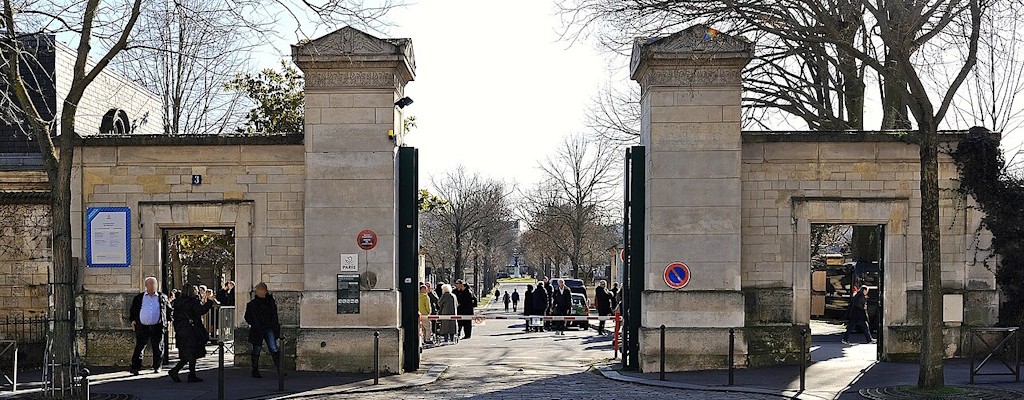
The Montparnasse Cemetery is one of Paris’s most poetic and historically rich sites. Nestled in the heart of the 14th arrondissement, this iconic cemetery is far more than just an eternal resting place—it’s a true open-air museum where art, literature, and philosophy intertwine beneath the canopies of century-old trees. Whether you’re a history enthusiast, a literature lover, or simply seeking a moment of tranquility, this unique destination will captivate you.
For your information: An exclusive feature on our site that’s worth its weight in gold:
This site includes a free “Paris Trip Organizer” that will save you the hassle of trying to see the maximum number of sights in the minimum amount of time.
1/ You enter your “general” preferences (museums, churches, monuments, parks, etc.),
2/ the organizer returns a complete set of relevant listings,
3/ you click on the places you want to visit,
4/ the organizer generates a day-by-day itinerary for your stay,
5/ with optional geographic optimization of daily visits—if you choose—to avoid tedious and tiring travel.
All of this takes just 5 clicks and 3 minutes. And it’s completely free. To use it, simply click on “Paris Trip Organizer.”
History of the Montparnasse Cemetery
Founded in 1824, the Montparnasse Cemetery is one of Paris’s three major cemeteries, alongside Père-Lachaise and Montmartre Cemetery. Originally, it was intended to replace the small parish cemeteries on the Left Bank, which had become insufficient due to the capital’s population growth. Its name evokes the bohemian district of Montparnasse, which, in the 19th and 20th centuries, was the hub of Parisian artistic and intellectual life.
Montparnasse Cemetery today: a must-see
Today, the cemetery spans 19 hectares and houses over 35,000 plots, some of which are true works of art. Its shaded paths, lined with chestnut and linden trees, create a peaceful atmosphere, almost timeless. Unlike the city’s hustle and bustle, this place invites contemplation and strolling, offering a tranquil interlude amid Paris’s vibrant energy.
What makes the Montparnasse Cemetery unmissable is above all the presence of tombs of legendary figures who have left their mark on cultural, artistic, and political history. Here, every gravestone tells a story, every epitaph evokes an extraordinary destiny. Prepare for a journey through the centuries, where the great names of literature, philosophy, cinema, and the arts rest side by side.
Literature is widely represented
Among the writers and poets buried here, it is impossible not to mention Jean-Paul Sartre and Simone de Beauvoir, whose neighboring graves attract visitors from around the world. Their love and intellectual commitment continue to inspire, and their modest, unassuming tomb is often adorned with flowers by admirers. Not far away lies Samuel Beckett, the Irish Nobel Prize-winning author whose minimalist and profound work still resonates today.
Poetry lovers won’t want to miss the grave of Charles Baudelaire, even though his remains were transferred here in 1892, long after his death. His modest yet moving monument honors the priceless legacy of this doomed poet, father of Les Fleurs du Mal. Further on, Guy de Maupassant, master of French realism, rests beneath a simple cross, while Sainte-Beuve, influential literary critic, watches over French letters from his imposing tomb.
Many artists find their final resting place at the Montparnasse Cemetery
The Montparnasse Cemetery is also the final resting place of great artists. The sculptor Constantin Brancusi, pioneer of modern art, lies beneath a minimalist gravestone, much like his work. Nearby, the grave of Man Ray, surrealist photographer and painter, draws contemporary art enthusiasts. His epitaph, "Unconcerned, but not indifferent", captures the avant-garde spirit of the artist.
Filmmakers rest here too
Film buffs won’t be disappointed: Jean Seberg, French-American cinema icon, lies here, as does Jacques Demy, director of The Umbrellas of Cherbourg. Their presence reminds us that Montparnasse was also a hub of the seventh art, where the paths of the greatest crossed.
Iconic tombs that stand out for their originality
Among the most remarkable memorial tombs, that of Serge Gainsbourg stands out for its originality. Since his death in 1991, his grave has been constantly covered in flowers, graffiti, whisky bottles, and even cigarettes, as a tribute to the provocative and brilliant artist. Fans from all over the world come to pay their respects, making his tomb one of the most visited in the cemetery.
Another iconic tomb is that of César Baldaccini, known as César, famous for his car compressions. His funerary monument, a bronze sculpture of an open hand, is a nod to his bold art. More discreet but equally touching, the tomb of Marguerite Duras, writer and filmmaker, evokes her unique talent and her love for Paris.
The Montparnasse Cemetery, nature in the heart of Paris
The Montparnasse Cemetery is not just a place of remembrance: it is also a haven of biodiversity. Its century-old trees shelter a diverse wildlife, from squirrels to songbirds, offering a soothing natural setting. The winding paths, lined with moss-covered tombs, some of them ancient, add to the site’s mysterious charm. In autumn, the golden leaves scattered on the ground create a melancholic atmosphere, while in spring, wildflowers bring a splash of color.
Themed guided tours for every taste
For visitors, the cemetery offers themed guided tours, allowing them to uncover its most fascinating secrets. Whether you choose a literary stroll, an artistic exploration, or a dive into the history of the neighborhood, these routes are an excellent way to experience the richness of this place. Informative panels, scattered along the paths, also provide insights to help visitors understand the significance of the personalities buried here.
A self-guided map of the cemetery and the surrounding neighborhood
If you wish to explore the cemetery independently, a map is available at the entrance or on the City of Paris website. Allow at least 1.5 to 2 hours for a complete visit, and remember to respect the tranquility of the place. The cemetery is open every day, and admission is free, making it an activity accessible to all budgets.
The Montparnasse neighborhood surrounding the cemetery is also worth exploring. Once a haven for artists and intellectuals, it retains a bohemian and authentic atmosphere. After your visit, why not stop at one of the neighborhood’s historic cafés, such as La Closerie des Lilas or Le Dôme, where Hemingway, Picasso, and Modigliani used to frequent? An ideal way to extend your immersion in Paris’s cultural history.
Montparnasse Cemetery, a unique place
Finally, Montparnasse Cemetery is a unique place, where past and present intersect. Unlike Père-Lachaise, often crowded with tourists, it offers a more intimate and contemplative experience. Here, there are no noisy crowds, just a serene atmosphere conducive to reflection. Whether you seek inspiration, history, or simply peace, this cemetery will touch you deeply.
In short, the Montparnasse Cemetery is far more than just a burial ground: it is a living monument, a poignant testament to Paris’s cultural legacy. Between the graves of Sartre, Beckett, Gainsbourg and so many others, every visit is a meeting with the soul of the city. So, during your next stay in Paris, don’t hesitate to step through the gates of this haven of peace. You’ll leave enriched, moved, and perhaps even a little transformed.
For more information, visit the official website of the City of Paris. Enjoy your visit!


