Tuileries Garden, 4 centuries of history, 80 statues to discover

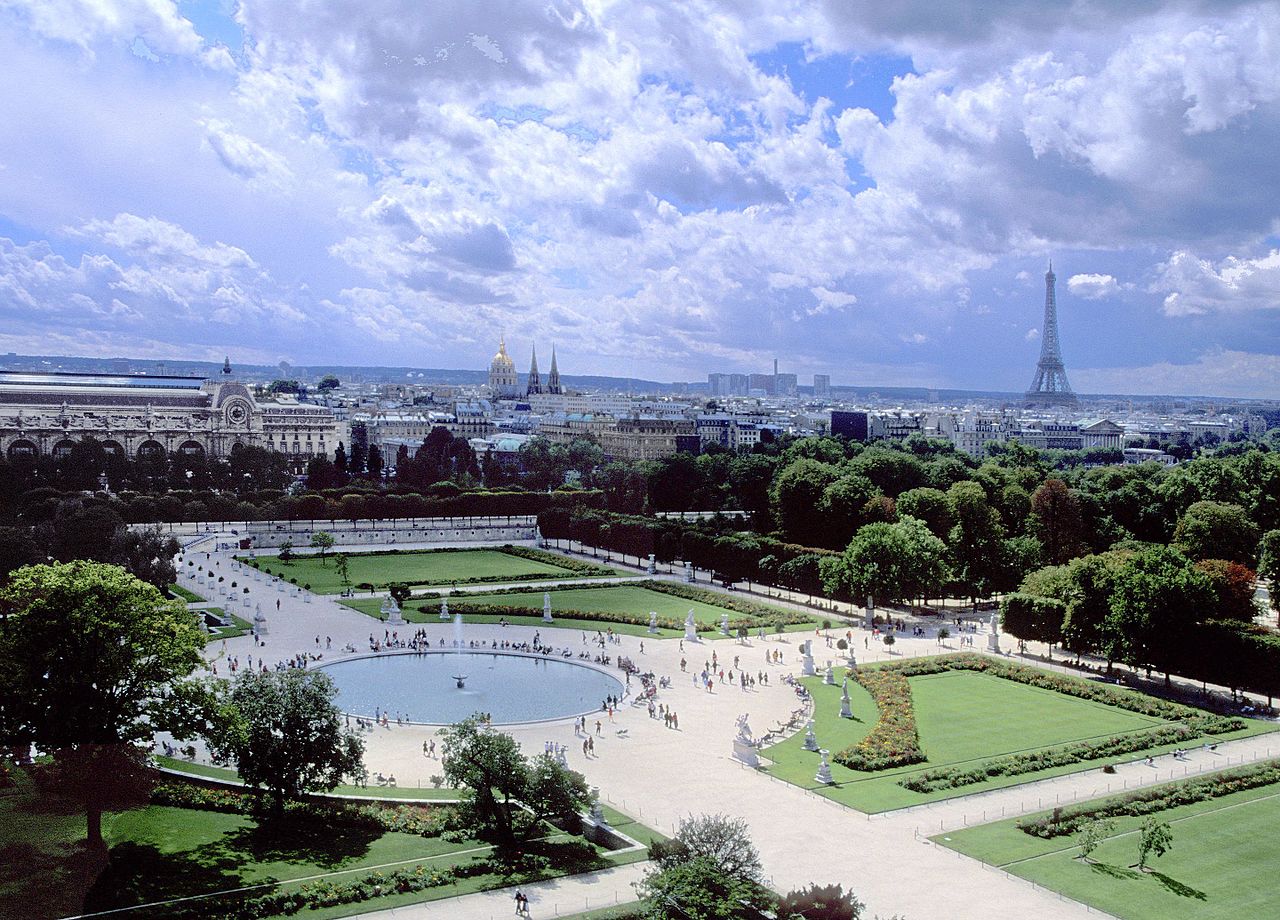
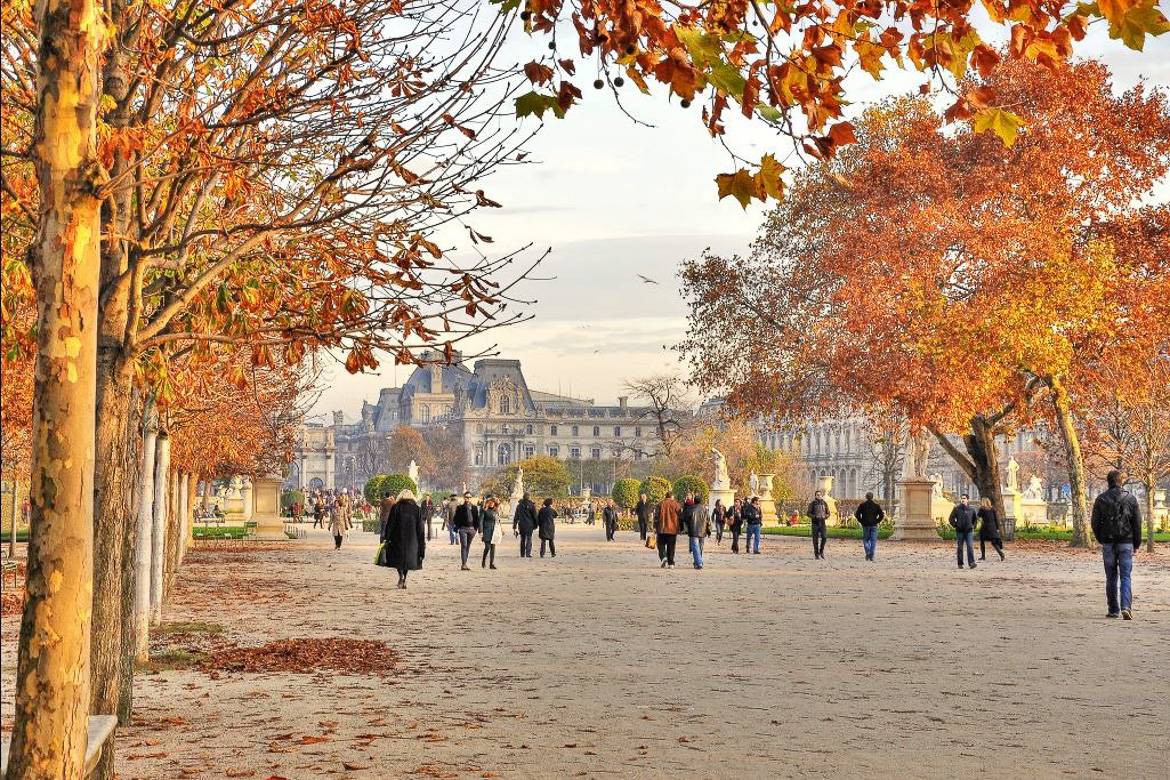
The Jardin des Tuileries separates the Jardin du Carrousel and the Musée du Louvre from the Place de la Concorde. They form a place for strolling and culture frequented by Parisians and tourists alike.
The Jardin des Tuileries was “begun” in 1564, at the same time as the Palais des Tuileries (now gone). Originally, they were designed “à l’italienne” (rectangular compartments with various plantings, tree masses, staggered rows, lawns, flowerbeds, etc.). The commission came from Catherine de Médicis, who was also of Italian origin.
Note: at the end of the article, you will find
1/ The photo gallery of the Jardin des Tuileries
2/ What to see nearby
3/ Your Bonus: 5 essential tips to help you plan and enjoy your stay in Paris
The evolution of the Jardin des Tuileries
From 1664 onwards, it was completely redesigned by André Le Nôtre, the famous gardener of King Louis XIV. He had already distinguished himself at the Château de Vaux-le-Vicomte for Fouquet.
He gave it its current appearance as a French-style garden. A fountain, a menagerie and a grotto decorated by the renowned ceramist Bernard Palissy adorned the garden at the time.
In the years 1605-1625, an orangery and a silkworm breeding house were added to it.
In 1716, a pedestrian bridge was installed to connect Place Louis XV (now Place de la Concorde). It spanned the moat of the Louis XIII enclosure. It was demolished in 1817.
The first ascent of people in a hot-air balloon took place in 1783. A plaque, located today to the right upon entering the garden, commemorates this event.
The Tuileries Garden during the Revolution
During the Revolution, it witnessed major events. The Tuileries Palace itself was the stage, notably the storming of the Tuileries on 10 August 1792.
The round basin also served for the ceremony of the Supreme Being on June 8, 1794. Effigies representing Atheism surrounded by Ambition, Selfishness, Discord, and False Simplicity were placed there.
Maximilien de Robespierre set fire to them amid a climax of shouts and applause.
On October 10 of the same year, the same basin received the coffin of Jean-Jacques Rousseau. It was draped in a shroud adorned with stars (later exhumed from Ermenonville to be transferred to the Panthéon).
Rue de Rivoli was laid out in the early 19th century between Rue de Rohan and Rue Saint-Florentin. It occupied the site of the dead-end of the Manège and the grounds of the Dames-de-l’Assomption congregation.
The garden was then extended to the northwest.
During the development of the Quai des Tuileries, a retaining wall was built along the riverside terrace. The stones came from the quarries of Châtillon.
At the western corners of the garden, Napoleon III had two identical buildings erected:
a jeu de paume in the northwest, which today houses a contemporary art and photography museum, the Galerie nationale du Jeu de Paume. This Jeu de Paume hall has nothing to do with the “Tennis Court Oath” known in French history. The oath was taken in the Jeu de Paume hall of the Palace of Versailles;
A conservatory in the southwest. It now houses a modern art museum, the Musée de l'Orangerie, where visitors can admire Claude Monet's Water Lilies, as well as works from the Jean Walter and Paul Guillaume collections. See the Musée de l'Orangerie page (Note: open from 9 am to 6 pm, closed on Tuesdays – Tel.: 33 (01) 44 77 80 07 or 33 (01) 44 50 43 00).
The evolving history of the Tuileries Garden
Over the years, many other events have taken place in the Tuileries Garden.
The Tuileries Palace was destroyed by a fire during the Paris Commune in 1871.
Following this fire, rue des Tuileries—now avenue du Général-Lemonnier—was opened in 1877 on the site of the former palace’s terrace.
In 1883, the ruins of the palace were demolished, making it difficult for today’s uninformed visitors to grasp the lines and aesthetics of the garden and palace. Part of the Carrousel Garden is now laid out on the site of the vanished palace (toward the Louvre Palace).
Thus, the Tuileries Garden is now visible from the Louvre Palace’s main courtyard. As avenue du Général-Lemonnier has been partially buried, the two gardens now form a continuous whole.
The first tethered balloon
For the 1878 World’s Fair, Henri Giffard flew thousands of people in a giant tethered balloon.
The garden during World War I
On March 23, 1918, during World War I, a shell fired by the German Big Bertha cannon exploded in the Tuileries Garden. On May 28, 1918, another shell exploded near the Orangerie terrace.
The Second World War and the nearby German Kommandantur
During the Second World War, part of the gardens was turned into a vegetable garden.
On August 25, 1944, General von Choltitz, commander of “Groß-Paris,” received a surrender ultimatum from Colonel Pierre Billotte of the 2nd Armored Division. After fierce fighting, Captain Branet took the neighboring Hôtel Meurice on Rue de Rivoli, which also housed the headquarters of the German occupying forces.
Captain Julien advanced along Rue du Faubourg-Saint-Honoré, parallel to the Tuileries Garden, to reach the Kommandantur headquarters at Place de l’Opéra, while Lieutenant Bricard cleared the Tuileries Garden. The fighting was intense, and the ten commemorative plaques placed along the garden, at the corners of Rue de Rivoli and Place de la Concorde, bear witness to the number of victims.
Events in the Jardin des Tuileries
In recent years, a funfair has been set up in the garden between late June and late August. Entry is free, but attractions are payable (over 80 rides including 20 attractions).
A major exhibition on gardens is also held every year at the beginning of June.
Sculptures on display in the Jardin des Tuileries
Classic works by French sculptors
The Jardin des Tuileries, particularly in its eastern section, houses a collection of classic works by French sculptors:
West entrance, the semicircle:
Bust of Le Nôtre (48° 51′ 54″ N, 2° 19′ 22″ E).
La Loire and Le Loiret, Corneille Van Clève (1703-1707; 48° 51′ 53″ N, 2° 19′ 24″ E)
Il Nilo (The Nile), Lorenzo Ottoni (1688-1692; 48° 51′ 52″ N, 2° 19′ 24″ E)
La Seine and La Marne, Nicolas Coustou (1704-1712; 48° 51′ 54″ N, 2° 19′ 25″ E)
Il Tevere (The Tiber), Pierre Bourdict (1685-1690; 48° 51′ 54″ N, 2° 19′ 26″ E)
To the east of the Grand Octagonal Basin:
Agrippina, Robert Doisy (1658-1690; 48° 51′ 50″ N, 2° 19′ 27″ E)
Hannibal, François Girardon (1722; 48° 51′ 52″ N, 2° 19′ 30″ E)
Autumn or Vertumnus, François Barois (1696; 48° 51′ 51″ N, 2° 19′ 28″ E)
Summer, Guillaume Coustou (1726; 48° 51′ 53″ N, 2° 19′ 29″ E)
Winter, Jean Raon (1710-1712; 48° 51′ 53″ N, 2° 19′ 29″ E)
Julius Caesar, Nicolas Coustou (1722; 48° 51′ 51″ N, 2° 19′ 29″ E)
Spring or Pomona, François Barois (1696; 48° 51′ 51″ N, 2° 19′ 27″ E)
Veturia, Pierre Le Gros the Younger (1695; 48° 51′ 54″ N, 2° 19′ 29″ E).
Terrace of the Jeu-de-Paume:
Lion, Giuseppe Franchi (48° 51′ 58″ N, 2° 19′ 24″ E).
Terrace of the Orangery:
The Kiss, Auguste Rodin (1886-1898; 48° 51′ 50″ N, 2° 19′ 18″ E)
Eve, Auguste Rodin (1881; 48° 51′ 50″ N, 2° 19′ 22″ E)
The Great Shadow, Auguste Rodin (1880; 48° 51′ 50″ N, 2° 19′ 22″ E)
Lion, Giuseppe Franchi (1806; 48° 51′ 50″ N, 2° 19′ 18″ E)
Meditation, Auguste Rodin (1881; 48° 51′ 50″ N, 2° 19′ 22″ E).
Terrasse des Feuillants:
Lion and lioness fighting over a wild boar, Auguste Cain (1882; 48° 51′ 54″ N, 2° 19′ 38″ E)
Monument to Jules Ferry, Gustave Michel (1906-1910; 48° 51′ 49″ N, 2° 19′ 52″ E)
Monument to Waldeck-Rousseau, Laurent Marqueste (1909; 48° 51′ 56″ N, 2° 19′ 30″ E)
Return from the Hunt, Antonin Carlès (1888; 48° 51′ 49″ N, 2° 19′ 53″ E)
Rhinoceros Attacked by Tigers, Auguste Cain (1882-1884; 48° 51′ 55″ N, 2° 19′ 37″ E).
Terrasse du Bord-de-l'Eau:
Sons of Cain, Paul Landowski (1906, Terrasse du Bord-de-l'Eau; statue; 48° 51′ 41″ N, 2° 19′ 45″ E)
Lion with a Serpent, Antoine-Louis Barye (1832; 48° 51′ 48″ N, 2° 19′ 24″ E).
Grand Couvert:
Apollo, Paul Belmondo (48° 51′ 54″ N, 2° 19′ 31″ E)
Jeannette, Paul Belmondo (48° 51′ 54″ N, 2° 19′ 31″ E)
Monument to Charles Perrault, Gabriel Pech (1908; 48° 51′ 54″ N, 2° 19′ 33″ E).
Exèdre Nord:
Atalanta, Pierre Lepautre (1703-1705; 48° 51′ 49″ N, 2° 19′ 41″ E)
Faun with a Kid, Pierre Lepautre (1685; 48° 51′ 50″ N, 2° 19′ 40″ E)
Hippomenes, Guillaume Coustou (1712; 48° 51′ 49″ N, 2° 19′ 41″ E).
Exèdre Sud:
Apollo pursuing Daphne, Nicolas Coustou (1714; 48° 51′ 47″ N, 2° 19′ 40″ E)
Daphne pursued by Apollo, Nicolas Coustou (1714; 48° 51′ 47″ N, 2° 19′ 39″ E)
Venus Callipyge, François Barois and Jean Thierry (1683-1686; 48° 51′ 47″ N, 2° 19′ 38″ E).
Grand Carré:
Diana with a Doe, Guillaume Coustou (48° 51′ 51″ N, 2° 19′ 44″ E)
Diana the Huntress, Edmond Lévêque (1869; 48° 51′ 45″ N, 2° 19′ 49″ E)
Farnese Flora, Antoine André (1676; 48° 51′ 44″ N, 2° 19′ 39″ E)
Farnese Hercules, Giovanni Comino (1670; 48° 51′ 47″ N, 2° 19′ 42″ E)
Julius Caesar, Ambrogio Parisi (1694 or 1713?; 48° 51′ 48″ N, 2° 19′ 42″ E)
The Death of Laïs, Mathieu-Meusnier (1850; 48° 51′ 43″ N, 2° 19′ 44″ E)
Nymph, Edmond Lévêque (1866; 48° 51′ 45″ N, 2° 19
Contemporary works in the western part of the garden
The western part of the Tuileries Garden, closest to the Place de la Concorde, houses a collection of contemporary works, mainly installed in 2000 under Alain Kirili’s direction:
L’Ami de personne, Erik Dietman (1992; 48° 51′ 51″ N, 2° 19′ 40″ E).
Arbre des voyelles, Giuseppe Penone (1999; 48° 51′ 47″ N, 2° 19′ 34″ E).
Arcs de cercles complémentaires, François Morellet (2000, Jardin des Tuileries; wall installation; 48° 51′ 54″ N, 2° 19′ 22″ E).
Le Bel costumé, Jean Dubuffet (1973/1998; 48° 51′ 56″ N, 2° 19′ 25″ E)
Comptine, Anne Rochette (1999, sculptural group; 48° 51′ 48″ N, 2° 19′ 31″ E)
Confidence, Daniel Dezeuze (2000, Jardin des Tuileries; installation; 48° 51′ 47″ N, 2° 19′ 39″ E)
Coup de chapeau II, Roy Lichtenstein (1996; 48° 51′ 51″ N, 2° 19′ 42″ E)
L’Échiquier, grand, Germaine Richier (1959, sculptural group; 48° 51′ 48″ N, 2° 19′ 35″ E)
Force et Tendresse, Eugène Dodeigne (1996; 48° 51′ 51″ N, 2° 19′ 42″ E)
La Foule, Raymond Mason (1963–1967, sculptural group; 48° 51′ 55″ N, 2° 19′ 29″ E)
Galatea, Roy Lichtenstein (1990; 48° 51′ 51″ N, 2° 19′ 42″ E)
Grand Commandement blanc, Alain Kirili (1986, sculptural group; 48° 51′ 51″ N, 2° 19′ 21″ E)
Grande Femme II, Alberto Giacometti (1959–60; 48° 51′ 50″ N, 2° 19′ 29″ E)
La Grande Musicienne, Henri Laurens (1937; 48° 51′ 50″ N, 2° 19′ 29″ E)
Manus Ultimus, Magdalena Abakanowicz (1997; 48° 51′ 49″ N, 2° 19′ 40″ E)
Microbe vu à travers un tempérament, Max Ernst (1964; 48° 51′ 50″ N, 2° 19′ 29″ E).
Personnage III, Étienne Martin (1967, sculptural group; 48° 51′ 52″ N, 2° 19′ 31″ E).
(Fixed) from a fixed point. No. 717, Lawrence Weiner (2000, Jardin des Tuileries; wall installation; 48° 51′ 55″ N, 2° 19′ 30″ E).
Primo Piano II, David Smith (1962; 48° 51′ 50″ N, 2° 19′ 29″ E)
Reclining Figure, Henry Moore (1951; 48° 51′ 50″ N, 2° 19′ 25″ E)
Standing Woman, Gaston Lachaise (1932; 48° 51′ 49″ N, 2° 19′ 40″ E)
The Welcoming Hands, Louise Bourgeois (1996, sculptural group; 48° 51′ 55″ N, 2° 19′ 22″ E)
Note: Some works have been moved to other locations
Brushstroke Nude, Roy Lichtenstein (1993).
The Scream, Chaim Jacob Lipchitz (1928–1929)
Untitled, Ellsworth Kelly (1988)
And to refresh yourself while in the Garden?
Seven restaurants or cafés are located in the Jardin des Tuileries:
Rosa Bonheur la Crêperie – along the Place de la Concorde
Petit Farmers – near the Grand Bassin – roughly in the center of the Jardin des Tuileries
Café des Marronniers (open Monday to Sunday from 7 AM to 9 PM) – near the Grand Bassin
Petit Plisson des Tuileries – roughly in the center of the Jardin des Tuileries
Terrasse de Pomone – roughly in the center of the Garden
Le Pavillon des Tuileries (Lunch 10:30 AM–5 PM and Dinner 5 PM–7 PM) – near the Grand Bassin
La Terrasse de Pomone (open year-round according to Jardin des Tuileries hours) – roughly in the center of the Jardin des Tuileries
To see nearby
You can enjoy visiting the surrounding area by taking our self-guided walks from Concorde:
Walk from the Arc de Triomphe to Concorde via the Champs-Élysées
Walk from Opéra Garnier to Galeries Lafayette and Place de la Concorde
But you can also see or visit the following Points of Interest near Place de la Concorde:
Place de la Concorde
Musée de l'Orangerie - Réservation entrée Musée de l’Orangerie
Musée du Jeu de Paume - Réservation entrée Musée du Jeu de Paume
Musée des Arts décoratifs_ Réservation Musée des Arts décoratifs – Not available – Ticket on site
Bourse de Commerce – Pinault Collection – Book tickets for Bourse de Commerce – Pinault Collection
Cruise embarkations are also available nearby:
Batobus Shuttle - River Taxi (Stop: Place de la Concorde) - Batobus River Taxi Booking (9 stops) (Hop-on Hop-off - 1 or 2-day pass - Easy way to travel between museums)
Seine River Cruise with Bateaux-Mouches - Pont de l'Alma - Seine River Cruise Booking – Departure Pont de l’Alma 75008 – Port de la Conférence – Bateaux-Mouches
Canal Saint-Martin cruise from Musée d'Orsay - Seine and Canal Saint-Martin Cruise Reservation – Port Solferino - Musée d'Orsay - Parc de la Villette
Vedettes de Paris Cruises - Paris Reservation: Seine Dinner Cruise with Panoramic Views and Champagne (Port Solférino – approx. Musée d'Orsay)
Bonus: 5 essential tips to help you organize and make the most of your stay in Paris
Have you noticed that our website provides you with tools to help you easily organize your trip to Paris so that your stay is a stress-free success?
1. Phrasebook Translator for those who don’t speak French fluently
Do you struggle to find the right word or phrase in French? Click here on PHRASEBOOK – or at the top right of your screen. It’s a glossary of 100 useful words and/or phrases for a tourist visiting Paris (At the restaurant, Hotel, Shopping, Metro, Greetings, Asking for directions, etc.). Eight languages are available. And here’s the best part? Each word and phrase can also be heard aloud in French.
2. The VPBY Trip Generator
There’s so much to see and do in Paris—it’s fascinating and educational! To make the most of your stay, we highly recommend planning ahead. To help you, we’ve made our Trip Generator available to you—FREE OF CHARGE.
In just 5 minutes and 5 clicks, you’ll get your half-day by half-day itinerary, with all reservations—if you want, no obligation—for the sites you’d like to visit. You can also book your transport (plane, train, or car) and your accommodation. Even suggestions for valuable souvenirs for yourself, your friends, and your family.
How does it work?
Click on "Paris Trip Organizer"—completely free—which will save you the hassle of trying to see as much as possible in the shortest time. Then you’ll need to make your choices:
1/ Select your "general interests" by clicking on the list (Museums, Churches, Monuments, Parks, etc.);
2/ The VPBY Stay Generator then suggests all relevant listings;
3/ You select by clicking on the names of the museums, monuments, parks, or activities you wish to include;
4/ The organizer returns a day-by-day itinerary for your stay;
5/ with geographically optimized daily visits—if you so choose—to avoid tiring and tedious travel.
It takes just 5 clicks and 3 minutes. And it’s completely free. To use it, click on "Paris Stay Organizer"
Note: Want to see what users of the VPBY Stay Generator think of their experience? Click on "They planned their trip with VPBY"
3. List of Reservations to Make
To avoid wasting time waiting in line, we recommend making your reservations online a few days in advance. All official reservations are useful and available on our website:
Reservations to enter museums, monuments, shows, and Seine cruises
Reservations for your arrival in France: planes, trains, cars
Reservations for your accommodation: hotels, apartments, guesthouses – in Paris or the immediate vicinity
You will find links to all these reservations available directly in the articles about the attractions that interest you or in the self-guided routes of our walks. By clicking on "Reservations" in the header bar, you will have access to all the reservations you will need during your stay. For example:
Notre-Dame de Paris entry reservation (Free entry but reservation recommended to avoid the queue)
Book Versailles Castle: Entry Ticket + Gardens Access + Trianon Estate
4. Collecting Paris Souvenir Photos
These are high-definition archival photos available in digital format or as long-lasting prints (75 to 100 years). Their size ranges from postcard to large wall art (1 meter square or more). A lifetime keepsake to decorate your home. Quality souvenirs (unlike plastic snow globes or the Eiffel Tower). At very affordable prices. Click on:
5. Bring back a personalized photo report of your stay in Paris
Professional photographers will capture your chosen locations in Paris or suggest scenic spots. Ideal for family portraits, weddings, or other events. Sessions last from 1 hour to a full day. The best quality-to-price ratio. Click on: