Jeu-de-Paume Museum: photography and image, video art, experimental cinema
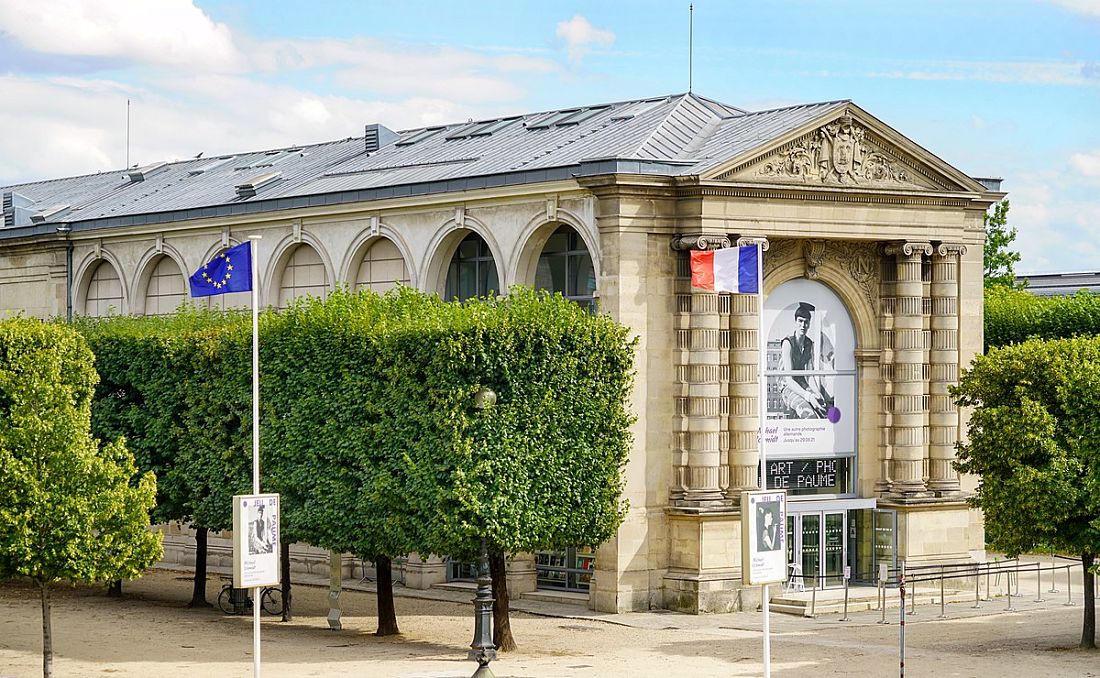
Jeu-de-Paume Museum origin : to do sports
Jeu-de-Paume Museum is the building that today houses a museum, the Galerie Nationale du Jeu de Paume. It was built to be a place reserved for sports ("Le jeu de paume", ancestor of tennis). In 1861, Napoleon III authorized its construction in the Tuileries garden and imposed that its architecture is similar to that of the Orangery museum building. The Jeu-de-paume Court was inaugurated in 1862.
Note: The historic oath known as the "Jeu de Paume", a pledge of union taken on June 20, 1789, by the 578 deputies of the Third Estate, the clergy, and the nobility (in reality, only 300 were present) took place in the Salle du Jeu de Paume of the Château de Versailles. It is considered as the point of start of the French Révolution.
Jeu-de-Paume Museum and its different uses throughout history
During the First World War, the Jeu-de-Paume hall was used as a distribution service for rationing tickets. A few sporadic exhibitions were held there nonetheless.On December 23, 1932, it became the Museum of Contemporary Foreign Schools paintings. The collections that had been locked up for 10 years were exhibited: works by Modigliani, Van Dongen, Picasso, Gris, Chagall, Zadkine... It then began to enjoy an international reputation.During the Second World War, many works looted by the Nazis were stored there and Goering came to make his choice. After the liberation, a recovery commission was set up at the Jeu de Paume in 1946, its research based on the documents of Rose Valland.In 1947 until 1986 (when the Musée d'Orsay opened), the collections of the Musée des Ecoles étrangères contemporaines were grouped with those of the Musée du Luxembourg to form the Musée National d'Art Moderne. The Musée des Impressionnistes then opened at the Jeu-de-Paume. In 1986, the Impressionist works were transferred to the Musée d'Orsay. The Jeu de Paume closed its doors and in 1987, under the impetus of the Ministry of Culture, it was decided that the museum would be devoted to contemporary art.
The last destination of the Museum
The Galerie Nationale du Jeu de Paume was inaugurated on June 17, 1991. Without a permanent collection, the exhibitions are exclusively temporary and concern the art of the second half of the 20th century.
Finally, in 2004, by ministerial decision, the Jeu de Paume became a museum devoted to photography and image, video art, experimental cinema, and documentary film. A particularly winding path!
Why visit and how to make the most of it?
Looking for a place where imagery comes to life, blending contemporary photography, video art, and experimental cinema? The Jeu de Paume is for you. Its always bold temporary exhibitions offer an immersion in diverse visual worlds, often thought-provoking or poetic. Perfect for modern art lovers and curious minds seeking inspiration, this museum is a creative escape right in the heart of Paris.
Make this visit part of a stroll through the neighborhood: after exploring the works, take a walk in the Tuileries Garden, just nearby. Its central pathway, ponds, and statues create an ideal setting to reflect or simply unwind. If you love contrasts, continue on to Place de la Concorde to admire its obelisk and majestic architecture.