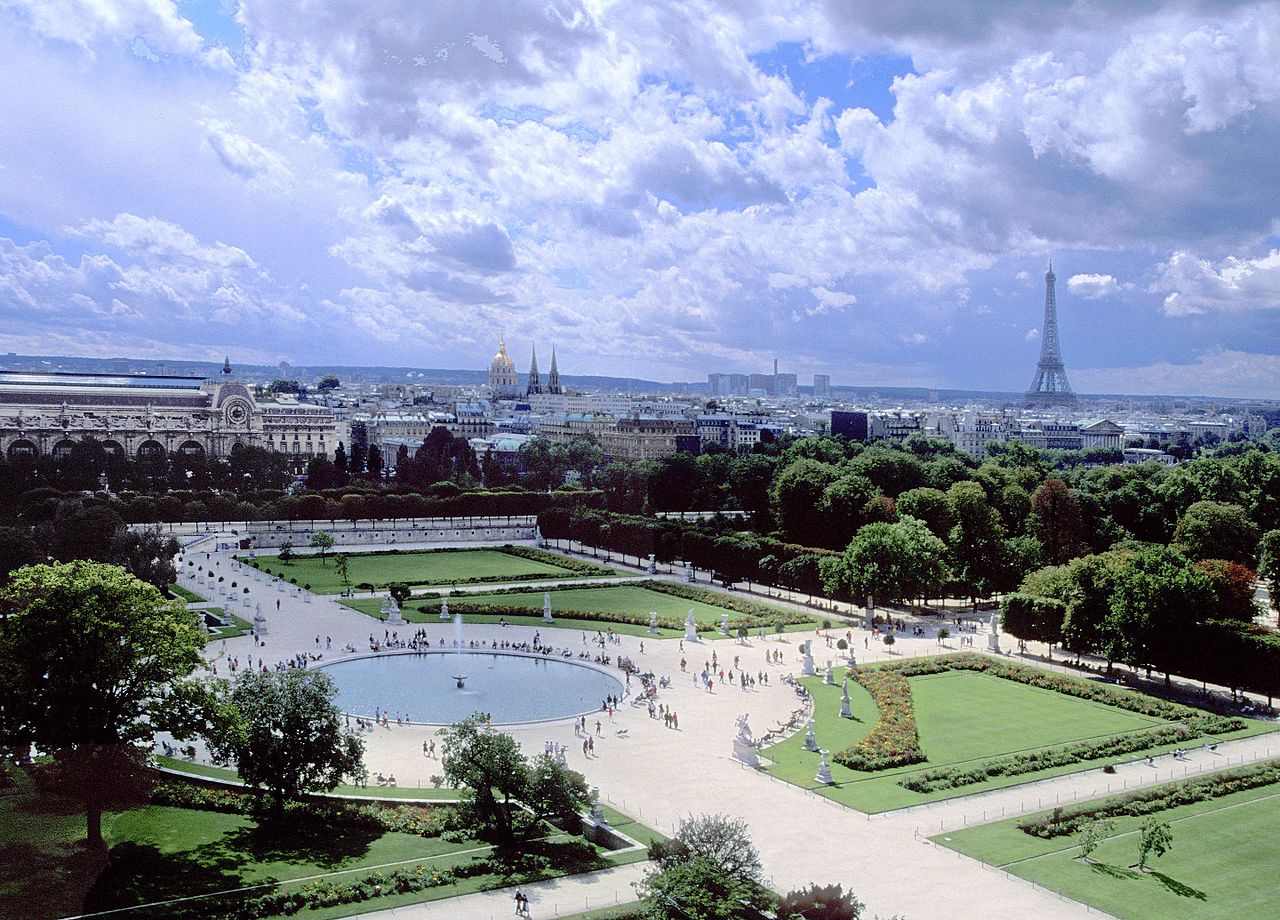
The walk from the Louvre to the Place de la Concorde is located slightly northwest of the geographical (and historical) center of Paris (the Île de la Cité).
We’ve chosen to begin our stroll right in front of the Louvre Museum, near the Pyramid. After a few hours in the ever-bustling Louvre, it can be refreshing to wander peacefully through the Tuileries Garden, crossing the gardens of the Carrousel and Tuileries from east to west before reaching Place de la Concorde. And this walk leads to many shopping spots.
A stroll from the Louvre to Concorde, a peaceful haven in a vibrant neighborhood
The walk from the Louvre to the Place de la Concorde escapes the crowded streets while remaining at the very heart of Paris. It winds through the Tuileries Gardens and also takes in Place Vendôme, the stronghold of high-end jewellery and luxury watchmaking.
Along the route: 16 points of interest
The starting point at the Louvre is exceptional, near the Pyramid. The endpoint at Place de la Concorde is just as impressive. But the 16 intermediate points of interest we’ve selected are also well worth exploring—some for their historical past (Arc de Triomphe du Carrousel, Tuileries Garden, Tuileries Palace), others for their contemporary appeal (Carrousel du Louvre, Musée des Arts Décoratifs and its fashion, textile, and advertising departments), and the luxury and jewelry scene (Place Vendôme). Plus two historic columns along the way: the Vendôme Column (Place Vendôme) and the Luxor Obelisk (Place de la Concorde)!
The walk ends at the historic Place de la Concorde
This short stroll, just 600 m as the crow flies, begins at the Louvre and concludes at Place de la Concorde. It revives the memory of the vanished Tuileries Palace and takes a detour via Place Vendôme, the heart of high-end jewelry and watchmaking.
Interactive map of the walk
Points of interest along the walk
1. Palais du Louvre
rue de Rivoli75001 Paris
Access
- The main entrance to the museum is located in the middle of the Cour Napoléon, under the Pyramid. Access is also possible, under certain conditions, from the Passage Richelieu, which connects the Cour Napoléon to the Place du Palais-Royal, and, for all visitors, from the Carrousel du Louvre shopping center, where there is also an underground parking lot for buses.
- To distribute the public, the museum communicates the waiting time in real time at its different entrances on its website
- Métro : Lines 1 et 7, station "Palais-Royal / Musée du Louvre" and Line 14, station "Pyramides" - List of metro stations
- Bus : 21 24 27 39 67 48 68 69 72 95and OpenTour
- RER : lines A and B, station Châtelet - Les Halles
- Batobus : Louvre stop, quai François Mitterrand
- Velib near the museum : n°1015 : 2 place A. Malraux, n°1023 : 165 rue Saint-Honoré, n°1014 : 5 rue de l'Echelle, n°1013 : 186 rue Saint-Honoré
- Parking : By the avenue du général Lemonier, every day from 7am to 11pm.
It is possible to access the Louvre Museum from the Gare du Musée d'Orsay (on the other side of the Seine river).
Short description
Long before the Louvre Museum, the Louvre was a fortress begun in 1190 by King Philip Augustus. It was transformed over several centuries:
- in 1515: King Francis I (François 1er) turns the former fortress into a Renaissance palace.
- In 1594, Henri IV undertook the great project of reuniting the Louvre Palace with the Tuileries castle, with two long galleries devoted to the king's art collections.
- In the 17th century, the king's taste was for French classicism: Louis XIV preferred Claude Perrault's regular and colossal project.
- Just behind it, the square courtyard, now open to the city, is delicately lit in the evening (open from 7.30-24.00 in summer and from 8.45-22.00 in winter).
- The Louvre became a museum in 1793, and underwent its final transformations during the Second Empire, when the galleries on either side of the Cour Napoléon were completed.
- But just as the original plan to link the Louvre palace to the neighboring Tuileries Palace was being completed, the Tuileries Palace was deliberately set on fire by the Communards (Insurrection of 1871).
In 1981, "the Grand Louvre" was one of the major works decided by President Mitterrand. The Richelieu wing (to the north, on the rue de Rivoli side), then still occupied by the Ministry of Finance, became part of the museum. The ministry is transferred to its current location, quai de Bercy. The surface of the museum increases from 30 000 m² to 55 000 m².
We suggest the "Pyramid of the Louvre" (see below) as a starting point for walks "from the Louvre".
2. Pyramide du Musée Louvre
Cour Napoléon75001 Paris
Architectes : Leoh Ming Pei for the Pyramid and Michel Macary for the Carrousel du Louvre
Coordinates Pyramide du Louvre (Main museum entrance) - Cours Napoléon, Paris 75001
Access
- The main entrance to the museum is located in the center of the Cour Napoléon, under the Pyramid. Access is also possible, under certain conditions, from the Passage Richelieu, which connects the Cour Napoléon to the Place du Palais-Royal, and, for all visitors, from the Carrousel du Louvre shopping center, where there is also an underground parking lot for buses.
- To distribute the public, the museum communicates the waiting time in real time at its different entrances on its website
- Métro : Lines 1 et 7, station "Palais-Royal / Musée du Louvre" and Line 14, station "Pyramides" - List of metro stations
- Bus : 21 24 27 39 67 48 68 69 72 95and OpenTour
- RER : lines A and B, station Châtelet - Les Halles
- Batobus : Louvre stop, quai François Mitterrand
- Velib near the museum : n°1015 : 2 place A. Malraux, n°1023 : 165 rue Saint-Honoré, n°1014 : 5 rue de l'Echelle, n°1013 : 186 rue Saint-Honoré
- Parking : By the avenue du général Lemonier, every day from 7am to 11pm.
It is possible to access the Louvre Museum from the Gare du Musée d'Orsay (on the other side of the Seine river).
Short description
From 1981 to 1999, the Louvre palace underwent major modernization work, known as the Grand Louvre. The Pyramid was a part of the modernization.
The Pyramid-of-the-Louvre is a pyramid made of glass and metal, located in the middle of the Cour Napoléon of the Louvre Museum in Paris. It is the main entrance to the museum. It was inaugurated by the President of the Republic François Mitterrand on March 4, 1988 (2 months before the presidential elections of 1988!) and a second time on March 29, 1989 by the same President Mitterrand. But the works were finished only 4 years later in 1993. Who knows why to make 2 inaugurations "in advance"?
The decision to build this Pyramid was the subject of a battle of influences: first the choice of a Sino-American architect and then the shape of the proposed building, modern in a historical context.
The technology used is new and also daring. The metal structure of the Pyramid-of-the-Louvre that supports the glass cladding is made of steel and aluminum and weighs 200 tons. It consists of a steel structure weighing 95 tons and an aluminum frame weighing 105 tons.
In the end, not one but 5 pyramids were built, one of which was inverted (the one above the Carrousel du Louvre).
3. Louvre Museum
9 rue de Rivoli75001 Paris
Coordinates Pyramide du Louvre (Main museum entrance) - Cours Napoléon, Paris 75001
Access
- The main entrance to the museum is located in the middle of the Cour Napoléon, under the Pyramid. Access is also possible, under certain conditions, from the Passage Richelieu, which connects the Cour Napoléon to the Place du Palais-Royal, and, for all visitors, from the Carrousel du Louvre shopping center, where there is also an underground parking lot for buses.
- To distribute the public, the museum communicates the waiting time in real time at its different entrances on its website
- Métro : Lines 1 et 7, station "Palais-Royal / Musée du Louvre" and Line 14, station "Pyramides" - List of metro stations
- Bus : 21 24 27 39 67 48 68 69 72 95and OpenTour
- RER : lines A and B, station Châtelet - Les Halles
- Batobus : Louvre stop, quai François Mitterrand
- Velib near the museum : n°1015 : 2 place A. Malraux, n°1023 : 165 rue Saint-Honoré, n°1014 : 5 rue de l'Echelle, n°1013 : 186 rue Saint-Honoré
- Parking : By the avenue du général Lemonier, every day from 7am to 11pm.
It is possible to access the Louvre Museum from the Gare du Musée d'Orsay (on the other side of the Seine river).
Short description
The Louvre became a museum on August 10, 1793 with an exhibition of 537 paintings. The to day Musée du Louvre contains more than 380,000 objects and displays 35,000 works of art in eight curatorial departments, with more than 60,600 square meters (652,000 sq ft) dedicated to the permanent collection.
The Louvre Museum offers a chronology from Antiquity to 1848 and a geographical area extending from Western Europe to Iran, via Greece, Egypt, and the Near East.
The Louvre Museum has eight departments: Oriental Antiquities, Egyptian Antiquities (Recently Renovated), Greek, Etruscan, and Roman Antiquities, Islamic Arts, Sculptures, Works of Art, Paintings, and Graphic Arts.
Almost all the works on display at the Louvre are available for consultation on the Internet.
The works in the Louvre Museum are varied in nature: paintings, sculptures, drawings, ceramics, archaeological objects, and objets d'art, among others. Among the museum's most famous pieces are the Code of Hammurabi (Babylonian legal text dated around 1750 BC, to date the most complete code of laws known from ancient Mesopotamia), the Venus de Milo, Leonardo da Vinci's Mona Lisa, Eugene Delacroix's Liberty Leading the People, or the Victory of Samothrace restored in 2014.
In Paris, several national museums complement the Louvre's collections, including the Musée d'Orsay (19th century) and the Musée du Jeu de l'Orangerie (mainly Impressionists).
4. Arc de Triomphe du Carrousel
Place du Carrousel75001, Paris
Access
- Metro: line 1 and 7 (Palais Royal - Musée du Louvre station)
- RER: line C (Musée D'Orsay Station)
- Bus: 27, 39, 68, 69, 72, 73, 85, 95
Short description
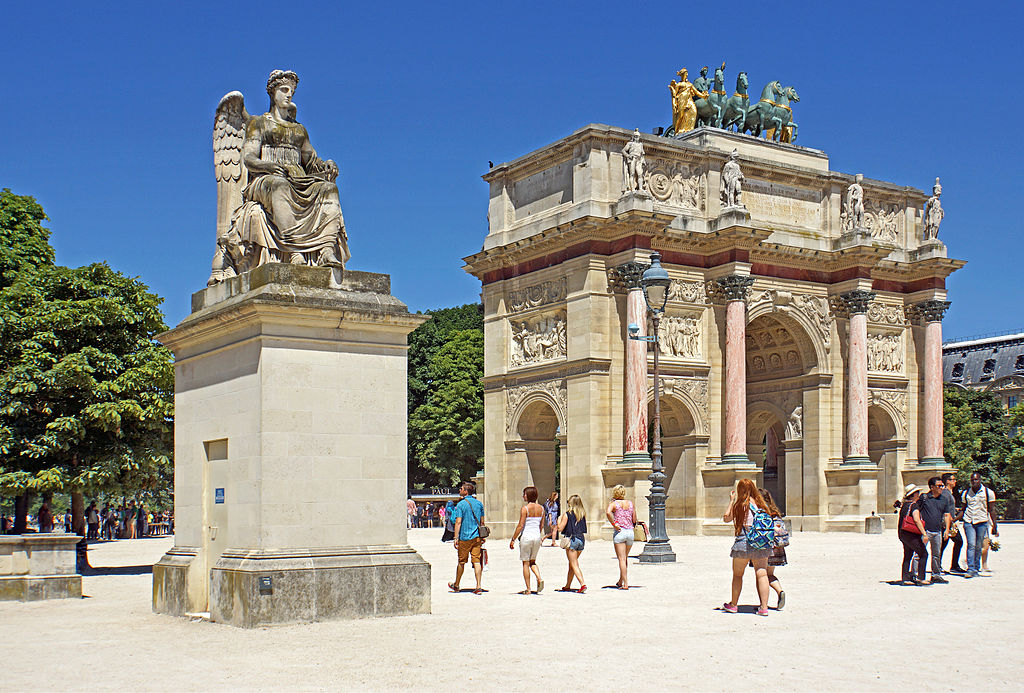
The Arc-de-Triomphe du Carrousel, is a monument inaugurated on August 15, 1808 by Napoleon 1st, on the place du Carrousel. It was right in front of the main entrance of the Tuileries Palace, now disappeared, burned in 1871 by the Communards.
The name Carrousel comes from a military horse show ( the Grand Carrousel), given in this place by Louis XIV, from June 5 to 6, 1662, on the occasion of the birth of his son Louis of France.
The monument was erected, between 1806 and 1810, in front of the Tuileries Palace to which it serves as the entrance of honor. It is a copy, in 3/4 scale, of the arch of Constantine (313-315 AC) in Rome.
The Arc de Triomphe du Carrousel has a height of 14.60 meters (45 feet) and its base is a rectangle of 19.60 meters (60 feet) by 6.65 meters (20 feet and a half). It is crowned by an imposing frieze in marble (Italian cherry), sculpted and engraved and the bas-reliefs illustrate the events of Napoleon's 1805 campaign.
It is surmounted by the "Quadriga of the Arch of Triumph of the Carrousel" (4 horses in the center) harnessed to a chariot and surrounded by 2 gilded lead statues of Peace and Victory.
The 4 horses "Quadriga of the Arch of Triumph of the Carrousel" was the horses of Saint Mark, a carriage adorning the top of the main door of the Saint Mark's Basilica in Venice and coming from the sack of Constantinople by the Venetians. Napoleon then General brought them back in 1798 during his Italian campaign.
Following the defeat of Napoleon in 1815 at Waterloo, the original quadriga of the Venetians (which they had stolen from Constantinople) was returned to the Austrians who gave it back to Venice. It is today above the main entrance of the Basilica of Saint Mark in Venice. Finally a very long journey!
This means that what is seen today above the Arch of the Carrousel of Paris is a copy made in 1828,
5. Jardin du Carrousel
6 Av. du Général Lemonnier75001 Paris
Access
- Métro: line 1 and 7 (Station Palais Royal - Musée du Louvre)
- RER: line C (Station Musée D'Orsay)
- Bus: 27, 39, 68, 69, 72, 73, 85, 95
Short description
The Carrousel garden is a space located east of the Tuileries garden, on the Louvre side, between the Marsan wing and the Flore wing of the Louvre Museum.
The Tuileries Palace burned down in 1871, razed in 1883 and never rebuilt, was located approximately where the Avenue du Général Lemonnier is today.
About twenty statues of the sculptor Aristide Maillol are spread in the garden since 1964. You can admire them while walking around. They are listed in our post "Carrousel Garden between Louvre and Tuileries, 20 sculptures by Maillol" with their geographical coordinates to facilitate your search.
6. Palais des Tuileries
Jardin des Tuileries75001 Paris
Access
- Métro : Station Palais Royal – Louvre (Lines 1 and 7) - Station Tuileries (Line 1) - Station Concorde (Lignes 1, 8 et 12)
- RER
- Bus : 21, 27, 39, 42, 45,48, 67, 68, 69, 72, 73, 81, 94, 95
- Parkings : Carrousel du Louvre, rue des Pyramides
- Parking cars : Carrousel du Louvre
Short description
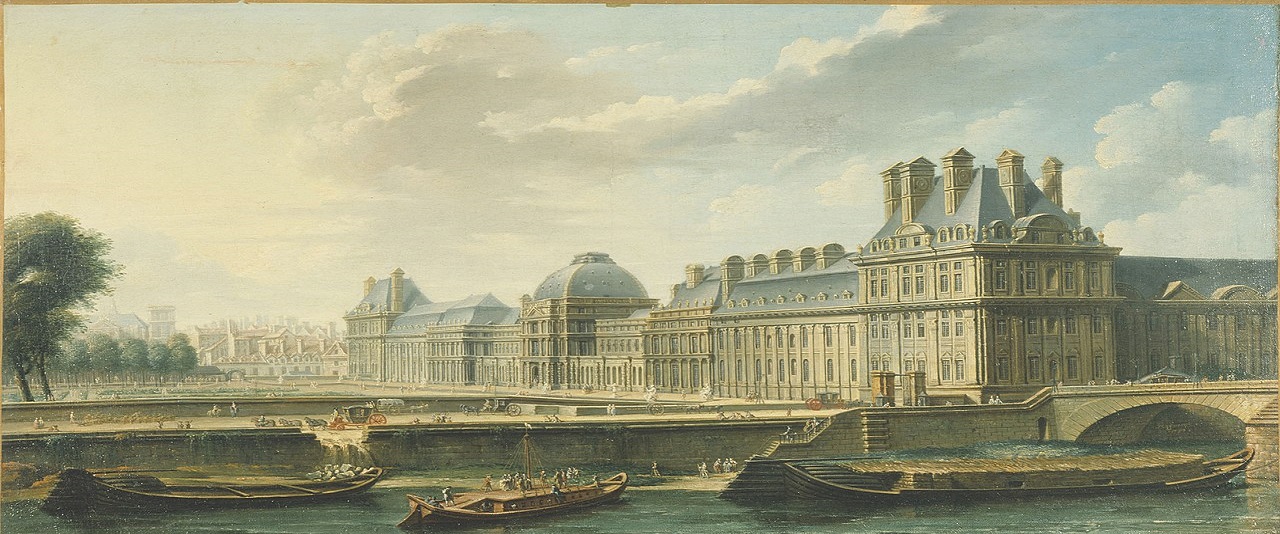
The Palais des Tuileries is a palace now destroyed whose construction began in 1564 under the impetus of Catherine de Medici. On this site were three tile factories established in 1372.
To sharpen your imagination, we have grouped 3 historical photos in the full post on the Tuileries Palace: before 1871, during and after the fire.
Enlarged under the successive reigns of the kings of France, it had a huge facade (266 meters long) and became a royal residence (Henri IV, Louis XIV, Louis XV, Louis XVI or Louis XVIII), then an imperial one (Napoleon I and Napoleon III).
Its destruction is the result of an arson attack on May 23, 1871 by the Communards Jules-Henri-Marius Bergeret, Victor Bénot and Etienne Boudin. The ruins of the Tuileries Palace were destroyed in 1883.
Le Palais des Tuileries est un palais aujourd’hui détruit dont la construction commença en 1564 sous l’impulsion de Catherine de Médicis. A cet emplacement se trouvaient trois fabriques de tuiles établies en 1372.
7. Carrousel du Louvre
99 rue de Rivoli75001 Paris
Architect : Michel Macary
Access
- Metro - Lines 1 and 7 (Palais Royal - Musée du Louvre station)
- Bus - 21, 27, 39, 67, 68, 69, 72, 95 (Stops "Palais Royal - Musée du Louvre" or "Palais Royal - Comédie Française" or "Musée du Louvre")
- Parking (670 spaces). Parc Carrousel Louvre" can be reached via avenue du Général Lemonnier, 75001 Paris
- From Rue de Rivoli: turn left at the traffic lights at Place des Pyramides
- From Quai des Tuileries: turn left at the Pont-Royal traffic lights.
- From Pont-Royal: go straight on, direction "Opéra", then turn right
In all three cases: enter the tunnel; at the traffic light at the lowest point of the tunnel, enter the central ramp marked
central ramp marked "Parc Carrousel Louvre".
- Autolib': 4 Autolib' stations are available in the vicinity of Carrousel du Louvre
- 3 Rue Saint Roch 75001 Paris
- 12-15 Rue des Pyramides 75001 Paris
- 4 Rue Croix des Petits Champs 75001 Paris
- 2 Rue de l'Amiral Coligny 75001 Paris
Click here for more information.
- Cab: take a cab to Place André Malraux 75001 Paris. Click here to book online.
- Velib': 4 Vélib' stations are available in the vicinity of the Carrousel du Louvre:
- 165, rue Saint Honoré 75001 Paris
- 5, rue de l'échelle 75001 Paris
- 2, place André Malraux 75001 Paris
186, rue Saint Honoré 75001 Paris
- 3 pedestrian entrances serve the Carrousel du Louvre:
- 99, rue de Rivoli 75001 Paris
- Exit from Musée du Louvre, place de la Pyramide Inversée
- 2 entrances from the Jardin des Tuileries, stairs on either side of the Arc de Triomphe du Carrousel.
Short description
Also as part of the changes brought about by the "Grand Louvre" project, an underground commercial space called the Carrousel-du-Louvre was created by Michel Macary (in reference to the nearby Place du Carrousel and above). It includes a historical and cultural space (with direct access to the Louvre museum and a 600-seat amphitheater of the Louvre School - Rohan amphitheater), a 10,200 m2 shopping mall, open on Sundays and with many big-name stores.
8. Musée des arts décoratifs
107 Rue de Rivoli75001 PARIS
Access
- Métro : Palais Royal – Louvre
- RER
- Bus : 21, 27, 39, 48, 68, 69, 72, 81, 95
- Parkings : Carrousel du Louvre, rue des Pyramides
- Parking cars : Carrousel du Louvre
Short description
The 1981 Grand Louvre project also included the renovation of the Musée des Arts décoratifs.
It now includes a set of 4 complementary museums: Musée des Arts décoratifs (reference), the former Musée de la Mode et du Textile, the former Musée de la Publicité and the Musée Nissim de Camondo.
The main part of the museum is at 107 rue de Rivoli. It includes a library (107Rivoli Library) and a boutique (107Rivoli Boutique).
9. Église Saint-Roch
296 rue Saint-HonoréPostal Address : 24 Rue Saint-Roch
75001 PARIS
Tél : 01 42 44 13 20
Architectes : Jacques Le Mercier, Jules Hardouin-Mansart, Robert de Cotte
Access
- Métro : line 1 (Station Tuileries), line 14 (Station Pyramides), line 7 (Station Pyramides)
- RER : line C (Station Musée D'Orsay)
- Bus : lines 20, 21, 68, 72
Short description
The Saint-Roch Church was built between 1653 and 1722 near the Tuileries Gardens. Note the absence of bell tower resulting from demolition works undertaken in the 19th century during the development of the passage Saint-Roch.
At the time of the French Revolution, this church was at the center of the fighting between factions, as shown by the facade riddled with impacts. Revolutionary groups, such as the Jacobin Club and the Feuillants Club, used to gather in the cloisters of the rue Saint-Honoré. The confrontations of that time are still visible.
It was also along this street that the vehicles that took the condemned from the Conciergerie prison to the Place de la Concorde where they were executed circulated.
Today, the Saint-Roch Church is the parish of the artists. Recently, quite a few funerals of them took place at the St Roch church.
Saint-Roch Church has always been the last resting place of personalities in history : André le Nôtre, Pierre Corneille, Fragonard, etc.
It still houses paintings and sculptures from convents destroyed during the Revolution. It is a kind of museum of religious art from the 18th and 19th centuries.
Numerous concerts are organized on weekday evenings and Sunday afternoons.
10. Colonne Vendôme
Place Vendôme75001 Paris
Access
- Metro
- ligne 1 - Tuileries station
- Lignes 7 and 14 - Pyramide station
- Lignes 7 and 8: Opera station
- Bus - lignes 72 et 52
Short description
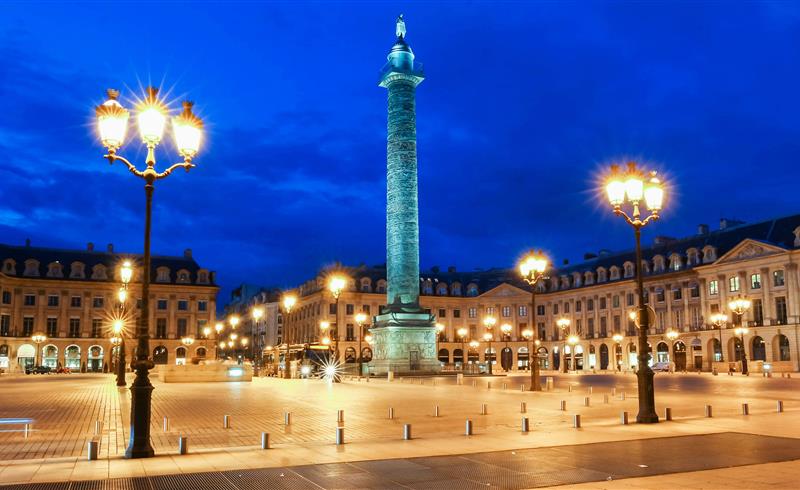
The Column Vendôme was erected by order of Napoleon 1st, from 1806 to 1810 to commemorate the battle of Austerlitz, then destroyed during the Paris Commune in 1871 before being rebuilt as we know it today. The column was named the column of the Grande Armée.
The dedicatory inscription, written in an antique manner, means "Napoleon Emperor Augustus consecrated to the glory of the Great Army this column formed of the bronze conquered on the enemy during the war of Germany, won under his command in 1805 in the space of three months".
Its barrel, consisting of 98 stone drums (rings), is covered with a cast bronze facing of 1,200 cannons taken from the Russian and Austrian armies. This number is probably exaggerated by propaganda, historians count about 130 guns taken from Austerlitz. An interior staircase leads to a platform located under the statue at the top.
During the insurrection of the Paris Commune, which lasted from March 18, 1871, until the "Bloody Week" from May 21 to 28, 1871, the motivations became more radical. The column was finally knocked down on 16 May 1871, not without difficulty, 11 days before the Commune was crushed.
The re-construction of the Column Vendôme begun in 1873 and completed in 1875 - at the expense of the painter Gustave Courbet (whom he never paid). He was condemned because he was at the origin of the destruction of the previous one.
11. Jardin des Tuileries
Place de la Concorde75001 Paris
Tel. +33 (0) 1 40 20 53 17
https://www.louvre.fr
Access
- Metro - Concorde Station (Lines 1, 8 and 12), Tuileries Station (Line 1)
- RER - Musée d'Orsay
- Bus - 21, 27, 42, 68, 69, 72, 73, 84, 94, 95
- Velib' : stations n°1018, n°1017, n°1019.
Short description
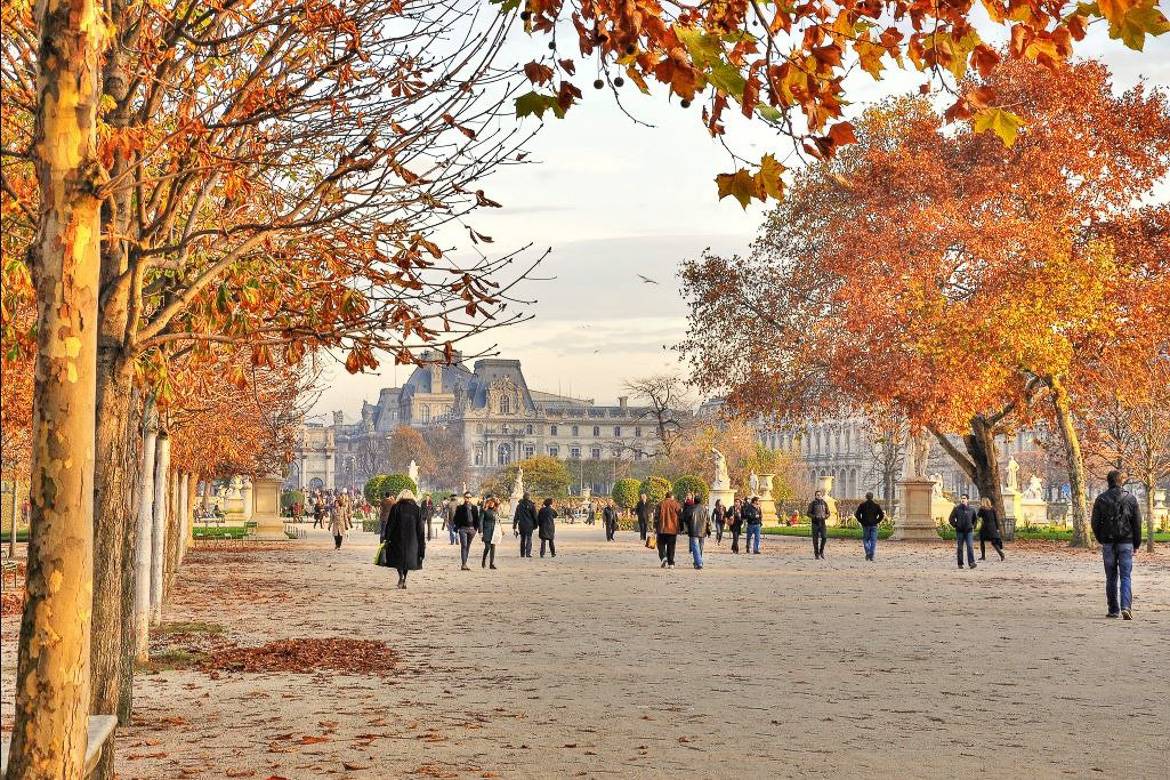
The Tuileries-Garden separates the Carrousel garden and the Louvre museum from the Place de la Concorde.
The Tuileries garden dates from 1564, at the same time as the Tuileries Palace starting construction. But from 1664, the Tuileries-Garden was entirely redesigned by André Le Nôtre, the famous gardener of King Louis XIV. A fountain, a menagerie and a grotto decorated by the famous ceramist Bernard Palissy decorate the garden. In the years 1605-1625, an orangery and a silkworm farm were added.
It is in 1783 that took place the first ascent of people in a gas balloon. A plaque, located today on the right when entering the garden, marks the memory of this event. During the Revolution, the Tuileries-Garden was the witness of the great events of which the palace itself was the theater, notably the "capture" of the Tuileries on August 10, 1792.
The rue de Rivoli was laid out at the beginning of the 19th century. Later during the development of the Quai des Tuileries, a supporting wall was built along the waterfront terrace. At the western corners of the garden, Napoleon III had two identical buildings built:
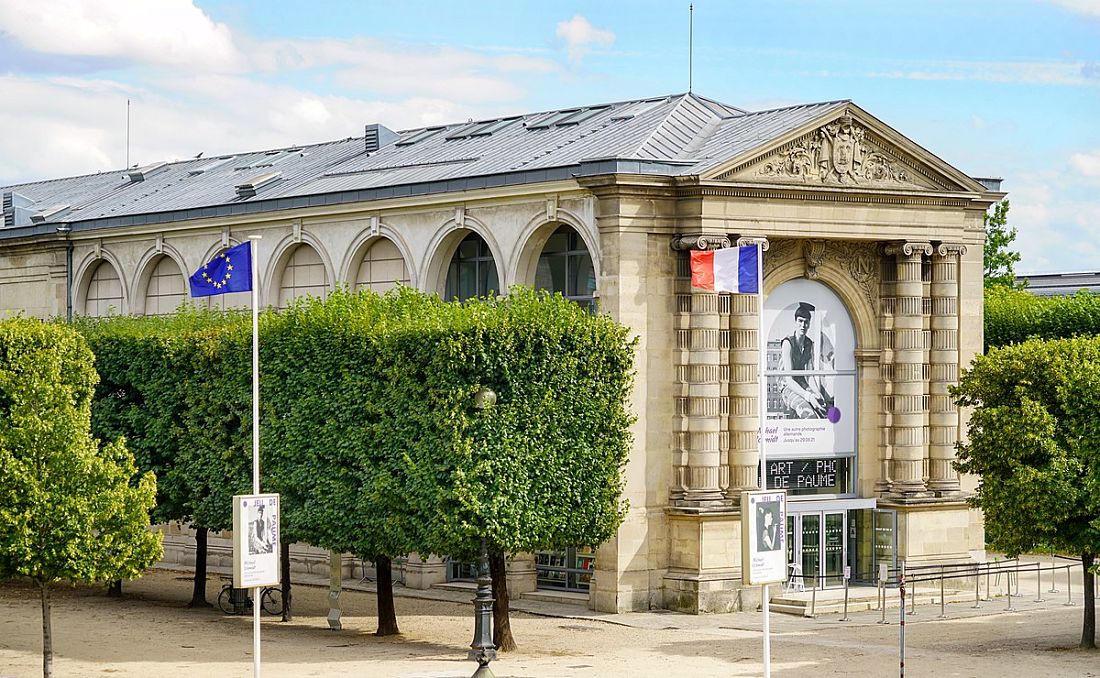
- a jeu de paume to the northwest which now houses a museum of contemporary art and photography, the Galerie Nationale du Jeu de Paume.
- an orangery in the southwest. Today it houses a museum of modern art, the Musée de l'Orangerie
Over the years, many other events have taken place in Tuileries-Garden. The Tuileries Palace was destroyed by fire during the Paris Commune in 1871, in 1883, the ruins of the Tuileries Palace are razed, during the 1878 World's Fair, Henri Giffard had thousands of people fly in a giant tethered balloon, during the First World War, 2 shell launched by the German cannon Grosse Bertha exploded in the Jardin-des-Tuileries and near the Orangery terrace, during the Second World War, a part of the Tuileries Gardens was transformed into a vegetable garden, on August 25, 1944, german General von Choltitz, commander of the "Groß-Paris" surrender after violent fighting. Captain Branet took the nearby Hotel Meurice, on rue de Rivoli, which was also the headquarters of the German occupation forces.
Eighty sculptures are exposed in the Tuileries-Garden. List and location on "Tuileries-Garden".
12. Place de la Concorde
Quartier des Champs Elysées75008 Paris
Access
- Metro: lines 1, 8 et 12 - Station Concorde
- RER: closest lines: A et C
- Bus: lines 42 45 52 72 73 84 94 (RATP)
- Noctilien N11 N24. (Night bus line)
- Tootbus Paris (Special bus line)
Short description
The Concord Square, with 8.64 hectares, is the largest square in Paris.
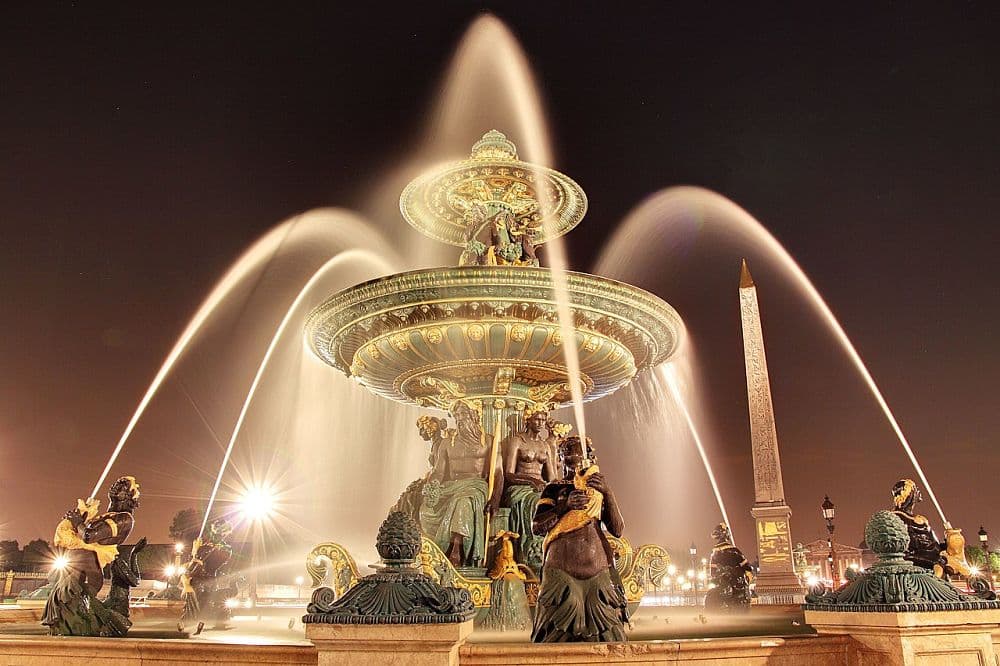
The Concord Square is located a few hundred meters from the Louvre, at the bottom of the Avenue des Champs-Élysées and adjoins the Jardin de Tuilerie. It is distinguished today by the Luxor Obelisk in its center, 3,300 years old (13th century with J-C) and erected in 1836 on Concord Square - See our article "Luxor Obelisk, Place de la Concorde, a present from Egypt".
In the beginning of the 18th century, it was only an esplanade surrounded by a ditch and two large open sewers. Later (1770), it was the scene of a dramatic accident where 133 people died as a result of the panic caused by a fire stated by a falling rocket. It was in honor of the wedding of the Dauphin (the future Louis XVI) and the Archduchess Marie-Antoinette of Austria.
A few years later, during the Revolution, the Concord Square was one of the bloodiest places: 1 119 people died there out of the 2 498 guillotined in Paris. Among them, king Louis XVI and the queen Marie-Antoinette died on Concord Square.
Between 1836 and 1846, the square was transformed by the architect Jacques-Ignace Hittorff. He added two monumental fountains (which had the audacity to be made of cast iron) on either side of the Luxor obelisk and surrounded the square with lampposts and rostral columns. They also evoke the emblem of the City of Paris. Architecture surrounding the Concord Square, the monumental fountains and The statues add to its splendor.
13. Musée de l'Orangerie - Orangerie Museum
Jardin des Tuileries (côté Seine - on the Seine side)Place de la Concorde
75001 Paris
| Coordinates | Latitude | Longitude |
| Sexagesimal (°, ', ") | ||
| Degré décimal (GPS) | 48.86435 | 2.32176 |
Architectes : Auguste Perret, Antoine Bourdelle, Henry Van de Velde
Interior decoration : Bourdelle (bronze and frescoes). Maurice Denis
Visiting the Orangerie Museum : conditions, prices and opening hours - see below "More on Orangerie Museum" available in English or in French
Access
- Metro: lines 1, 8 et 12 - Station Concorde
- RER: closest lines: A et C
- Bus: lines 42 45 52 72 73 84 94 (RATP)
- Noctilien N11 N24. (Night bus line)
- Tootbus Paris (Special bus line)
Short description
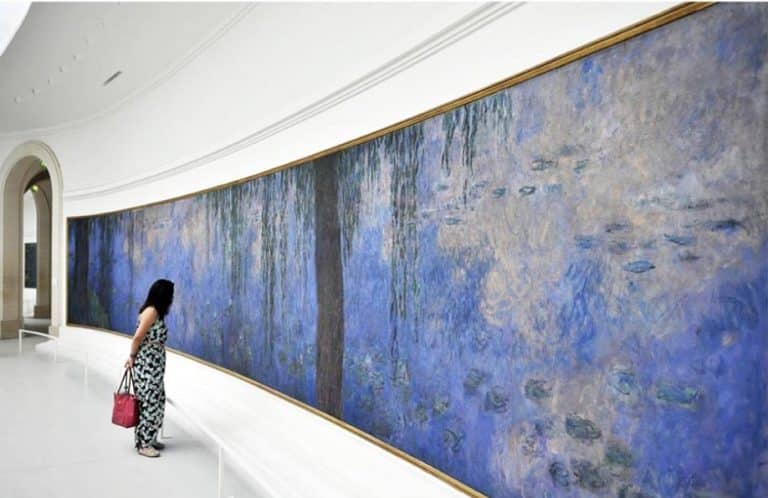
Orangerie museum is known for the Water Lilies of Claude Monet that it shelters. The Water Lilies cycle occupied Claude Monet for three decades, from the end of the 1890s, until his death in 1926, at the age of 86.
Orangerie museum also contains in its basement the Jean Walter and Paul Guillaume collection, devoted to the great names of the 20th century: Renoir, Cézanne, Matisse, Picasso, Soutine and a few others. They are paintings of the Impressionist (XIXe) and Modernisme (XXe) periods.
Outside of the building are also sculptures by Rodin and a few others.
14. Obélisque de Louxor
Place de la Concorde75008 Paris
Access
- Metro: lines 1, 8 et 12 - Station Concorde
- RER: closest lines: Line A : Station Charles de Gaulle/Étoile - Line C : Station Invalides
- Bus: lines 24, 42, 72, 73, 84, 94
- Noctilien N11 and N24. (Night bus line)
- Tootbus Paris (Special bus line)
- Parking : Jardin des Tuileries et Carrousel (accès par le quai des Tuileries ou la rue de Rivoli) - Rue du Mont-Thabor, rue des Pyramides
- Stations Vélib' : 119, rue de Lille - 2, rue Cambon
The Luxor obelisk is part of a gift including 2 obelisks, the 2nd will never be brought to Paris. The gift to king Charles X and France of Mehmet Ali, Viceroy of Egypt, was made at the instigation of Baron Taylor and Jean-François Champollion (1790-1832 - the first to translate the hieroglyphics).
The donation of the Obelisk was made in early 1830. It was transported by a special barge called "Luxor" towed by the steamship and sailboat "Sphinx". It finally arrived in Paris in 1834 after a stopover in Toulon and Rouen and the ascent of the Seine. It was erected on October 25, 1836.
Its weight is 222 tons. The stone base of 240 tons is from Brittany, western France, not Egypt.
Atop the Obelisk is a small pyramid called "pyramidion". Also to be noted that the Obelissk is also a huge sundial: Roman numerals, lines are traced and metal inlays sealed on the ground of the Concord Square.
15. Musée du Jeu de Paume - Jeu de Paume Museum
1, place de la Concorde, jardin des Tuileries75001 Paris
Tél : 33 (0)1 47 03 12 50
Visiting the Jeu de Paume Museum : conditions, prices and opening hours - see below "More on Jeu de Paume Museum" available in English or in French
Access
- Metro: lines 1, 8 et 12 - Station Concorde
- RER: closest lines: A et C
- Bus: lines 42 45 52 72 73 84 94 (RATP)
- Noctilien N11 N24. (Night bus line)
- Tootbus Paris (Special bus line)
Short description
The today Galerie Nationale du Jeu de Paume was inaugurated on June 17, 1991. Without a permanent collection, the exhibitions are exclusively temporary and concern the art of the second half of the 20th century. In 2004, by ministerial decision, the Jeu de Paume became a museum devoted to photography and image, video art, experimental cinema and documentary film.
16. Hôtel de la Marine
2 Place de la ConcordeParis - 75008
Architecte : Ange-Jacques Gabriel
Access
- Metro: lines 1, 8 et 12 - Station Concorde
- RER: closest lines: A et C
- Bus: lines 42 45 52 72 73 84 94 (RATP)
- Noctilien N11 N24. (Night bus line)
- Tootbus Paris (Special bus line)
Short description
Visiting the Hotel de la Marine : conditions, prices and opening hours - see below "More on Hôtel-de-la-Marine Museum" available in English or in French
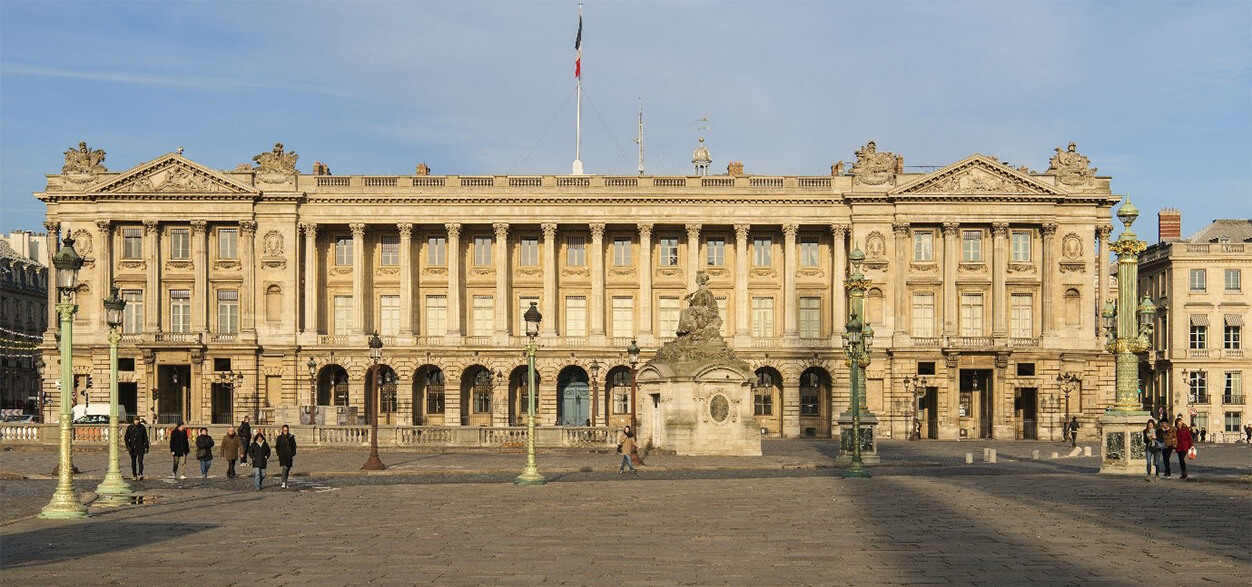
The Hôtel-de-la-Marine is a new museum inaugurated in June 2021, in a magnificent 18th century historic building. From its loggia, visitors have a breathtaking view of the Place de la Concorde. A "Garde-meuble de la Couronne" building under the old regime (the forerunner of today's Mobilier national) and then the home of the Ministry of the Navy, the Hôtel de la Marine bears witness to the changes in France, from royalty to the present day.
The Furniture Store of the Crown of France
The hotel was built between 1757 and 1774 to house the Garde-Meuble de la Couronne from 1772. It was organized into three exhibition rooms:
- the Salle d'Armes (collection of armor and weapons of the kings of France - today in the Invalides and the Louvre);
- the Galerie des Grands Meubles (fabrics and collection of tapestries unique in the world - now in the Louvre and the Mobilier National);
- the Hall of Jewels (vases of colored stones and rock crystal, silverware, diplomatic gifts, as well as the crown jewels, including diamonds set in jewel cases).
The course of history in the Hôtel-de-la-Marine
- The Revolution. The Hôtel de la Marine was looted for weapons by Parisian rioters on the morning of July 13, 1789.
- Establishment of the Navy. Later in 1789 and until 2015
- January 21, 1793: the Intendant of the Garde Meuble de la Couronne can attend from his office the execution of King Louis XVI
- October 16, 1793, from the same place, he can also attend the execution of Queen Marie-Antoinette
- October 24, 1793, it is in the Hotel that was signed the minutes of the execution of the former queen Marie-Antoinette.
The theft of the Crown diamonds
The theft of the century, in the middle of the revolution! This theft took place during the week of September 11 to 17, 1792, over several days, by about forty people, in the chaos that reigned in this revolutionary period. Between 1792 and 1794, two thirds of the jewels were found, including the "Regent", the "Sancy", and most of the "Mazarins". Some of the stones were permanently lost. The collection, deposited in the National Treasury, was estimated at 17 million pounds.
Abolition of slavery
The decree of abolition of slavery was signed on April 27, 1848 by Victor Schœlcher, Under-Secretary of State for the Navy in the provisional government. This government was the result of the Revolution of 1848, which had driven King Louis Philippe I from power.
The 4 most important balls of the 19th century in the Hôtel-de-la-Marine
- February 27, 1802: the ball of Europe
- June 1825: the ball of the coronation of Charles X
- February 12, 1866: the ball of Napoleon III
- October 18, 1893: the ball for the Russian squadron
The visit of the Hôtel-de-La-Marine
The proposed tours are special and original: the tours are done with the sound of the "Confident", a connected headset that tells the story along the routes. Four audio tours are offered: three of 1h30 each and one of 45 mn, for immersive visits at the heart of more than 250 years of history of the monument:
- The Grand Tour: available in 3 versions to explore the monument in its entirety in 1.5 hours:
- Time Travel,
- Age of Enlightenment and
- Family.
- Salons & loggia: for a 45-minute discovery of the ceremonial salons and the most beautiful view of Paris.
- The Grand Tour: available in 3 versions to explore the monument in its entirety in 1.5 hours:
The loggia adjoining the salons d'honneur of the Hôtel de la Marine, offers a breathtaking view of the Place de la Concorde, the Tuileries gardens, the Musée d'Orsay, the Grand Palais and the Eiffel Tower.
The Hôtel-de-la-Marine Museum will also host the Al Thani Collection from Qatar for the next 20 years, in parallel with a program of temporary thematic exhibitions. These presentations follow an agreement between the Centre des monuments nationaux and the Al Thani Collection Foundation.
The Al Thani Collection is among the most prestigious private collections in the world. It includes an exceptional group of works of art covering a long period from Antiquity to the present day. Encyclopedic in its approach and representative of a rich array of cultures and civilizations, the Collection celebrates the creativity and universal power of art through the ages. Previously, these works have been shown in temporary traveling exhibitions at major international institutions, including the Metropolitan Museum of Art in New York, the Victoria and Albert Museum in London, the Hermitage Museum in St. Petersburg, and the National Museum in Tokyo.
Further information on the walk from Louvre to Concord-Square via Tuileries and Place-Vendôme
This Walk from Louvre to Concord is short but opens up some interesting perspectives
This Walk from Louvre to Concord is located in the immediate vicinity of the luxury districts of Paris. Of course, the Avenue des Champs-Elysées, which ends at Place de la Concorde too, and a few hundred meters away, there is Avenue Montaigne. From the same Place de la Concorde runs the Rue Royale, which cuts 200 m from, the Rue de Faubourg-Saint-Honoré. And Rue de Rivoli runs alongside the Jardins des Tuileries. These are all addresses of luxury and fashion, with the great French and international names all to be found here.
For information: our shopping lists for luxury districts
- Avenue-Montaigne, Paris, 500 m of luxury and haute couture
- Champs-Elysées stores: list of 100 stores to visit
- Rue du Faubourg-Saint-Honoré luxury boutiques not to be missed (Unfinished)
- Rue Royale boutiques
- Boutiques rue de Rivoli (Unfinished)
Our self-guided walks to guide you through these streets
We have other self-guided walks available that start directly where the “Walk from Louvre to Concord” ends, it means at the Concord Square. The walk is called Arc-de-Triomphe to Place-de-la-Concorde and can be reversed with a simple click in order to be made from Concord to Arc-de-Triomphe. In 24 points of interest, everything you need to know about this famous avenue.
In addition when you are at Arc-de-Triomphe an other walk takes care of you until Palais de Chaillot – Esplanade du Trocadéro. It is called Walk from Eiffel-Tower to Palais-de-Chaillot via Place d’Iena. And finally the third walk Walk from Eiffel-Tower to Palais-de-Chaillot via Place d’Iena will let you at the foot of the Eiffel Tower.
Walks in the heart of historic Paris
From the Louvre Pyramid, where you started this walk to the Place de la Concorde, we have two other very interesting walks for you:
- the first begins at the Louvre itself and heads towards the historic heart of Paris, the Ile de la Cité (approx. 1 km) – “Stroll in the Ile-de-la-Cité of Paris, 800 year history“. This walk brings to life the history of Paris and France through 13 points of interest.
- the other starts 400 m from the end of the previous one and takes you through the Marais to the Bastille (2 km walk) – “Walk from Pompidou-museum to the Bastille via the Marais“. Immerse yourself in the historic and fashionable Marais district. 17 points of interest to enjoy.
So, if you follow our various walks, you can start at the Tour-Eiffel, then pass through the Palais de Chaillot, join the Arc-de-Triomphe, walk down the Champs-Elysées, through the Jardins des Tuileries, arrive at the Louvre, visit the historic heart of the Cité-de-Paris, then return to the Musée Pompidou, cut through the Marais to reach the Bastille! And if you prefer, you can take these walks in reverse order with a starting point at la Bastille! Quite a program!
Our walks in Montmartre
In a similar vein, we’ve programmed an exhaustive tour of Montmartre, in the form of 3 walks:
- Pigalle to Sacré-Coeur walk, along the south side of Butte Montmartre
- Walk on the Butte Montmartre on the roof of Paris
- Walk from the Musée de Montmartre to Pigalle via the Moulin-Rouge
Relaxation “breaks” that go hand in hand with the walks on offer
And that’s not all: we’re in the process of compiling “Pauses détente” lists from the shopkeepers you come across as you stroll through the streets of Paris. Our aim is to provide you with a list of reliable, rated merchants (URLs) from which you can make your purchases (gifts, coffee, meals, or shopping) in complete confidence. These will be “specialized” itineraries linked to the routes of our walks. We call these addresses “Relaxation Breaks”: coffee breaks, restaurant breaks, and so on. Much remains to be done. Apart from “Magasins des Champs-Elysées: liste de 100 commerces à visiter”, we also have at your disposal: