Royal Street in Paris, luxury between Concorde and Madeleine, a history

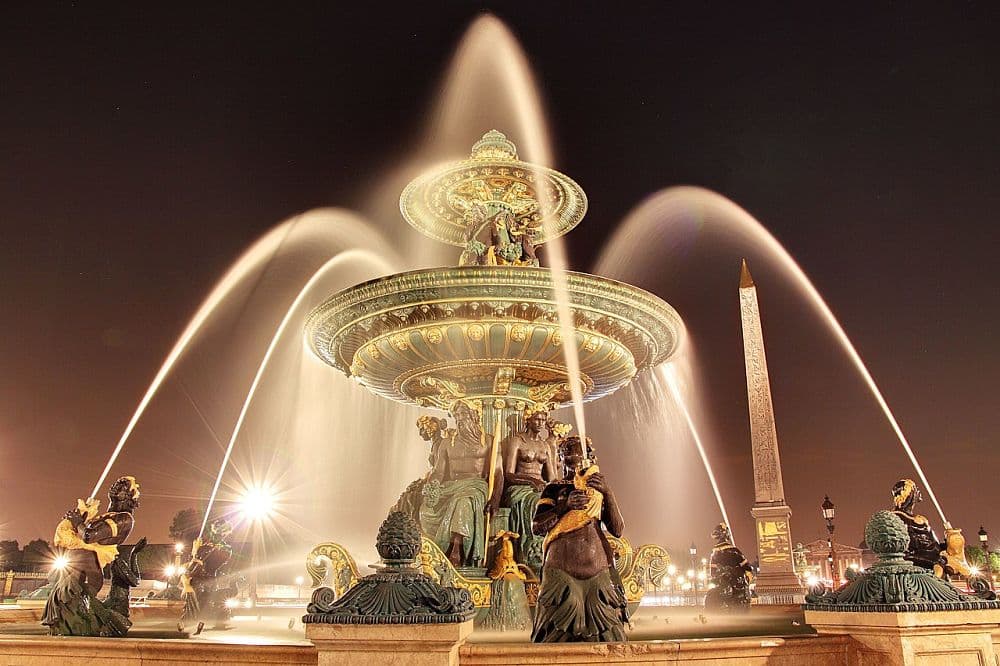
Paris’s Rue Royale is a short 282-metre-long street located in the 8th arrondissement, linking Place de la Concorde to the square and Église de la Madeleine. It serves as a grand entrance to the surrounding luxury district, featuring Haussmannian architecture, a rich history, and prestigious hotels. A delightful street to explore on foot.
The Origins of Rue Royale in Paris
Rue Royale in Paris was once a marsh connecting Place Louis XV (Place de la Concorde) to the site where the Église de la Madeleine now stands. Architect Ange-Jacques Gabriel (the younger), while designing Place de la Concorde, also created this street, lined with grand townhouses for the aristocracy.
The Origin of the Name
This Rue Royale in Paris replaced the “Porte Saint-Honoré,” which stood at the corner of Rue Saint-Honoré, built under Louis XIII and destroyed in 1733.
The street was laid out in accordance with the letters patent of 21 June 1737, by which King Louis XV ordered “that the façades of the buildings to be erected in the new street be designed in a uniform architectural style.”
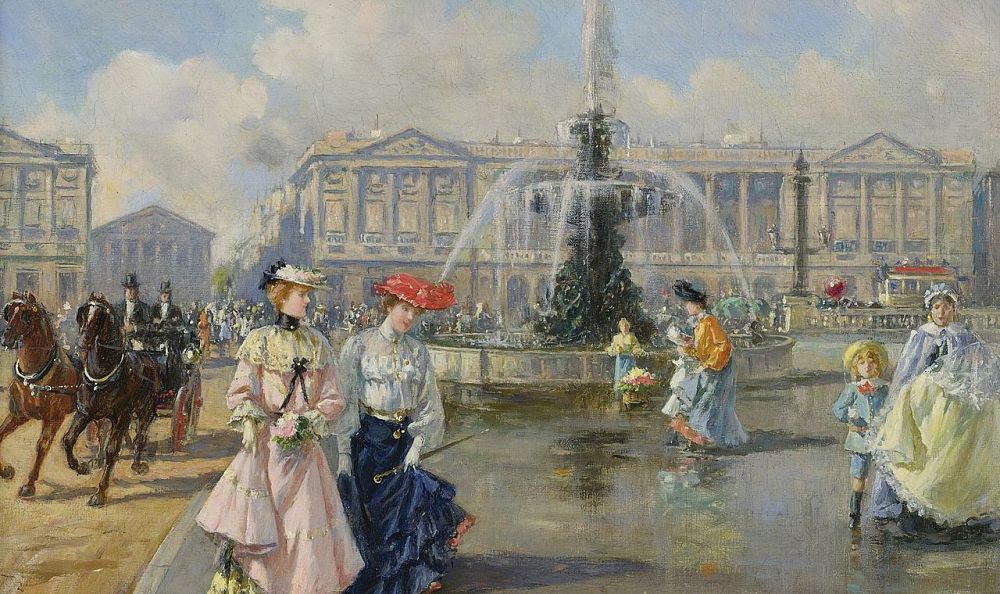
The street leading to Place Louis XV (later renamed Place de la Concorde), created around 1755–1760 with the king’s statue at its centre, was naturally named “Royale.”
Over the centuries, the street has witnessed a rich history:
royal processions
the French Revolution
Haussmann’s transformations
the Paris Commune uprising
the great Parisian gastronomic houses
It is, in a way, a condensed reflection of several centuries of the capital’s history.
Construction of the first section of the street
This is the section of Rue Royale located between Place de la Concorde (formerly Place Louis XV) and the streets of Saint-Honoré and du Faubourg-Saint-Honoré.
The "Rue Royale des Tuileries," as it was then called, was begun in 1758, following a uniform façade design by Ange-Jacques Gabriel.
This sumptuous real estate development was conceived to accompany the creation of Place Louis XV (now Place de la Concorde). It was primarily carried out by the architect and contractor Louis Le Tellier, who replicated similar decorative plans and formulas from one lot to the next.
The buildings feature five levels, with the second floor always being the noble floor. The grand staircase is located at the junction of the courtyard return and the street-facing building.
The southern end of the street, leading to Place de la Concorde, is framed by two identical townhouses designed by Gabriel, whose columned façades overlook the square. These are the Hôtel de la Marine to the east (now a museum) and the Hôtel des Monnaies to the west (now the Hôtel de Crillon and home to the Automobile Club de France).
Construction of the Second Section of Rue Royale
By ordinance on June 20, 1824, the area around the Église de la Madeleine was redeveloped and several new streets opened, while Rue Royale was extended. King Louis XVIII died on September 16, 1824, and did not live to see the result.
The extension of rue Royale between rue Saint-Honoré and the Madeleine Church, increasing its width from 22.80 m to 43 m. The then-current "plan d'occupation des sols" specified:
Article 1: The alignments of new constructions are clearly defined on the plan.
Article 2: Owners of neighboring buildings will be required to comply with the indicated alignments for any construction they wish to erect.
Rue Royale Today
Today, rue Royale in Paris is a prestigious thoroughfare, home to the most renowned luxury brands, particularly in fashion (Gucci, Dior and others) and gastronomy.
The buildings along rue Royale perfectly embody the 19th-century Paris envisioned by Haussmann:
ashlar stone façades
wrought-iron balconies
monumental alignment
wide sidewalks
For many foreign visitors, it is "the Paris of postcards," best explored on foot—especially during the Christmas illuminations.
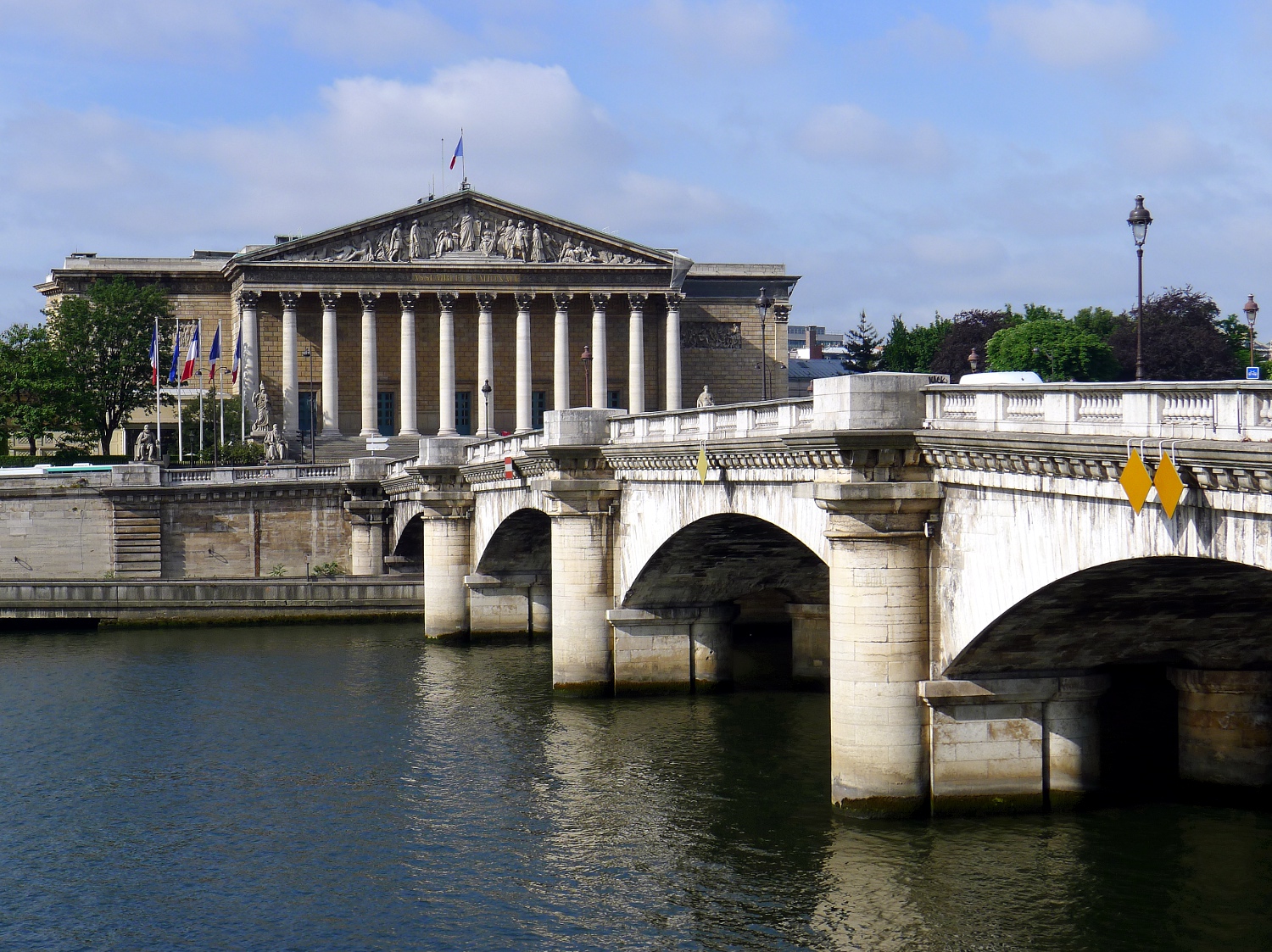
Don’t miss the view framed by the buildings of the National Assembly to the west, across Place de la Concorde and the Seine, as well as the Église de la Madeleine to the east.
Rue Royale in Paris: the gateway to a prestigious Parisian district of luxury
Rue Royale connects the iconic Place de la Concorde (and the Jardin des Tuileries) to the Église de la Madeleine. It also intersects the prestigious Rue du Faubourg Saint-Honoré and Rue Saint-Honoré. Just 200 m away are Place Vendôme and its luxury jewellers, watchmakers and high-end jewellers.
A short stroll past Maxim’s leads to the Galerie Royale and its luxury boutiques, and on Place de la Madeleine, the Galerie de la Madeleine.
Less than 500 m away, the Opéra Garnier takes you straight to the Grands Magasins of Galeries Lafayette and Printemps Haussmann.
This is also where you’ll find the famous and historic Maxim’s restaurant, as well as the equally renowned (9 Place de la Madeleine) Lucas Carton, the Cordon Bleu Café de la Madeleine (in the Hôtel de la Marine, Place de la Concorde), and Ladurée Paris Royale, world-famous for its macarons. Rue Royale runs perpendicular to Rue Saint-Honoré and the Champs-Élysées via Place de la Concorde.
Rue Royale and its history
Rue Royale and the 1770 crowd disaster
On May 30, 1770, during the celebrations for the wedding of the Dauphin (the future Louis XVI) and Marie Antoinette, a deadly stampede left 132 dead and many injured. How had Paris’s famed police force, envied throughout Europe, failed so spectacularly?
As evening fell, spectators thronged toward the place Louis-XV (now place de la Concorde). The Attorney General Séguier estimated their number at 400,000, while the writer Louis-Sébastien Mercier claimed that two out of three Parisians were outdoors.
Chaos erupted when the crowd in the square tried to head north to the fair on the boulevards, while the fairground workers sought to reach place Louis-XV. The two streams collided on the rue Royale, blocked by a line of waiting carriages.
In the wake of the tragedy, the Parliament of Paris launched an inquiry in response to public outrage.
The investigation was likely to involve the city’s top police officials, the prévôt des marchands (head of the Parisian municipality), the Bureau de la Ville, the Lieutenant General of Police and the Châtelet, as well as the officers of the Parisian guard and militia.
The inquiry revealed a lack of cohesion among the forces responsible for maintaining order.
Following the investigation, new regulations confirmed the Lieutenant General of Police’s future dominance over public order.
The Revolution and rue Royale in Paris
With a name like that, Rue Royale was bound to be a prime target during the French Revolution. Around 1792, it was renamed “Rue de la Révolution.” Later, it became “Rue Royale Saint-Honoré,” and then, in 1795, “Rue de la Concorde”—a move meant to calm tensions during those turbulent times, reflecting the new name of the Place Louis XV, which had just been rechristened Place de la Concorde.
It finally regained its original name by prefectural decree on April 27, 1814.
The 1871 Paris Commune uprising and the burning of Rue Royale
The bloody revolt of the Commune, which began in Montmartre and engulfed Paris in the spring of 1871, did not spare Rue Royale.
It was only toward the end of the insurrection, however, that the buildings at numbers 15, 16, 19, 21, 23, 24, 25, and 27 were set ablaze. The area suffered heavy damage during the fighting. The fire began on May 24, 1871, five days before the end of the Commune uprising.
From residential street to one of Paris’s most exclusive shopping districts
The transformation was slow after the Restoration.
From the late 19th century onward, however, Rue Royale became one of Paris’s leading hubs for luxury commerce.
The great jewellers left the Palais-Royal district to settle on rue Royale nearby. Today, it is home to luxury brands such as Chanel, Dior, Gucci and Cerruti, as well as the headquarters of L'Oréal, the globally renowned cosmetics company.
Rue Royale: remarkable buildings and monuments steeped in history
No. 1, on the north side of rue Royale, the former Hôtel des Monnaies
This is where the treaties recognising the independence of the United States of America were signed by France under Louis XVI.
The first treaty recognising the independence of the United States was signed on 6 February 1778 by Benjamin Franklin, Silas Deane, Arthur Lee and the Frenchman Conrad Alexandre Gérard. The name "Hôtel des Monnaies" comes from the fact that the centralisation of coin production had been considered for this building. However, the final choice for this institution was made elsewhere, in the building at 6 quai Conti, in the 6th arrondissement.
Between the Place de la Concorde and the Maxim's restaurant
On the south pillar of the entrance to No. 1, a reproduction of a 1914 French mobilisation poster can be seen. The original poster, long forgotten and damaged by time, has been replaced by a similar one, protected by a display case.
No. 2 rue Royale is now home to the Musée Hôtel de la Marine. Until the French Revolution, it served as the Garde-Meuble de la Couronne, where royal furniture was stored.
For the next two centuries, it housed the headquarters of the French Navy until 2015, when it was fully restored. Part of the building is now a museum under the auspices of the Centre des Monuments Nationaux and open to the public.
No. 3: this is the Hôtel de Richelieu. The Maxim’s restaurant has occupied this address since 1893.
It is distinguished by its Art Nouveau façade and interior décor (1899).
Maxim’s is now owned by the heirs of fashion designer Pierre Cardin.
In 2020, the restaurant is open from Wednesday to Saturday, for lunch from 12:30 to 14:00 and for dinner from 19:30 to 22:00.
No. 5: former address of the Molyneux fashion boutique, founded in 1919.
Edward Molyneux, nicknamed “Captain Molyneux,” was born in London on 5 September 1891 and died in Monte Carlo on 23 March 1974. He was a British fashion designer and perfumer.
In 1935(?), the perfume Rue Royale (sic) is said to have been created here.
No. 6: Hôtel Le Roy de Senneville, built in 1769 by Louis Le Tellier for Jean-François Le Roy de Senneville (1715–1784).
It was later occupied by Marc-Antoine Randon de La Tour, treasurer-general of the King’s Household, sentenced to death by the Revolutionary Tribunal on 7 July 1794 and guillotined on the same day.
Madame de Staël rented the apartment overlooking the courtyard during her final stay in Paris, beginning in October 1816. She lived there in seclusion after suffering a stroke in February 1817 while on her way to a ball at the home of the Duc Decazes. She died on 14 July 1817 in a house belonging to Sophie Gay, near the rue Neuve-des-Mathurins.
In 1881, before also occupying No. 9, the renowned interior decoration firm Jansen established itself in the bay to the left of the carriage entrance, incorporating Madame de Staël’s former apartment.
To the right of the carriage entrance, in 1901, the jeweller Fouquet commissioned a striking Art Nouveau-style interior for his shop. It was designed by Alfons Mucha and executed with the assistance of Maison Jansen.
On the upper floor, two drawing rooms have retained their original décor from the 1770s.
The cobbled passage still features its flat vaulted ceiling.
The grand staircase, with its wrought-iron balustrade in Louis XV style, remains intact.
No. 8: Hôtel de La Tour du Pin-Gouvernet, built in 1769 by Louis Le Tellier. The architect Ange-Jacques Gabriel once lived there.
Adrien Hébrard, owner of the Hébrard foundry, set up a gallery there where he exhibited works by his artists.
In 1933, the haute couture house Jenny Sacerdote moved in. It closed in 1940.
No. 9: hotel built by Louis Le Tellier after 1781.
Louis-Nicolas-Joseph Robillard de Péronville, father of Jacques-Florent Robillard, Baron of the Empire under Napoleon Bonaparte and publisher of the *Musée Royal* for Napoleon Bonaparte and the *Musée National*, died there on 24 July 1809.
Jacques-Florent Robillard, Baron de Magnanville, was born on 19 July 1757 in Étampes and died on 5 April 1834 in Versailles. A French merchant, he was one of the first regents of the Bank of France, then a private institution representing the 200 wealthiest French families ("the 200 families"). The Bank of France was eventually nationalized in 1946 by General de Gaulle.
In the same building on Rue Royale, François Alexandre Frédéric de La Rochefoucauld-Liancourt died on 27 March 1827. Founder in 1780 of an engineering school several years before the École Polytechnique (1794), this *Grande École* still exists today under the name ENSAM (École nationale supérieure des Arts et Métiers). He was an intimate of Louis XVI.
A staunch advocate of constitutional monarchy, he was isolated at Court. It was he who announced to the king the storming of the Bastille as he rose on 15 July 1789. “But is this a revolt?” Louis XVI exclaimed, alarmed by the people’s unrest. He replied: “No, sire, it is a revolution.”
The Duke traveled extensively abroad before and after the Revolution to study the best industrial and agricultural techniques. He tested them on his estate in Liancourt (70 km north of Paris) before 1789, and even more so after his return from exile as an émigré.
When he died in 1827, students from the École des Arts et Métiers, who had come from Compiègne to Paris to pay their respects to their benefactor, were denied the right to carry his coffin. They clashed with official agents who refused to let go. The Duke’s coffin was opened on the pavement…
The Duke now rests in the family vault at the Liancourt cemetery (Oise). His first funerary monument was reconstructed in the “ferme de Liancourt,” a property of the Fondation des Ingénieurs des Arts et Métiers. Today, it serves as a conference center.
The Ingénieurs Arts et Métiers also own a private mansion at 9 bis, avenue d’Iéna – 75116 PARIS, between Trocadéro and the Arc de Triomphe. Its sumptuous salons house a gourmet restaurant, once reserved for members but now open to all at moderate prices (tel. 33 1 40 69 27 00).
No. 11: Hotel built by Louis Le Tellier, after 1781. The large salon with beveled corners was reinstalled in Paris at the Nissim-de-Camondo Museum, and the bedroom at the Palacio Errázuriz (es), the Museum of Decorative Arts in Buenos Aires. Queen Nathalie of Serbia (1859-1941) lived here. Brunner exhibition room in 1910. No. 13: Hotel built by Louis Le Tellier, also after 1781. The writer Jean Baptiste Antoine Suard, permanent secretary of the Académie française, died here on July 20, 1817. A salon from the apartment overlooking the street was reinstalled at the Philadelphia Museum of Art, in Philadelphia (Pennsylvania).
No. 14, corner of rue Saint-Honoré: On the site of the Crédit Lyonnais agency, which has been present since at least 1910, a cabaret called La Porte Saint-Honoré stood at the end of the 19th century. This name recalled the former gate of Louis XIII’s city walls, which once stood here and was demolished in 1733. The physiologist Claude Bernard lived in this house in 1859.
On April 5, 1939, the building became the headquarters of L’Oréal, whose main shareholder at the time was Eugène Schueller, and whose descendants (the Bettencourt Meyers family) still are today.
The company’s premises occupy all the buildings at this address, extending as far as rue Saint-Florentin, which runs parallel to it.
No. 15: Heurgon Jewelers, founded in 1865. Since then, this famous Parisian brand has expanded throughout the building and up to 25, rue du Faubourg-Saint-Honoré. This PARIS 8 boutique is located just a few dozen meters away, at 58, rue du Faubourg Saint-Honoré, 75008 Paris.
No. 16: The Ladurée pastry shop was founded at this address on rue Royale in 1862. In 1871, after the building was destroyed by fire during the Commune, the pastry shop was transformed into a tea salon.
Ernest Ladurée had the idea of combining Parisian coffee culture with pastry-making, thus giving birth to one of the capital’s first tea salons. It became a meeting place for women who had abandoned the more fashionable circles.
The building is listed and has retained the same decor since its reconstruction after the fire. Ladurée remains a thriving company, still renowned for its macarons, with several shops in Paris and around the world.
No. 20: Photographer Eugène Druet opened an art gallery here in 1908.
No. 21: This building housed the Weber brasserie from 1899 to 1961. Before 1914, it was a gathering place for writers, journalists, and artists.
After the riots of February 6, 1934 (a Paris street demonstration organized by several far-right leagues; police opened fire, killing 15 demonstrators), the wounded were taken to Weber for first aid.
From 1905 onwards, it was owned by hotelier Arthur Millon, then by his son-in-law René Kieffer (1880–1945).
No. 22: The Duke of Pasquier died at this address in 1862.
No. 23: Built in 1907 on the site of an old Evangelical Missions hall and a temporary theatre known as the Théâtre Royal (1906). In 1889, photographer Eugène Pirou had his studios here.
No. 24: Jean-Jacques Lubin (1765–1794), painter and member of the Paris Commune insurrection, was guillotined on 11 Thermidor, Year II (29 July 1794). He lived at 24, rue de la Révolution (formerly rue Royale) at the time of his execution.
Môme, a humorist of the Belle Époque era, renowned for his biting wit, absurd humour, and wordplay—including holorhymes. He is sometimes regarded as one of the greatest storytellers in the French language.
No. 25: Entrance to the Cité Berryer, which extends to 24 rue Boissy-d'Anglas and was once the site of the Aguesseau market, inaugurated in July 1746.
From 1927 to 1987, the fifth floor housed the Keystone photographic press agency.
It was in 1746, on an undeveloped plot of land, that this district was born at the border between the Cour de Commerce and the hidden Passage. The area was highly sought after at the time. The structures and façades of the buildings, classified as historic monuments since 1987, were preserved during the renovations of the 1990s.
Nowadays, it is no longer food shops but luxury boutiques (Dior, Chanel, Alain Martinière...) that line the Cité Berryer. Its charming houses, flower-filled balconies, old cobblestones, and vintage street lamps create a picturesque scene.
Nos. 27 and 3 Place de la Madeleine, a building that once housed the Brasserie Autrichienne, severely damaged by shelling during the Commune (second half of May 1871). The Larue Restaurant, opened in the same location in 1886, welcomed Proust in the early 1900s, and from 1924 to 1925, hosted the monthly "Dîner Bixio" dinners.
No. 33 (demolished building). This was a drinks establishment called the Irish and American Bar, frequented by Henri de Toulouse-Lautrec, who sketched it several times, including depictions of Gabriel Sue and the clown duo Foottit and Chocolat.
To see nearby (and book if necessary)
You can enjoy exploring the surroundings by taking our self-guided walks from Place de la Concorde:
Walk from the Arc de Triomphe to Concorde via the Champs-Élysées
Walk from the Louvre to Concorde via the Tuileries and Place Vendôme
Walk from the Opéra Garnier to the Grands Magasins Lafayette and Place de la Concorde
But you can also see or visit (and book online when available) the following Points of Interest:
Musée du Jeu de Paume – Book tickets for Musée du Jeu de Paume
Musée des Arts décoratifs - Reservation Musée des Arts décoratifs – Not available – Ticket purchase on site
Fondation Cartier for Contemporary Art - Book Fondation Cartier tickets
And for a relaxing moment on the waters of the Seine with nearby boarding
Paris Canal Cruises - Port de Solférino - Book Seine and Canal Saint-Martin Cruise – Port Solferino – Musée d’Orsay – Parc de la Villette
Batobus River Shuttle - Stops at Place de la Concorde, Musée d’Orsay or Louvre - Book Batobus River Taxi (9 stops) (Hop-on Hop-off – 1 or 2-day pass – Easy way to travel between museums)
Bonus: 5 essential tips to help you organize and enjoy your stay in Paris
Have you noticed that our website provides you with tools to help you easily organize your trip to Paris so that your stay is a success without stress?
1. Phrasebook Translator for those who don’t speak French fluently
Do you struggle to find the right word or phrase in French? Click here on PHRASEBOOK – or at the top right of your screen. It’s a glossary of 100 useful words and/or phrases for a tourist visiting Paris (At the restaurant, Hotel, Shopping, Metro, Greetings, Asking for directions, etc.). Eight languages are available. And guess what? Each word and phrase can also be heard aloud in French.
2. The VPBY Itinerary Generator
There’s so much interesting and educational to see in Paris. A well-organized stay is highly recommended. To help you, we offer you FREE access to our Itinerary Generator.
In 5 minutes and 5 clicks, you’ll get your half-day-by-half-day visit schedule, with all reservations—if you want, no obligation—for the sites you wish to visit. Reservations for your transport (plane, train, or car) and your accommodation are also included. Even suggestions for valuable gift souvenirs for you, your friends, and your family.
How does it work?
Click on "Paris stay organizer"—completely free—which will save you the hassle of trying to see as much as possible in the shortest time. Then you’ll need to choose:
1/ You select your "general interests" by clicking on the list (Museums, Churches, Monuments, Parks, etc.);
2/ The VPBY Stay Generator then provides you with all relevant listings;
3/ You select by clicking on the names of the museums, monuments, parks, or activities you wish to include;
4/ The organizer returns your itinerary for each day of your stay;
5/ with geographically optimized daily visits—if you wish—to avoid tedious and tiring travel.
It takes just 5 clicks and 3 minutes. And it’s completely free. To use it, click on "Paris Stay Organizer"
Note: Want to know what users of the VPBY Stay Generator think of their experience? Click on "They planned their trip with VPBY"
3. List of Reservations to Make
To avoid wasting time queuing, we recommend making your reservations online a few days in advance. All official reservations are useful and available on our website:
Reservations to enter museums, monuments, shows, and Seine River cruises
Reservations for your arrival in France: flights, trains, and cars
Reservations for your accommodation: hotels, apartments, guesthouses – in Paris or nearby
You’ll find links to all these reservations directly in the articles about the attractions that interest you or in the self-guided itineraries of our walks. By clicking on "Reservations" in the header bar, you’ll have access to all the reservations you’ll need during your stay. For example:
Notre-Dame de Paris entry reservation (Free entry but reservation recommended to avoid queues)
Book tickets for Château de Versailles: Entry + Gardens Access + Trianon Estate
4. Collectible Photo Souvenirs of Paris
These are collectible HD photos available in digital format or as long-lasting prints (75 to 100 years). Their size ranges from postcard to large format (1 m or more on one side). A lifetime keepsake to decorate your home. High-quality souvenirs (unlike typical plastic Eiffel Towers or snow globes). At very affordable prices. Click on:
5. Take home a personalized photo report of your Paris stay
Professional photographers will capture Paris at the spots you choose or we recommend. Ideal for families, weddings, and other special events. Sessions last from 1 hour to a full day. The best quality-to-price ratio. Click here: