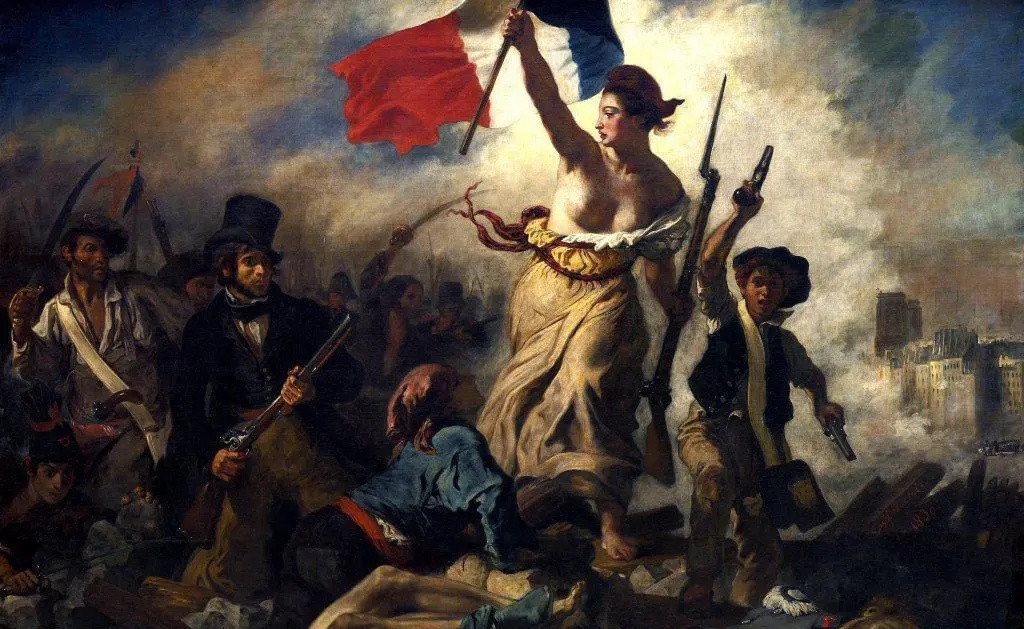
13 Key Rulers in 2000 Years of French History: These are the characters of an epic novel. For two thousand years, leaders have shaped the destiny of France. Some have left their mark through their courage. Others, through their vision or boundless ambition.
13 Key Rulers in 2000 Years of French History: Exceptional Figures
Who are the figures who built France? We count only 13 key leaders over 2,000 years. This is an assessment that may not be entirely objective, but it certainly aligns with the views of most historians. They range from legendary kings to charismatic emperors, or simply extraordinary individuals whose legacy still resonates today. Their decisions shaped our culture, our borders, and even our identity. Paris, Notre-Dame (rebuilt after the fire), Versailles, and the battlefields bear their mark.
This journey through 13 exceptional destinies reveals the major turning points in our country’s history. From Vercingetorix to de Gaulle, discover how these leaders changed the course of history. Ready to dive into France’s most captivating pages?
Vercingetorix: the first resistor against Rome and symbol of Gallic unity
Vercingetorix embodies the first great resistance against Rome. As chief of the Arverni, he united the Gallic tribes in 52 BCE. His name means "king of the great warriors." He boldly defied Julius Caesar.
His victory at Gergovia marked a turning point. The Gauls repelled the Roman legions. But the defeat at Alesia changed everything. Vercingetorix surrendered to spare his men. He was executed after six years in captivity.
Today, he symbolizes Gallic unity. His statue stands in Alesia, the site of his defeat. Visitors can explore this historic site. Also discover Notre-Dame de Paris, another monument steeped in history.
Notre-Dame entry booking (Entry is free, but booking the day and time of your visit is recommended to avoid the queue)
Vercingetorix remains a mythical figure. His courage still inspires. He represents the fight for freedom. A hero who shaped the early days of France.
To learn more about the history of Paris, explore our 11 classic books about Paris. They reveal iconic places and their fascinating past.
Clovis: The foundational baptism of Christian France and the birth of a dynasty
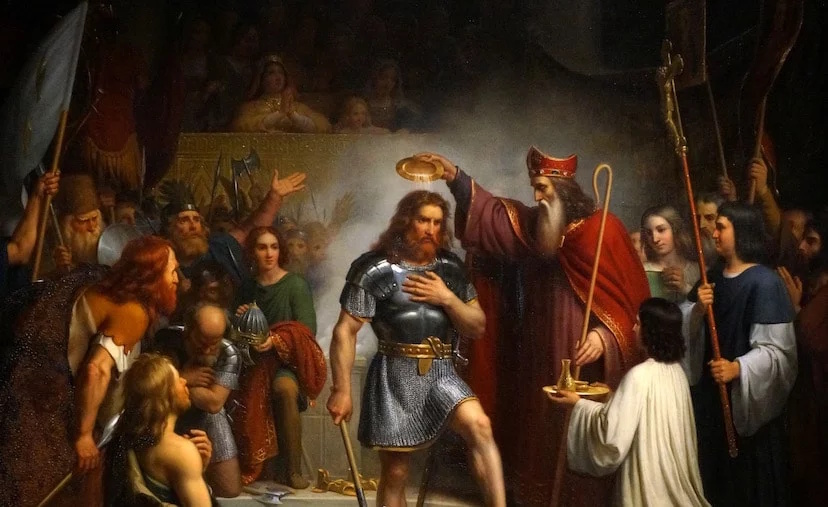
Clovis ruled from 481 to 511. He embodies the first Frankish king to unite the Germanic tribes. His baptism marks a turning point for France. He adopts Christianity around 496. This choice seals the alliance with the Church. He lays the foundations for a lasting kingdom.
Clovis’s conversion changes history. It binds political power and religion. The king is baptised in Reims, a city that will become the site of royal coronations. Notre-Dame de Paris, the future cathedral, will symbolise this union.
Clovis expands his territory by force, defeating the Visigoths and the Alamanni. His reign solidifies Frankish Gaul and establishes a dynasty: the Merovingians. His successors will rule for two centuries. Clovis dies in 511, leaving behind a political and religious legacy.
His tomb is in Paris. The Basilica of Saint-Denis holds his remains. This place becomes the necropolis of the kings of France. Clovis remains a key figure. He unites the Franks and Christianizes Gaul. His baptism founds Christian France.
Charles Martel: The savior of Europe against Muslim invasions at Poitiers
In 732, Europe trembles. Muslim troops, coming from Spain, advance northward. Their goal? To conquer Gaul. At their head, the governor Abd al-Rahman. Standing against them is a man: Charles Martel. His name means "the hammer." He will strike hard.
Charles Martel is not a king. He is Mayor of the Palace, a key position under the Merovingians. But he holds real power. His army, made up of infantry and cavalry, faces the invaders near Poitiers. The battle is fierce. For seven days, the two sides observe each other.
On October 25, 732, the decisive confrontation took place. Charles Martel led his troops with bold strategy. He repelled the Muslim cavalry, long considered invincible. Abd al-Rahman died in battle. The invaders retreated. Europe was saved.
This victory altered the course of history. It halted Muslim expansion into Western Europe. Charles Martel became a hero. His son, Pepin the Short, founded the Carolingian dynasty. His grandson, Charlemagne, would forever shape the history of France.
Today, Poitiers commemorates this battle. A place steeped in history to discover on a trip to France. Charles Martel remains the symbol of resistance against invasion.
Charlemagne: The emperor with the flourishing beard, father of medieval Europe and the Carolingian Renaissance
Charlemagne reigned from 768 to 814. He stands out in history as a giant of the Middle Ages. His empire stretched across much of Western Europe. He unified territories under a single authority.
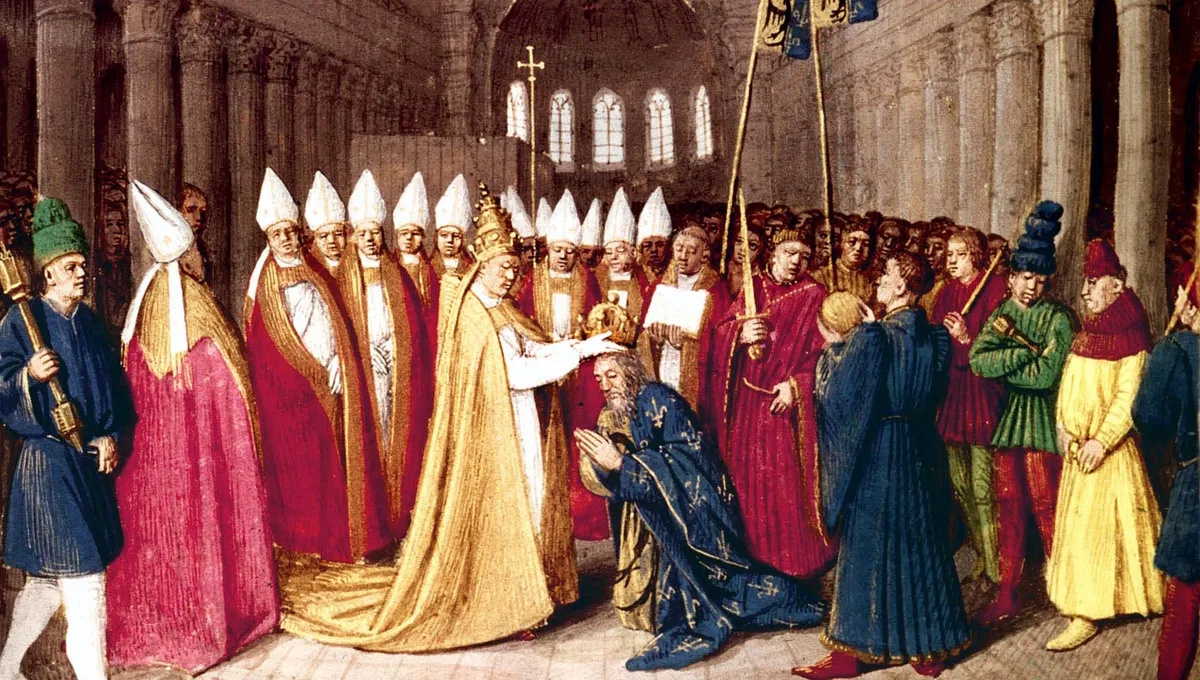
Crowned emperor in 800, he revived the idea of a Western Roman Empire. His reign saw the birth of a cultural renaissance. The arts, education, and architecture flourished like never before. The Carolingian Renaissance laid the foundations for modern Europe.
Charlemagne also modernized administration. He established counties and sent out *missi dominici* to oversee his vast empire. His legacy still influences European institutions today. Discover how Versailles, a symbol of royal power, draws inspiration from this era.
His reign also marks a religious turning point. He imposes Christianity in his conquests. Churches and monasteries become centers of knowledge. The cathedral Notre-Dame de Paris, later on, will embody this tradition.
Charlemagne dies in 814. His empire fragments, but his influence endures. He remains a major figure in the history of France and Europe.
Hugh Capet: The Rise of the Capetians and the Building of a Lasting Kingdom
Hugh Capet marks a turning point in French history. In 987, he becomes King of the Franks. His election puts an end to the Carolingian dynasty. He founds the line of the Capetians, who will reign for more than 800 years.
His reign consolidates royal power. He relies on the Church and local lords. He establishes the hereditary transmission of the crown. Thus, his son Robert II succeeds him without contestation. This stability strengthens monarchical authority.
Hugh Capet controls a modest territory. He rules over the Île-de-France and a few provinces. Yet, he lays the foundations for a unified kingdom. His successors will gradually expand this domain. Versailles, later on, will symbolize this power.
His legacy is immense. The Capetians build a centralized France. They create lasting institutions. Their dynasty shapes the national identity. Without Hugh Capet, modern France would not exist.
Also discover the Crown Jewels of France, witnesses to this royal history.
Book a visit to Versailles (Multiple options and combined tours)
Book the Versailles and Monet Tour (Giverny)
Saint Louis: The Just King and Crusader, Model of Christian Monarchy
Louis IX, better known as Saint Louis, reigned from 1226 to 1270. He embodies the ideal of the Christian king. His reign marks the peak of the French medieval monarchy. He was canonized in 1297 for his piety and justice.
He reformed the justice system by banning judicial duels. He established the presumption of innocence and introduced impartial investigations. The poor could now appeal directly to the king. His sense of fairness still inspires us today.
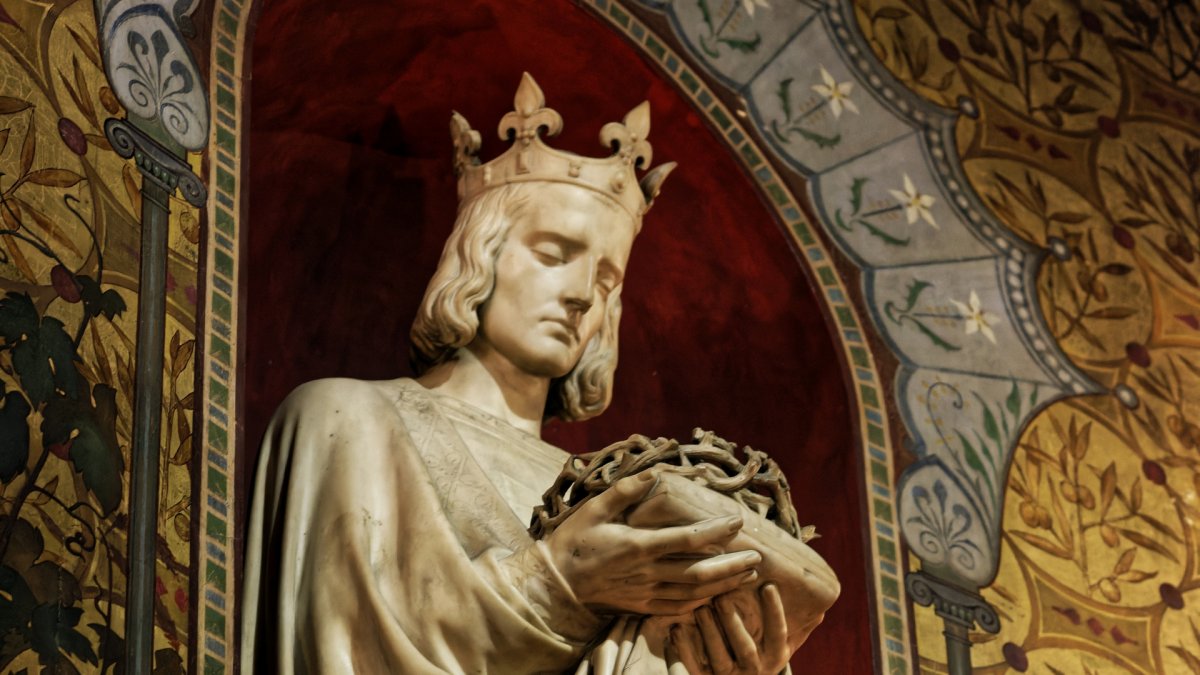
Passionate about relics, he acquired the Crown of Thorns of Christ. To house it, he commissioned the Sainte-Chapelle, a masterpiece of Gothic art. This monument embodies his devotion.
He led two crusades, in 1248 and 1270. The first ended in failure and his capture. The second cost him his life, as he succumbed to the plague in Tunis. His sacrifice cemented his image as a martyred king.
Saint Louis left a lasting legacy. He modernized administration and strengthened royal authority. His reign laid the foundations for a powerful and respected monarchy. Discover his influence during a visit to Versailles, where his legacy endures.
Joan of Arc: The Heroine of the Hundred Years' War and National Icon
Joan of Arc was born in 1412 in Domrémy, in Lorraine. At the age of 13, she began hearing divine voices. These voices commanded her to free France from the English. The Hundred Years' War had been raging for nearly a century.
In 1429, she convinced the dauphin Charles to entrust her with an army. Dressed as a man, she led the troops to victory at Orléans. This battle marked a turning point. Charles VII was crowned king in Reims, just as she had predicted.
Captured by the Burgundians, she was sold to the English. Tried for heresy, she was burned at the stake in Rouen in 1431. She was only 19 years old. Her trial was reviewed in 1456, and she was exonerated, becoming a martyr.
Today, Joan of Arc is a major figure in French history. Her courage still inspires. She embodies resistance and faith. Discover her legacy at Notre-Dame de Paris, where statues pay tribute to her. Her story is also told in iconic books about Paris.
As a symbol of the nation, she is celebrated every year. Her myth transcends borders. Joan of Arc remains a timeless icon.
Francis I: The Renaissance King, Patron of the Arts and Rival of the Habsburgs
Francis I reigned from 1515 to 1547. He embodies the peak of the French Renaissance. His reign marked a cultural and political turning point. The king attracted the greatest artists to his court.
Leonardo da Vinci dies in Amboise in 1519. He leaves behind masterpieces like the Mona Lisa. Francis I also modernizes the Loire Valley châteaux. Chambord and Blois become architectural gems. Explore France’s royal heritage to discover these treasures.
Politically, he faces off against Charles V. Their rivalry shapes Europe. The Battle of Pavia in 1525 leaves a deep mark on him. Despite this, he strengthens royal authority. He imposes French as the administrative language.
François Ier laid the foundations for a powerful France. His patronage and reforms left a lasting mark. French Renaissance owes much to him.
Henri IV: The good King Henry, peacemaker and modernizer of France
Henry IV embodies one of France’s most beloved monarchs. Born in 1553, he ended the Wars of Religion by issuing the Edict of Nantes in 1598. This historic decree granted Protestants the freedom to worship, restoring civil peace after decades of bloody conflict.
Nicknamed the “Good King Henry”, he earned his reputation through pragmatism and his close bond with the people. His famous line, “A chicken in every pot on Sundays,” reflects his determination to improve daily life for the French. He also modernized the country by boosting agriculture, expanding roads, and fostering trade.
His reign marks a turning point for Paris. He launches major works, such as the Place des Vosges or the Pont Neuf. These projects transform the capital into a more functional and elegant city. To learn more about Paris’s architectural heritage, discover the Renaissance of Notre-Dame, another symbol of the city.
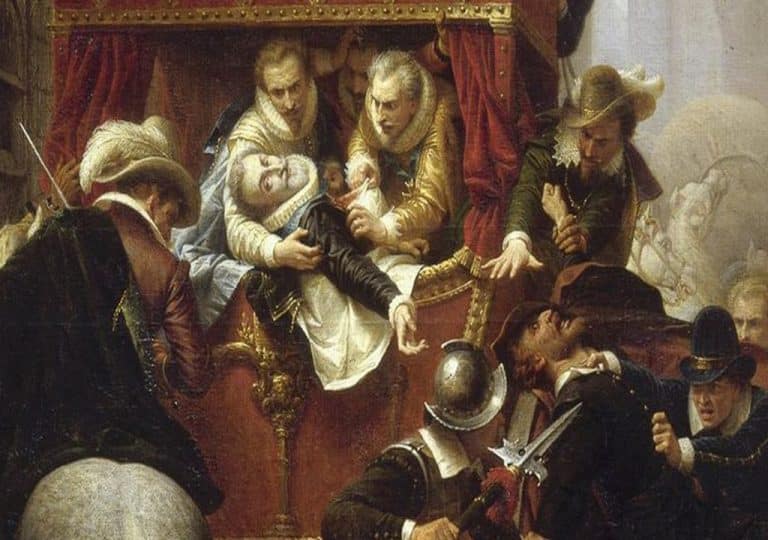
Henri IV is assassinated in 1610 by Ravaillac, a religious fanatic. Yet his legacy endures. He lays the foundations for a united and prosperous France, paving the way for the reign of Louis XIV. His influence is still felt today in the streets of Paris, where his name remains associated with tolerance and progress.
Louis XIV: The Sun King, the height of absolute monarchy and Versailles
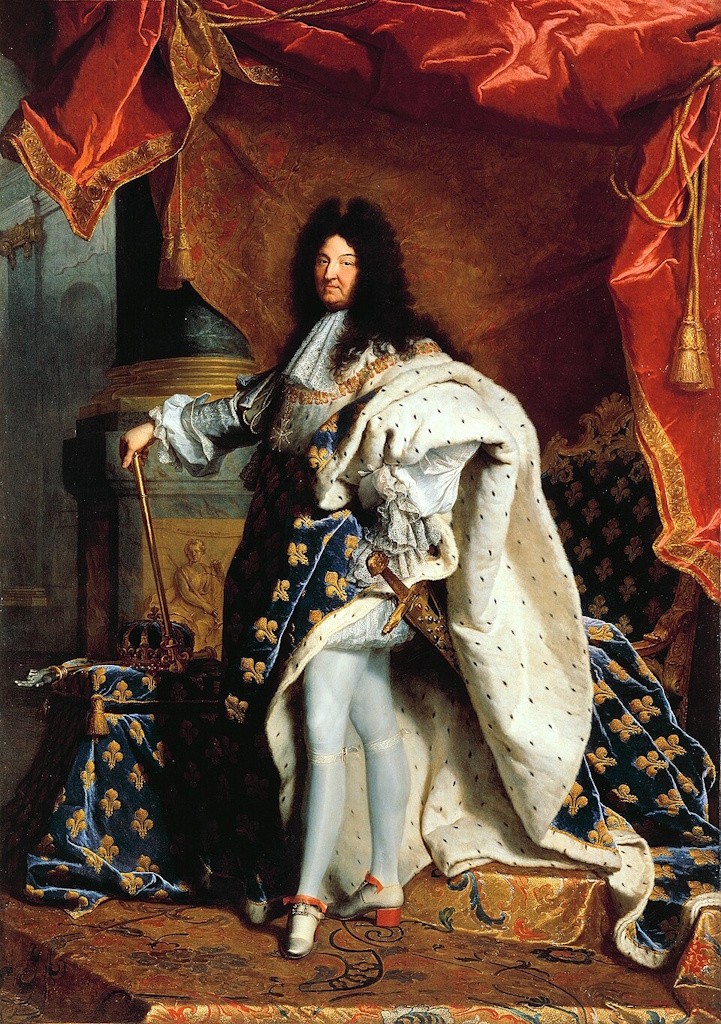
Louis XIV ruled for 72 years. This is the longest reign in French history. He embodies absolute monarchy. His power is limitless. He famously declared: « L’État, c’est moi » (I am the state).
He transformed Versailles into a symbol of his might. The château became the center of power. Nobles lived there under close watch. The court shimmered with opulence. Discover how to plan your visit to Versailles to step back in time.
Louis XIV waged costly wars, expanding French territory. Yet the kingdom’s finances were drained. His reforms left a lasting mark on France. French culture shone across Europe.
His reign left a mixed legacy—glory and decline intertwined. Versailles endures as an architectural masterpiece, a testament to his boundless ambition.
The Crown Jewels shine brightly during his reign. Discover their tumultuous history and their secrets.
Napoleon I: The military genius and reformer, founder of the First Empire
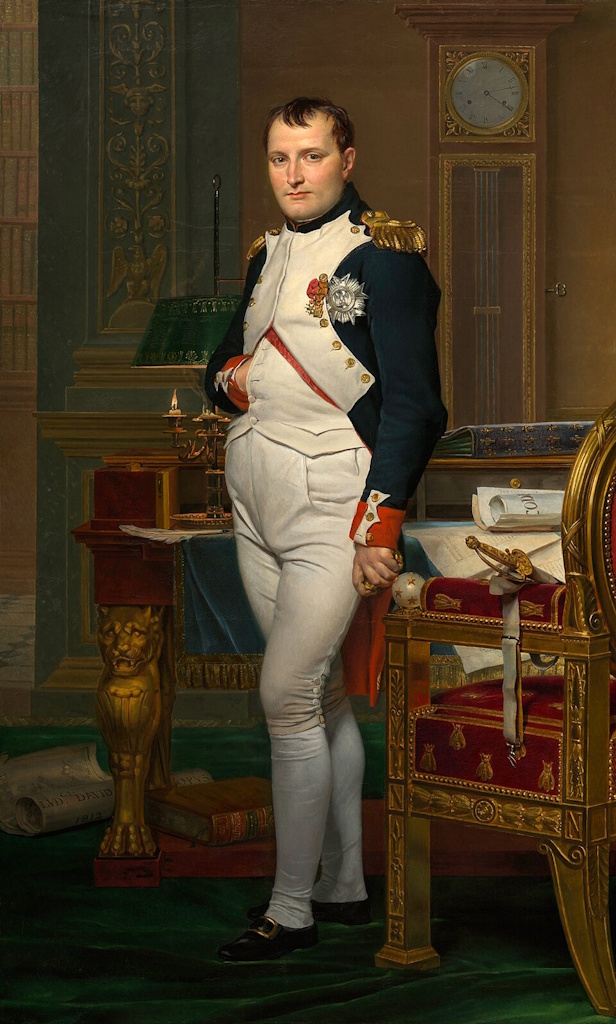
Napoleon Bonaparte left an indelible mark on French history through his military genius. Born in Corsica in 1769, he established himself as an unparalleled strategist. His victories, such as at Austerlitz in 1805, are still studied in military academies. He reshaped Europe and founded the First Empire in 1804.
His legacy extends far beyond the battlefield. Napoleon profoundly reformed France. He established the Civil Code, still in force today. High schools, the Bank of France, and the baccalaureate were all born during his reign. These measures modernized the country and inspired neighboring nations.
Paris also bears his mark. The Arc de Triomphe, commissioned by Napoleon, celebrates his victories. Discover its history on a stroll from the Eiffel Tower to the Palais de Chaillot. These monuments reflect his ambition to make Paris the capital of an empire.
His reign ended in 1815, after the defeat at Waterloo. Exiled to Saint Helena, he died in 1821. Yet his influence endured. Napoleon remains a controversial but unavoidable figure. His mark on France and Europe is indelible.
Napoleon III: The last emperor, modernizer of Paris and driving force behind the great works
Napoleon III, nephew of Napoleon I, ruled from 1852 to 1870. He was the last emperor of the French. His reign marked a turning point for Paris. He transformed the capital into a modern city.
Under his leadership, Baron Haussmann redesigned Paris. Grand boulevards replaced medieval alleys. Parks like the Bois de Boulogne came into being. These works improved hygiene and traffic flow.
Napoleon III also modernized infrastructure. He developed railways and ports, encouraged industrialization, and made Paris a model for Europe.
His reign also saw the birth of the Second Empire. He promoted the arts and culture, and the World’s Fairs of 1855 and 1867 placed Paris at the heart of the world. Discover Avenue Montaigne, a symbol of this Parisian luxury.
Despite his successes, his reign ended abruptly. The defeat against Prussia in 1870 brought the Empire to an end. Napoléon III remains a key figure in French history.
Charles de Gaulle: The liberator and founder of the Fifth Republic, a 20th-century icon
Charles de Gaulle embodies the spirit of resistance and France’s grandeur. Leader of the Free French Forces during World War II, he rejected the 1940 armistice. His 18 June 1940 Appeal from London marked the beginning of the fight against Nazi occupation. He became the symbol of liberation in 1944, triumphantly entering Paris alongside the Allies.
After the war, he founded the Fifth Republic in 1958. His goal? To restore stability and prestige to France. He endowed the country with a strong Constitution, strengthening the executive branch. His foreign policy, marked by national independence, made France a respected power. He left office in 1969, leaving a lasting mark on history.
De Gaulle remains an essential figure. His legacy is still visible today, notably through iconic landmarks like the Palais de Chaillot, where he delivered historic speeches. His influence extends beyond France’s borders, inspiring future generations.
To discover other great French figures, explore the history of the Paris Olympics, born during his era. De Gaulle shaped modern France, blending tradition and modernity.