Henri IV and the Reconquest of the Throne was an epic that unfolded like a swashbuckling adventure film in a political and religious climate that lasted more than 15 years. But it was a true story, a part of French history.
After spending more than three years as a hostage at the French court, he took advantage of the turmoil of the Fifth War of Religion to escape on 5 February 1576. Once reunited with his supporters, he returned to Protestantism, this time by abjuring Catholicism on 13 June of that same year.
Note: You will find at the end of the text 1/ A photo gallery related to Henri IV 2/ Your Bonus: 5 essential tips for planning and enjoying your stay in Paris
The court of Nérac: the calm before the storm
In 1577, he took a cautious part in the Sixth War of Religion led by his cousin the Prince of Condé (a Huguenot).
Henri now faced the distrust of the Protestants, who reproached him for his lack of religious sincerity. He distanced himself from the province of Béarn, which remained firmly under Calvinist control. He also faced even greater hostility from the Catholics.
In December 1576, he nearly died in a trap set in the town of Eauze. Bordeaux, the capital of his governorship, refused him entry. Henri then settled along the Garonne, in Agen and Lectoure, which had the advantage of being close to his château of Nérac. His court was composed of noblemen from both faiths. His advisors were mainly Protestants, such as Duplessis-Mornay and Jean de Lacvivier.
From October 1578 to May 1579, the queen mother Catherine de Médicis came to see him to complete the pacification of the kingdom. Hoping also to make him more compliant, she brought back his wife, Marguerite.
For several months, the couple of Navarre lived in luxury at the château of Nérac. The court indulged in hunting, games, and dancing, much to the dismay of the Protestant pastors. Henri himself gave in to the pleasures of seduction. He fell successively in love with two of the queen’s ladies-in-waiting: Mlle Rebours and Françoise de Montmorency-Fosseux.
The Events Between 1580 and 1590 – Henri de Navarre Becomes the Heir to King Henri III
This period was marked by twists and turns, as well as crucial decisions Henri de Navarre had to make.
Henri then took part in the Seventh War of Religion, reignited by his fellow Protestants. During the capture of Cahors by his army in May 1580, he managed to prevent looting and massacre despite five days of street fighting. This earned him great prestige, both for his courage and his humanity.
On a personal level, between 1582 and 1590, Henri de Navarre maintained a relationship with the Catholic Diane d’Andoins, to whom he promised marriage. The king’s romantic escapades created discord within their union, which remained childless. Marguerite’s departure for Paris (1585) sealed their definitive break.
In 1584, François, Duke of Anjou and Alençon, the younger brother and heir to the throne of King Henri III of France, died without an heir. Having no children himself, King Henri III considered designating Henri de Navarre as his legitimate heir. He sent the Duke of Épernon to invite him, in vain, to convert and return to court.
A few months later, Henri III was forced to sign the Treaty of Nemours as a pledge of good faith to the Holy League. He then declared war on the Protestants and outlawed them. Rumor had it that, overnight, half of the future mustache of Henri IV turned white.
Restored to his Protestant faith, he was excommunicated again by the Pope and then had to face the royal army, which he defeated at the Battle of Coutras in 1587.
Une série de meurtres après 1588
The year 1588 was marked by many twists of fate. On March 5, 1588, the sudden death of Prince Henri de Condé placed the King of Navarre at the head of the Huguenots.
On December 23, 1588, in a "stroke of majesty," King Henri III of France had Duke Henri de Guise (leader of the anti-Protestant League, which had grown too powerful) assassinated, and the next day his brother, Cardinal Louis.
The shift in the political situation pushed the French monarchs Henri III of France and Henri III of Navarre (the future Henri IV) to reconcile through a treaty signed on April 30, 1589. United against the Catholic League, which controlled Paris and much of the kingdom, they managed to besiege the capital in July of that same year. But they failed to take it.
On August 1, 1589, King Henry III was himself assassinated by Jacques Clément, a fanatical Catholic monk. Before dying the next day from a wound to the lower abdomen, he officially recognized his brother-in-law, King Henry III of Navarre, as his legitimate successor. He thus became Henry IV, King of France. On his deathbed, Henry III advised him to convert to the religion of the majority of the French.
Henry IV and the reconquest of the throne: King of France and Navarre, a king without a kingdom
The long reconquest of the kingdom by Henry IV then began. Indeed, three-quarters of the French population refused to recognize a Protestant noble as king. Meanwhile, the Catholic League refused to validate the legitimacy of this succession.
Henry IV and the reconquest of the throne, a king alone against the League
In 1589, aware of his weaknesses, Henry IV first had to rally minds. The Catholic royalists demanded that he renounce Protestantism, he who had already changed religions three times before the age of nineteen. He refused, but in a declaration published on August 4 (three days after the assassination of Henry III), he stated that he would respect the Catholic faith. Many remained reluctant to follow him, whether Catholic or Protestant. Some Protestants, like La Trémoille, even left the army, which shrank from 40,000 to 20,000 men.
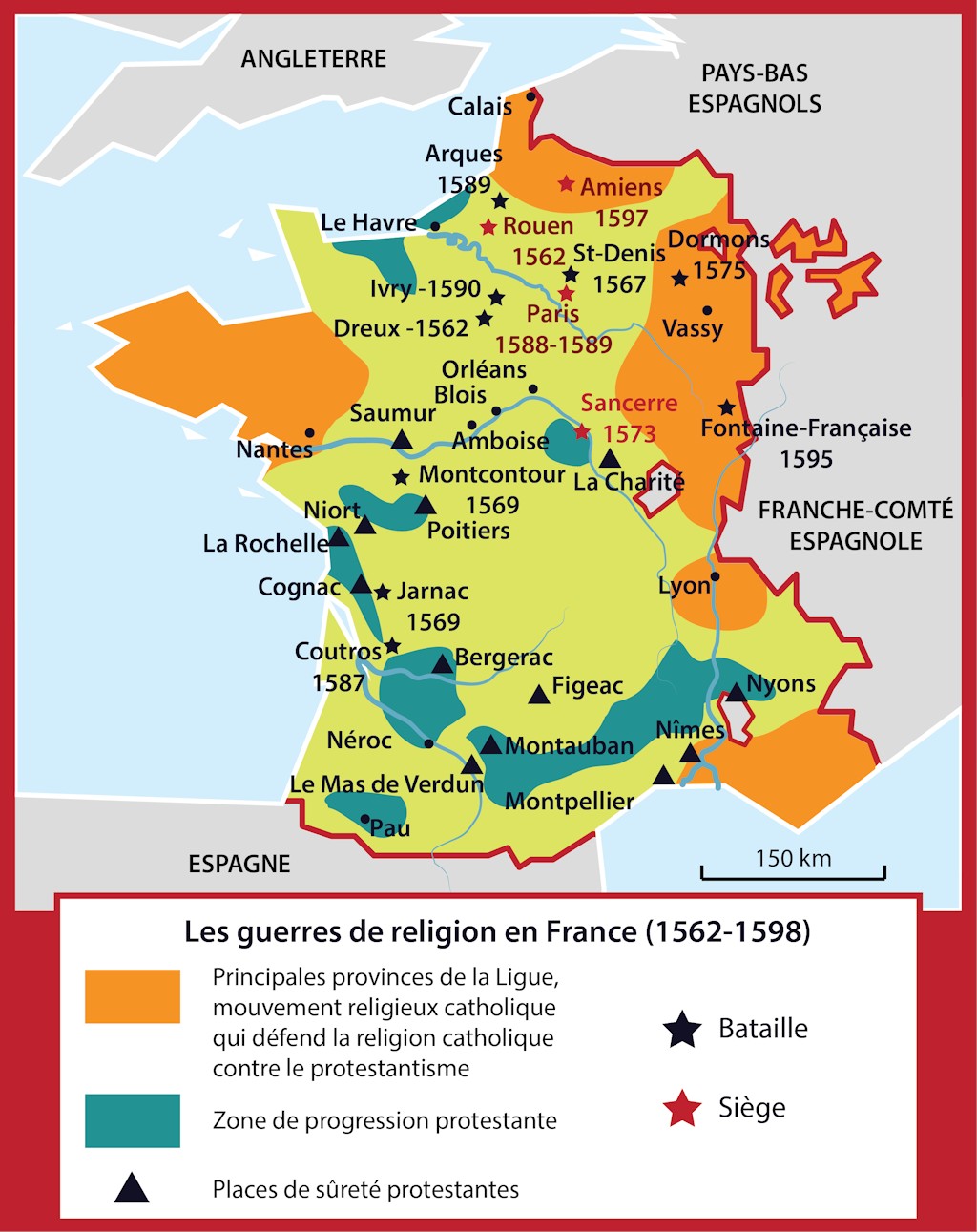
Weakened, Henry IV had to lift the siege of Paris, as nobles returned home, refusing to serve a Protestant. Yet he won a victory over Charles of Lorraine, Duke of Mayenne, on September 29, 1589, at the Battle of Arques. The king’s 10,000 men crushed the 35,000 League troops, a victory likened to David’s triumph over Goliath.
In addition to the support of certain nobles, the Huguenots and moderates were reassured by this steadfast and humane war leader. Added to this were the backing of Conti and Montpensier (princes of the blood), Longueville, Luxembourg and Rohan-Montbazon (dukes and peers), marshals Biron and d’Aumont, as well as a great many nobles (from Champagne, Picardy, and Île-de-France).
He then failed to retake Paris but seized the town of Vendôme. Once again, he made sure that the churches remained intact and that the inhabitants did not suffer from the passage of his army.
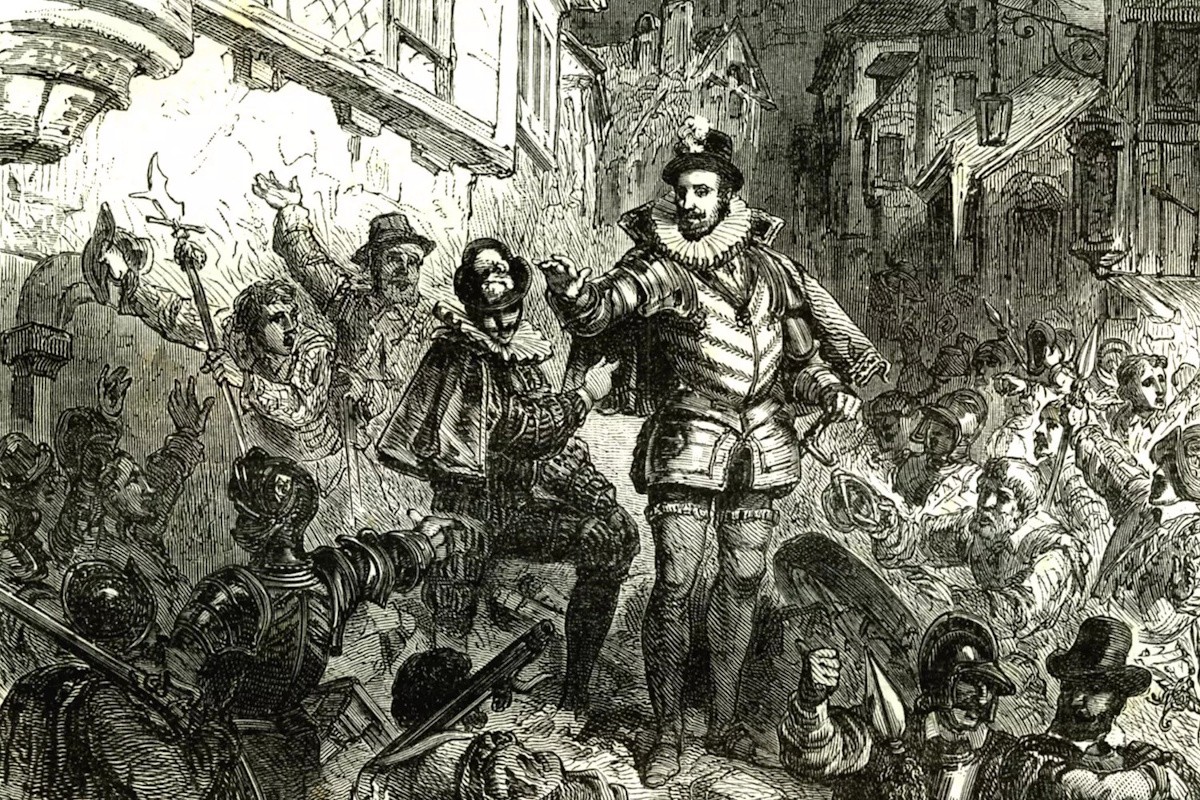
Thanks to this example, all the towns between Tours and Le Mans surrendered without a fight. He defeated the League and the Spanish again at Ivry on 14 March 1590, where the myth of the white plume was born. According to Agrippa d’Aubigné, Henri IV is said to have cried out: “Rally to my white plume, you will find it on the path to victory and honour.”
Henri IV and the reconquest of the throne: religion regains its strength
The Protestants reproached him for not granting them freedom of worship. In July 1591, through the Edict of Mantes (not to be confused with the Edict of Nantes of 1598), he reinstated the provisions of the Edict of Poitiers (1577), which granted them only very limited freedom of worship.
The Duke of Mayenne, then at war with Henri IV, convened the Estates-General in January 1593 with the aim of electing a new king to replace Henri IV. But he failed: the Estates negotiated with Henri IV’s party, secured a truce, and then obtained his conversion.
Encouraged by the love of his life, Gabrielle d’Estrées, and aware of the exhaustion of the opposing forces—both morally and financially—Henri IV, a shrewd politician, chose to abjure his Calvinist faith. On April 4, 1592, in a declaration known as the "expedient," he announced his intention to be instructed in the Catholic faith.
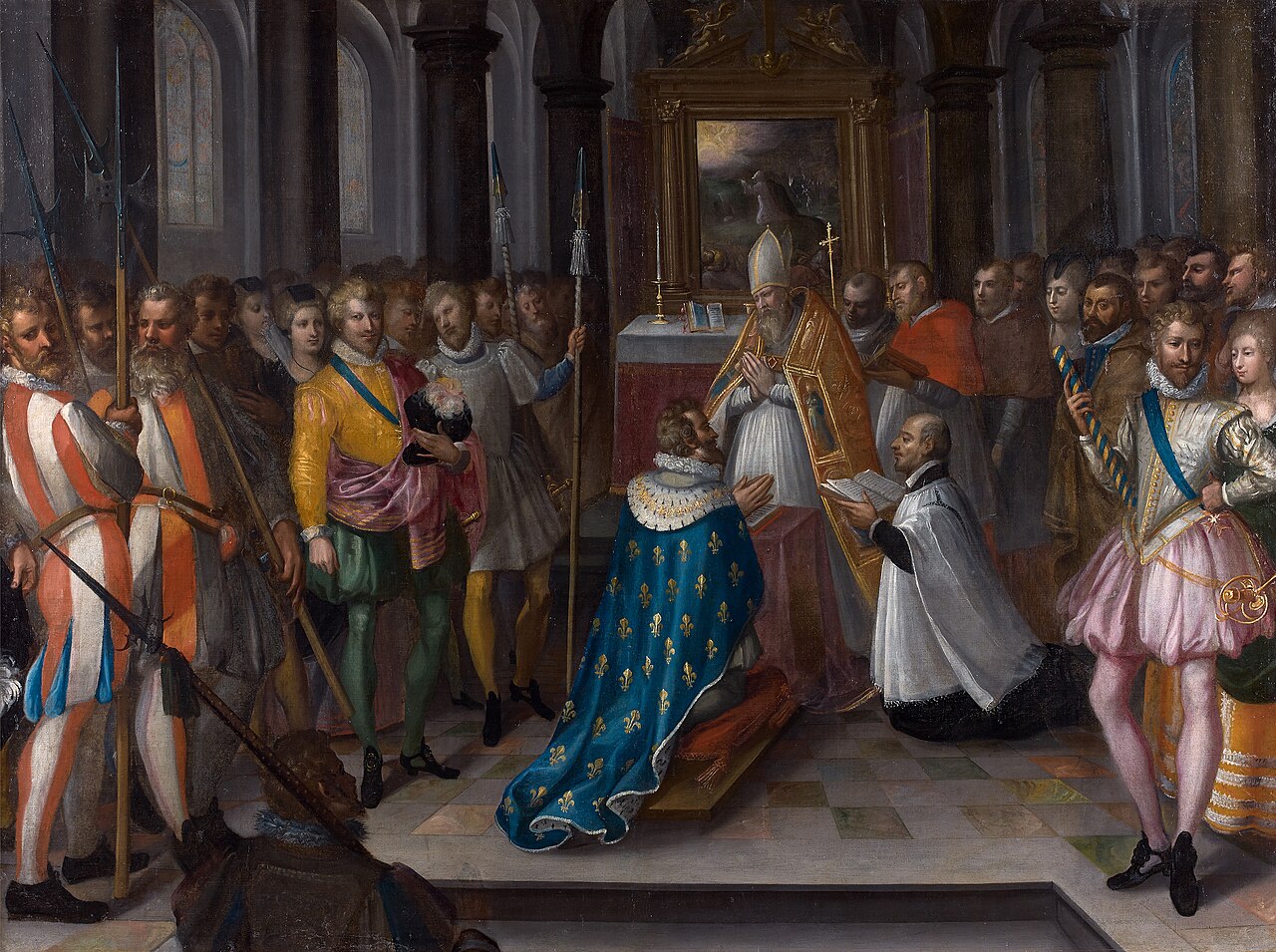
Henri IV solemnly abjured Protestantism on July 25, 1593, at the basilica of Saint-Denis near Paris, where he was baptized by Jacques Davy du Perron. He is often mistakenly credited with the phrase "Paris is well worth a Mass" (1593), though in reality, the sentiment behind the words seems entirely fitting.
Henri IV and the reconquest of the throne: abjuration before the coronation
To hasten the allegiance of cities and provinces (and their governors), he multiplied promises and gifts, for a total of 25 million livres. The resulting tax increase (a multiplication by 2.7 of the *taille*) provoked a revolt in the provinces most loyal to the king: Poitou, Saintonge, Limousin, and Périgord.
In early 1594, Henri IV successfully laid siege to Dreux before being crowned king in the Chartres Cathedral on February 27, 1594.
He was one of only three French kings to be crowned outside Reims and Paris, cities then held by the League’s army.
He nevertheless made his entry into Paris on March 22, 1594, where he issued edicts proclaiming his royal pardon. He finally obtained absolution from Pope Clement VIII on September 17, 1595. Gradually, the entire nobility and the rest of the population rallied behind Henri IV. With a few exceptions, such as Jean Châtel, who attempted to assassinate him on December 27, 1594, at the Hôtel du Bouchage near the Louvre.
He definitively defeated the League’s army at Fontaine-Française.
Henri IV finally king in his own right
The war against Spain and Savoy
In 1595, Henri IV officially declared war on Spain. The last French League supporters, financially backed by Philip II of Spain, were then branded as “traitors.”
But Henri IV struggled greatly to repel Spanish attacks in Picardy. The Spanish took Amiens, and Spanish troops also landed in Brittany. There, the governor Philippe-Emmanuel de Lorraine, Duke of Mercœur, still refused to recognize Henri IV, putting the king in a perilous situation. After all, he was a cousin of the Guise family and brother-in-law of the late King Henri III.
Another challenge came from the Protestant nobility, which stayed out of the fighting. Like La Trémoille and Bouillon, they were shocked by Henri IV’s conversion to Catholicism. With the Protestants in full retreat, they accused the king of abandoning them. They regularly gathered in assemblies to revive their political organization, even going so far as to seize royal taxes for their own purposes.
But Henri IV took control. After subduing French Brittany, ravaging Franche-Comté, and retaking Amiens from the Spanish, he signed the Edict of Nantes in April 1598, establishing peace between Protestants and Catholics.
Nantes was the seat of the governor of Brittany, the Duke of Mercœur, who was also the last of the rebels. In total, the nobility’s ralliements cost 35 million livres tournois.
With both armies exhausted, the Peace of Vervins between France and Spain was signed on 2 May 1598. After decades of civil war, France was finally at peace.
But this was not the end for Henri IV. He waged a “battle for the Edict of Nantes” to secure its acceptance by the various parliaments of the kingdom. The last of these was Rouen’s, in 1609.
However, the clause in the Treaty of Vervins concerning the Duke of Savoy sparked a new war. On 20 December 1599, Henri IV received Charles-Emmanuel I of Savoy at Fontainebleau to settle the dispute. In March 1600, the Duke of Savoy requested a three-month reflection period, then returned to his lands.
Once this period had elapsed, Henri IV summoned Charles-Emmanuel to learn his intentions. The prince replied that war would be less harmful to him than the peace being offered. Henri IV declared war on him on 11 August 1600, leading to the Treaty of Lyon* in 1601.
*Treaty of Lyon, 17 January 1601.
This was a territorial exchange between Henri IV and Charles-Emmanuel I, Duke of Savoy: the latter ceded to France the Bresse, the Bugey, the Pays de Gex and the Valromey, territories that had belonged to the Duchy of Savoy for several centuries, but in return obtained control of the Marquisate of Saluzzo, in Italy.
The marriage of Henri IV to Marie de Médicis
In 1599, Henri IV was approaching his fiftieth year and still had no legitimate heir. For several years, Gabrielle d’Estrées had shared his life, but as she did not belong to a reigning family, she could not claim the title of queen. Her sudden death in the night of 9 to 10 April 1599, likely due to puerperal eclampsia, allowed the king to consider marrying a new wife worthy of his rank.
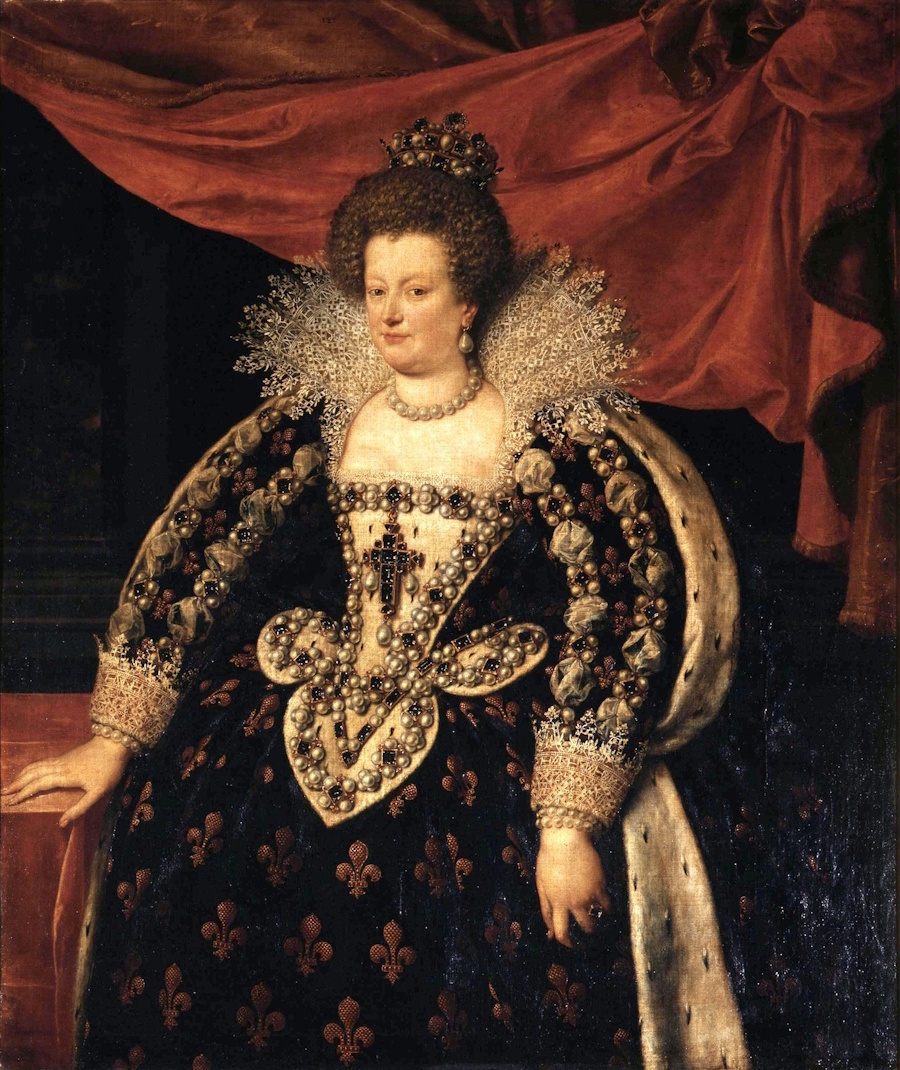
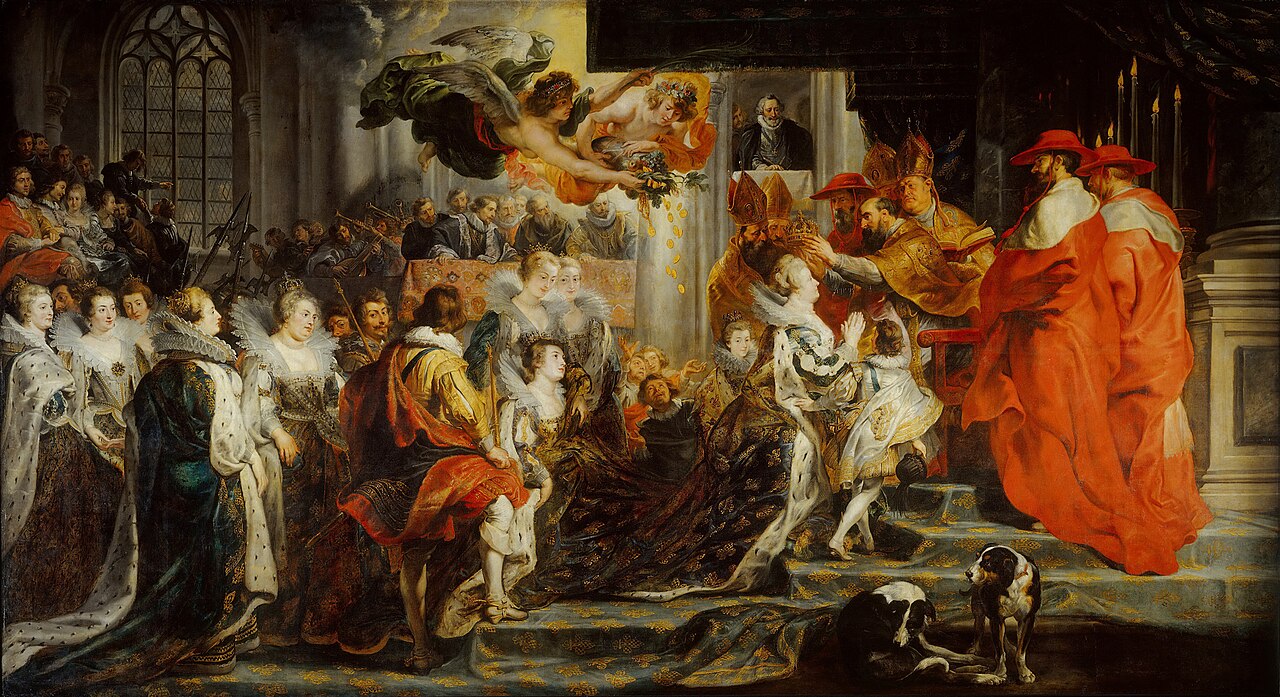
In October 1599, he had his marriage to Queen Marguerite annulled, and then, on 17 December 1600, he married Marie de Médicis. She was the daughter of François Ier de Médicis and Jeanne d’Autriche, niece of Ferdinand Ier, Grand Duke of Tuscany. This marriage proved doubly advantageous. First, the dowry erased a full year’s worth of debts, and Marie de Médicis gave birth to the dauphin Louis (the future Louis XIII) on 26 September 1601, thus securing the future of the Bourbon dynasty.
Henri IV and his other mistresses
But Henri IV would remain Henri IV until his death. He compromised his marriage and risked his crown through his extra-marital affairs.
First, Henriette d’Entragues, a young ambitious woman, blackmailed the king to legitimize the children she had borne him. When he refused her demands, Henriette d’Entragues multiplied her plots against her royal lover. In 1602, as Henri IV was presenting his goddaughter, Louise de Gondi, at the priory of Saint-Louis in Poissy—she would later become prioress in 1623—he was struck by the beauty of Louise de Maupeou, whom he pursued.
In 1609, after other liaisons, Henri fell for the young Charlotte-Marguerite de Montmorency. That year, she entered the service of Queen Marie de Médicis, wife of Henri IV.
It was during a ballet rehearsal that she captivated the king, then aged 56, though she was only 14.
In May 1609, Henri IV broke off Charlotte’s engagement to the Marquis de Bassompierre and married her to a prince of the blood, Henri II de Bourbon-Condé. Henri IV counted on the complacency of his cousin, reputed to prefer men. However, as a husband, he could not tolerate the king’s persistent advances toward his wife and left the court with her. Henri IV followed them into the provinces and tried to approach her under various disguises. To escape him, Condé took his wife to Brussels, capital of the Spanish Netherlands, then under Habsburg rule.
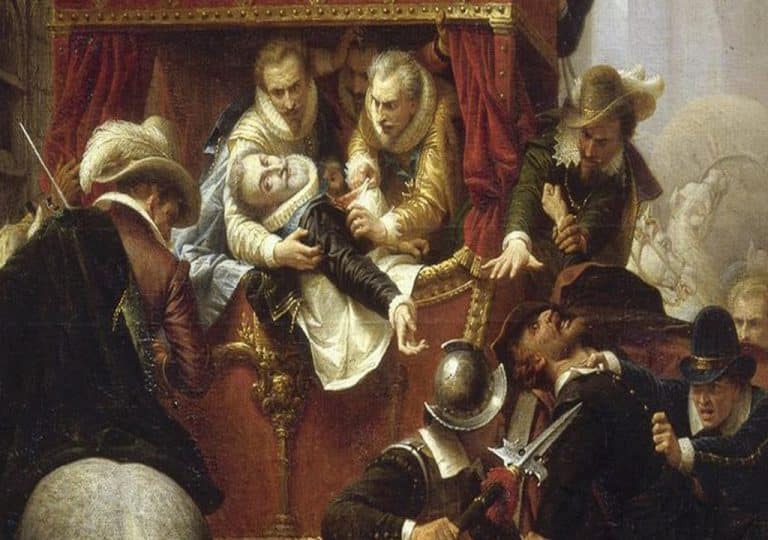
The great military campaign in Europe against the House of Habsburg that Henri IV had planned to launch on 17 May 1610—was it a pretext to “free” Charlotte, exiled in Brussels? Or was it the other way around? In any case, the war never took place: Henri IV was assassinated on 14 May 1610. To be continued ...
Bonus: 5 key tips to help you plan and enjoy your stay in Paris
Did you notice that our site provides tools to help you easily organize your trip to Paris so that your stay is a stress-free success?
1. Phrasebook Translator for Those Not Fluent in French
Having trouble finding the right word or expression in French? Click here on PHRASEBOOK – or at the top right of your screen. This is a lexicon of 100 useful words and/or expressions for a tourist visiting Paris. You’ll feel at ease at a restaurant, hotel, while shopping, on the metro, greeting people, asking for directions, and more. Eight languages are available. And guess what? You can also listen to each word and expression in French.
2. The VPBY Stay Generator
There are many interesting and educational things to see in Paris. A well-organized stay is highly recommended. To help you, we offer you, FREE OF CHARGE, our Stay Generator.
In just 5 minutes and 5 clicks, you’ll get your half-day-by-half-day sightseeing itinerary. And on top of that, all the bookings—if you want, with no obligation—for the sites you wish to visit. Reservations for your transport (plane, train, or car) and your accommodation are also included. Even suggestions for valuable gift souvenirs for you, your friends, and your family.
How does it work?
Click on “Paris Stay Organizer,” completely free, which will save you the hassle of trying to see as much as possible in the shortest time. Then you’ll have to choose:
1/ Select your "general preferences" by clicking on the list (Museums, Churches, Monuments, Parks, etc.);
2/ The VPBY Stay Generator then provides you with all relevant listings;
3/ You select by clicking on the names of the museums, monuments, parks, or activities you wish to include;
4/ The organizer returns your itinerary for each day of your stay;
5/ with geographical optimization of daily visits—if you so desire—to avoid tiring and tedious travel.
This is done in 5 clicks and just 3 minutes. And it’s completely free. To use it, click on "Paris Stay Organizer".
Note: Want to know what users of the VPBY Stay Generator think of their experience? Click on "They planned their trip with VPBY".
3. List of Reservations to Make
You have free access to our database to "tame" Paris (Click on Paris Guide) and discover Paris (Click on Places to Visit). And to avoid wasting time in lines, we recommend making your reservations directly online a few days in advance. All official reservations are available on our website:
Reservations to enter museums, monuments, shows, and Seine cruises
Reservations for your arrival in France: flights, trains, cars
Reservations for your accommodation: hotels, apartments, guesthouses – in Paris or nearby
You will find links for all these bookings directly in the articles of the visits that interest you or in the self-guided routes of our walks. By clicking on "Bookings" in the header bar, you will have access to all the reservations you will need during your stay. For example:
Book Notre-Dame de Paris entry (Free entry but reservation recommended to avoid queues)
Book Château de Versailles: Entry Ticket + Gardens Access + Trianon Estate
4. Bring Home Collector’s Photos of Paris as Souvenirs
These are high-definition collector’s photos available in digital format or as long-lasting prints (75 to 100 years). Their size ranges from postcard to large artwork (up to 1 m on each side or more). A lifelong keepsake to adorn your home. Quality souvenirs (unlike the typical snow globes or plastic Eiffel Towers). At very affordable prices. Click here:
5. Return with a personalized photo report of your stay in Paris
Professional photographers reportage in Paris at locations of your choice or suggested by us. A "family", wedding, or other event reportage. From 1 hour to a full day. The best quality-to-price ratio. Click on: