L'Oréal, global leader in cosmetics, a billionaire family
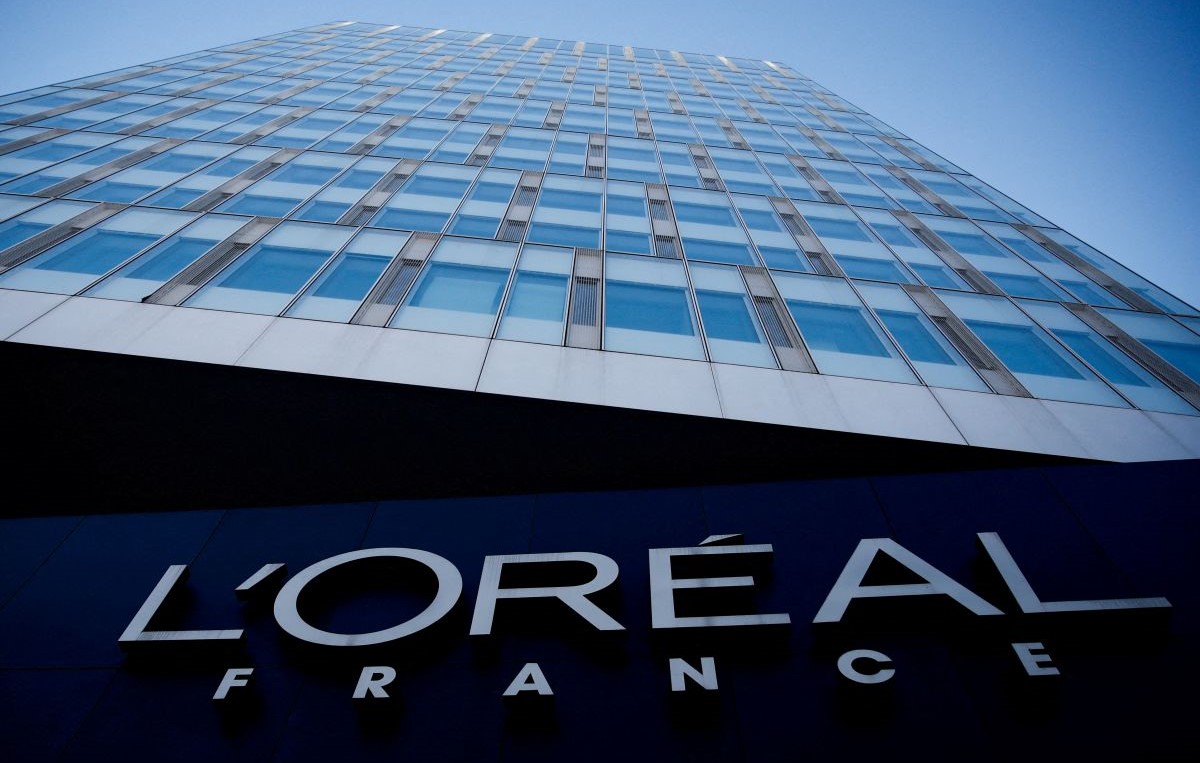
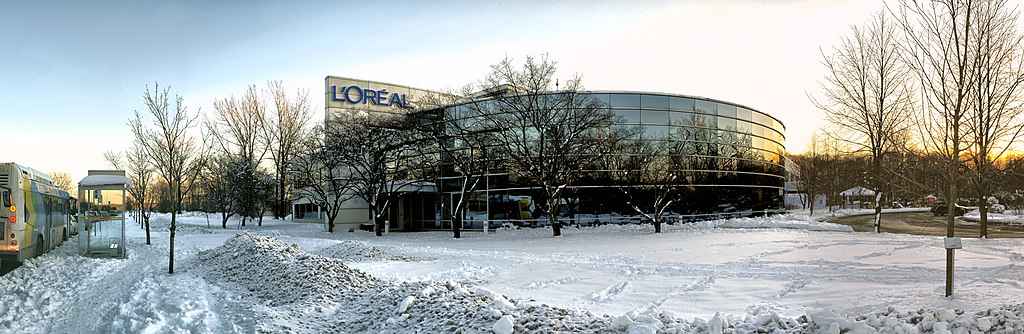
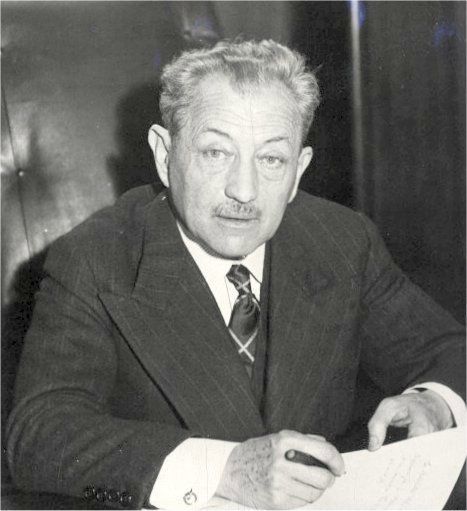
The L'Oréal Group, a name familiar to women and men around the world. This company, whose headquarters are relatively modest given its international importance, has a history tied to two men. First, its founder, Eugène Schueller, and François Dalle, his successor.
Note: At the end of the text you will find
1/ a photo gallery;
2/ places to visit nearby (with direct online booking where necessary)
3/ and your Bonus "5 essential tips for organizing and enjoying your stay in Paris".
Eugène Schueller and the origins of the L'Oréal Group
Eugène Schueller, a young French chemist of Alsatian origin born in 1881. He graduated from the Institut de Chimie Appliquée de Paris in 1904. On November 14, 1907, he filed a patent with the Office National de la Propriété Industrielle for a hair dye process.
At the time, he worked as a preparator at the Sorbonne under the direction of Professor Victor Auger, advisor to the Pharmacie Centrale de France. He was the only one to volunteer to conduct research on a completely harmless hair dye to conceal white hair. At the time, these “dyes” were based on hydrogen peroxide. This problem would shape his destiny for the rest of his life.
He developed a dye formula that provided lasting coverage of white hair. It was made from potato starch.
Eugène Schueller resigned in January 1908. He founded his own company and set up shop in a two-room apartment at 3, rue d’Alger, in the 1st arrondissement of Paris. This space served as both an office and an exhibition salon. But the expected success did not materialize.
The financial contribution of André Spéry
André Spéry, an accountant from Épernay and employee of the Cusenier spirits company, contributed his inheritance of 25,000 francs.
On July 30, 1909, the French company for harmless hair dyes was established as a simple partnership. It set up shop at 7 bis, rue du Louvre, in the 1st arrondissement of Paris. They hired a representative and a demonstrator, a former hairdresser at the Imperial Court of Russia.
The company founded by Eugène Schueller was now underway. Its first issue of La Coiffure de Paris (a publication for hairdressers) was published in October-November 1909.
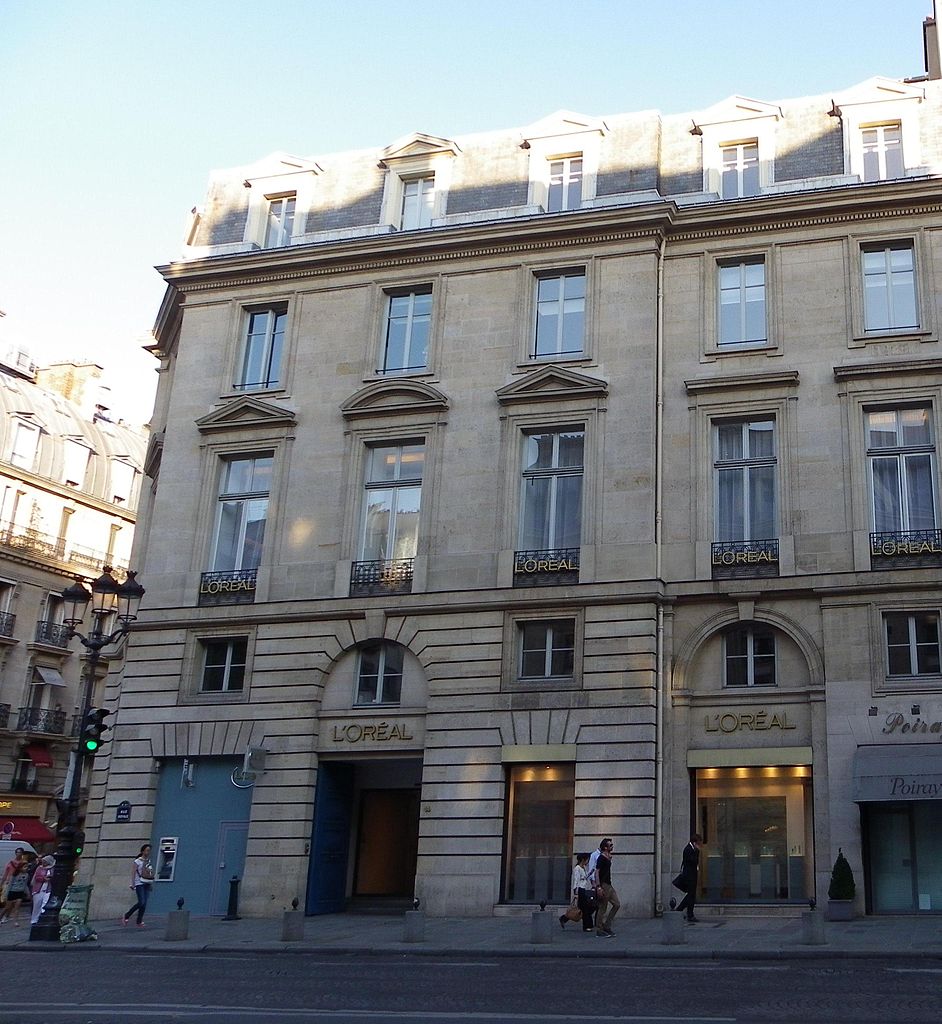
The historic headquarters of the L'Oréal Group, 14 rue Royale in Paris
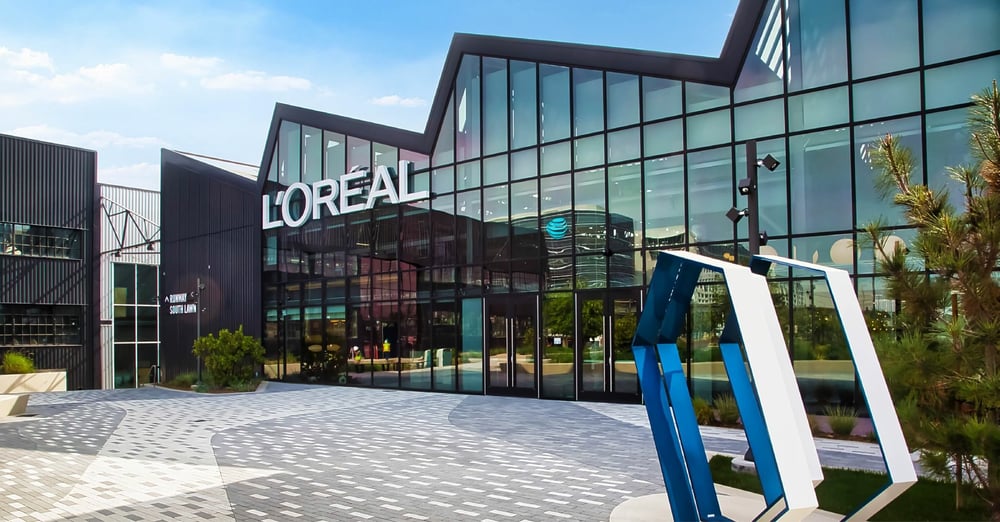
The historic headquarters of the L'Oréal Group since 1938, renamed "Le Visionnaire" upon its reopening in 2023. 14 rue Royale, just a stone’s throw from the Place de la Concorde, is a place steeped in history.
It is located at the corner of rue Saint-Honoré. It once housed a branch of Crédit Lyonnais, present here since at least 1910. But before that, in the late 19th century, it was home to a cabaret called La Porte Saint-Honoré. Its name comes from the old gate in the Louis XIII city walls, which stood on this site and was demolished in 1733.
Physiologist Claude Bernard lived here in 1859.
Today, it serves as the headquarters of L'Oréal, established at this address by Eugène Schueller in 1938. The company occupies the entire complex at 14 rue Royale, extending to rue Saint-Florentin at the rear and running parallel to rue Royale.
The building itself is one of the masterpieces of 18th-century French architecture, designed by architect Ange-Jacques Gabriel. Its façade and roof are listed as historic monuments.
Inspired by the vision of François Dalle, L'Oréal's CEO between 1948 and 1984, 14 rue Royale has retained the spirit of a workshop and a “bivouac.” It is here, for over 80 years, that the care and beauty products that sometimes revolutionized our daily lives were conceived.
The hairdressing sector, the cradle of L'Oréal's original business, will once again take center stage with over 750 square meters of space. It features a highly digitalized, hybrid and agile training zone, delivering cutting-edge expertise and a unique experience.
The interwar period for the company that would become the L'Oréal Group on April 5, 1939
Advertising within the group
Initially, the L'Oréal Group was a company that maintained a strong and continuous presence in professional hairdressing publications.
In 1923, Eugène Schueller launched L'Oréal Bulletin, a professional magazine distributed in hair salons.
Two years later, L'Oréal Humoristique was launched to entertain waiting clients.
The women’s magazine Votre Beauté was created in 1933.
In 1935, Eugène Schueller merged all these publications under the Société d’éditions modernes parisiennes (SEMP).
L'Oréal and diversification
L'Oréal began diversifying in 1928 by acquiring the Société des Savons français, founded in 1920 on rue Martre in Clichy (where L'Oréal’s administrative headquarters are located today) and better known under the Monsavon brand.
This marked the company’s first foray into mass-market products. Monsavon was sold to Procter & Gamble in 1961.
Internal group development
L’Oréal’s future also lay in the development of its own products. In 1929, Eugène Schueller created the first fast-acting hair dye called “Imedia,” whose success was amplified by the fashion for short hair.
Four years later, he launched the Dopal shampoo in hair salons.
The following year, the product was rebranded as Dop for mass-market distribution.
In 1935, he developed Ambre Solaire, the first sunscreen cream.
Yet in 1945, L’Oréal had only 25 researchers on staff.
A company at the forefront of social progress
In 1938, Eugène Schueller introduced the “profit-sharing salary,” which adjusted according to the company’s turnover for all L’Oréal employees.
A blemish on the record: flirtation with Marshal Pétain and the Nazis
Eugène Schueller also used his resources to train a far-right group, the Secret Committee of Revolutionary Action (CSAR), which would later be known as La Cagoule. The L’Oréal headquarters hosted many meetings of this organization.
During World War II, Eugène Schueller entrusts André Bettencourt (who would later become his son-in-law) with the management of the French collaborationist magazine, La Terre française.
After the war, André Bettencourt joined the management of the group. At the same time, the L'Oréal subsidiary in Spain was established by Henri Deloncle, the brother of the politician Eugène Deloncle. This subsidiary would employ Jean Filiol, a member of the Cagoule, despite his conviction as a co-responsible for the Oradour-sur-Glane massacre. This allowed him to avoid serving his sentence. Many other Cagoule members would also go on to work for L'Oréal in other foreign subsidiaries after the war.
At the same time, a young François Mitterrand (future President of the Republic) is hired as the general manager of L'Oréal's promotional magazine, Votre Beauté.The L'Oréal Group becomes a public limited company on April 5, 1939
When the PLC was created, Eugène Schueller held 62,500 of the 70,000 shares of 100 Frs each that made up the company’s 7-million-franc capital.
Today, Françoise Bettencourt Meyers and her children own 34.7% of the group, and their fortune was estimated in 2023 at over 90 billion US dollars.
L'Oréal today
Turnover
It amounted to €38,261 million in 2022 (€38 billion).
Advertising
The group spends around 30% of its turnover on advertising. To date, the group does not have a clearly identified slogan. However, catchphrases sometimes accompany its institutional communication: “Beauty is a scientific adventure”, “L'Oréal, two passions: beauty and research”, “#1 worldwide in beauty”, “Global leader in beauty”, or more recently “Beauty is a value for the future”.
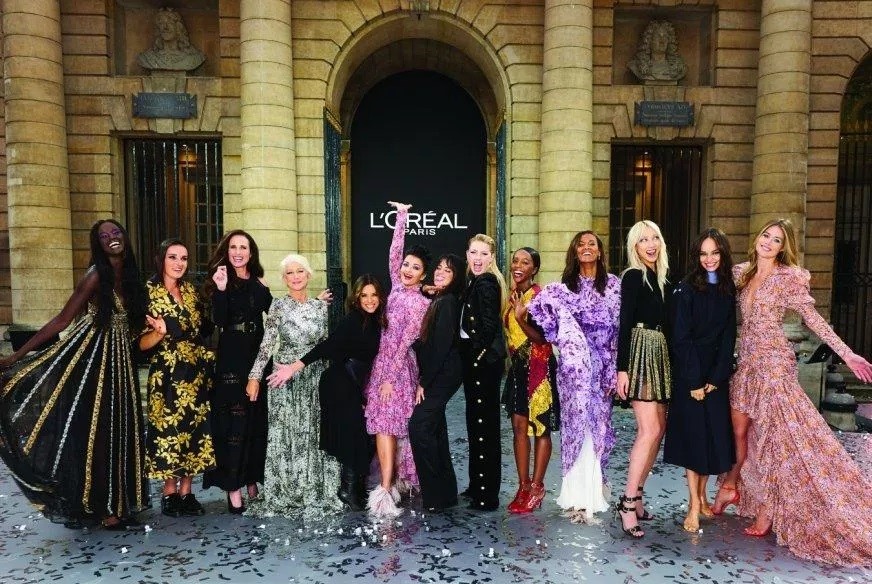
The slogan “Because I'm worth it” has been associated with the L'Oréal Paris brand since the 1970s and covers all of its products. The television advertising has featured several famous ambassadors. Each of the group’s other brands has its own communication, tailored to the image it wishes to reflect and the values it seeks to convey.
Organisation of the business
L'Oréal’s brands are organised by distribution channel across four divisions: professional products, consumer products, L'Oréal Luxe, and dermatological beauty. They are present in 150 countries worldwide.
Professional Products
This division, representing the original activity of the group, offers brands serving professionals in the hairdressing industry. It brings together around twenty brands.
Consumer Products
This division, which also brings together around twenty of the group’s best-known brands, is dedicated to high-tech products distributed in mass retail. It includes brands such as Garnier, L’Oréal Paris, Mixa, and others.
L’Oréal Luxe
This division, which brings together the group’s most prestigious brands, offers perfumes, skincare products and makeup items through selective distribution.
Among certain brands, only the licenses for perfumes and cosmetics are owned by L'Oréal: Azzaro, Cacharel, Diesel, Giorgio Armani, Guy Laroche, Helena Rubinstein, Lancôme, Mugler, Nickel, Paloma Picasso, Prada, Ralph Lauren, Valentino, Yves Saint Laurent, etc.Dermatological Beauty
This division brings together dermocosmetic care brands available on advice and prescription, offering high-tech products: AcneFree, Ambi and CeraVe (in the United States), La Roche-Posay, Saint-Gervais Mont Blanc (following the acquisition of the management company Les Thermes de Saint-Gervais), Vichy
Also worth mentioning
Digital Services Factory
The Digital Services Factory is a hub dedicated to designing and developing new digital services for the Group’s brands.
ModiFace, a Canadian company specializing in augmented reality and artificial intelligence applied to beauty, founded in 2007 by Parham Aarabi and acquired by L’Oréal in 2018
Incubators
In 2013, L'Oréal established its beauty-focused incubator in San Francisco: the Tech Incubateur Technology[120] (also known as the Connected Beauty Incubator, or the California Research Center). For several years, the group has also invested in venture capital funds and start-up incubators. In December 2018, L’Oréal launched its own investment fund, BOLD (short for Business Opportunities for L’Oréal Development), to take minority stakes in beauty start-ups.
Travel Retail
In 2013, L’Oréal created a dedicated “Travel Retail” division, bringing together brands from all its divisions in travel hubs such as airports, cruise ships, and dedicated locations in Asia.
Other activities
These activities fall outside the beauty and cosmetics sector, such as chemicals or credit.
To see near the Concorde and rue Royale
You can enjoy exploring the surrounding area by taking our self-guided walks from Place de la Concorde:
Self-guided walk from the Opéra Garnier to the Grands Magasins Lafayette and Place de la Concorde
Self-guided walk from the Arc de Triomphe to Concorde via the Champs-Élysées
Then Self-guided walk from the Louvre to Concorde via Tuileries and Vendôme
But you can also see or visit (and book online when available) the following points of interest:
Cruise embarkations are also available within short distances:
Batobus Shuttle - River Taxi(Stop at Place de la Concorde) - Batobus River Taxi Booking (9 stops) (Hop-on Hop-off - 1 or 2-day pass - Easy way to travel from one museum to another)
Bateaux-Mouches Seine Cruise - Pont de l'Alma - Seine cruise booking – Departure Pont de l’Alma 75008 – Port de la Conférence – Bateaux-Mouches
Canal Saint-Martin cruise from Musée d'Orsay - Seine and Canal Saint-Martin Cruise Reservation – Port Solferino - Musée d'Orsay - Parc de la Villette
Vedettes de Paris Cruises - Paris Reservation: Seine Dinner Cruise with Panoramic Views and Champagne (Port Solférino – approx. Musée d'Orsay)
Bonus: 5 essential tips to help you organize and make the most of your stay in Paris
Have you noticed that our website provides you with tools to help you easily organize your trip to Paris so that your stay is a stress-free success?
1. Phrasebook Translator for those who don’t speak French fluently
Do you struggle to find the right word or phrase in French? Click here on PHRASEBOOK – or at the top right of your screen. It’s a glossary of 100 useful words and/or phrases for a tourist visiting Paris (At the restaurant, Hotel, Shopping, Metro, Greetings, Asking for directions, etc.). Eight languages are available. And here’s the best part? Each word and phrase can also be heard aloud in French.
2. The VPBY Trip Generator
There’s so much to see and do in Paris—it’s fascinating and educational! To make the most of your stay, we highly recommend planning ahead. To help you, we’ve made our Trip Generator available to you—FREE OF CHARGE.
In just 5 minutes and 5 clicks, you’ll get your half-day by half-day itinerary, with all reservations—if you want, no obligation—for the sites you’d like to visit. You can also book your transport (plane, train, or car) and your accommodation. Even suggestions for valuable souvenirs for yourself, your friends, and your family.
How does it work?
Click on "Paris Trip Organizer"—completely free—which will save you the hassle of trying to see as much as possible in the shortest time. Then you’ll need to make your choices:1/ Select your "general interests" by clicking on the list (Museums, Churches, Monuments, Parks, etc.);
2/ The VPBY Stay Generator then suggests all relevant listings;
3/ You select by clicking on the names of the museums, monuments, parks, or activities you wish to include;
4/ The organizer returns a day-by-day itinerary for your stay;
5/ with geographically optimized daily visits—if you so choose—to avoid tiring and tedious travel.It takes just 5 clicks and 3 minutes. And it’s completely free. To use it, click on "Paris Stay Organizer"
Note: Want to see what users of the VPBY Stay Generator think of their experience? Click on "They planned their trip with VPBY"
3. List of Reservations to Make
To avoid wasting time waiting in line, we recommend making your reservations online a few days in advance. All official reservations are useful and available on our website:
Reservations to enter museums, monuments, shows, and Seine cruises
Reservations for your arrival in France: planes, trains, cars
Reservations for your accommodation: hotels, apartments, guesthouses – in Paris or the immediate vicinity
You will find links to all these reservations available directly in the articles about the attractions that interest you or in the self-guided routes of our walks. By clicking on "Reservations" in the header bar, you will have access to all the reservations you will need during your stay. For example:
Notre-Dame de Paris entry reservation (Free entry but reservation recommended to avoid the queue)
Book Versailles Castle: Entry Ticket + Gardens Access + Trianon Estate
4. Collecting Paris Souvenir Photos
These are high-definition archival photos available in digital format or as long-lasting prints (75 to 100 years). Their size ranges from postcard to large wall art (1 meter square or more). A lifetime keepsake to decorate your home. Quality souvenirs (unlike plastic snow globes or the Eiffel Tower). At very affordable prices. Click on:
5. Bring back a personalized photo report of your stay in Paris
Professional photographers will capture your chosen locations in Paris or suggest scenic spots. Ideal for family portraits, weddings, or other events. Sessions last from 1 hour to a full day. The best quality-to-price ratio. Click on: