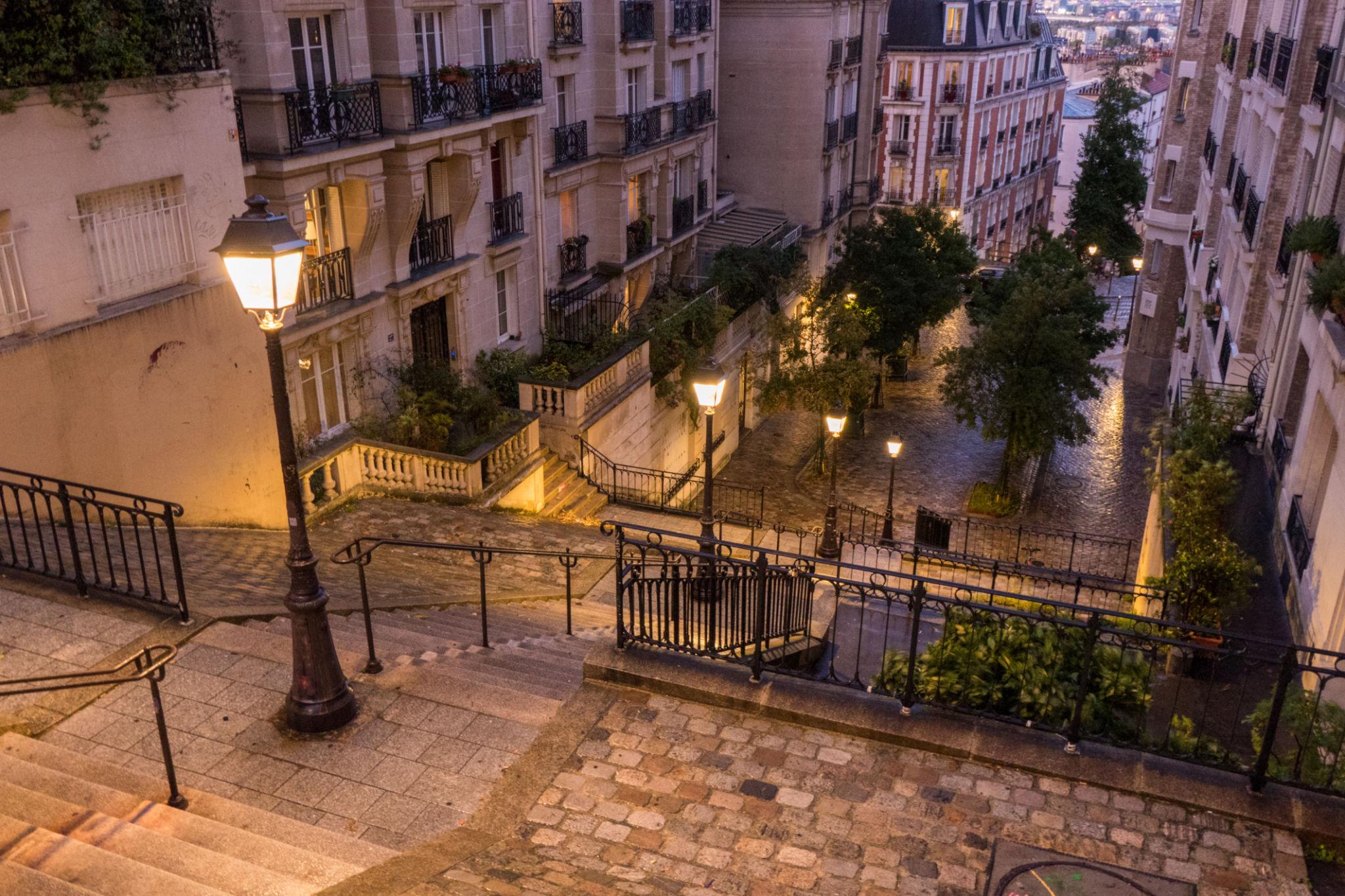
Rue du Mont-Cenis, at the top of Montmartre hill in Paris
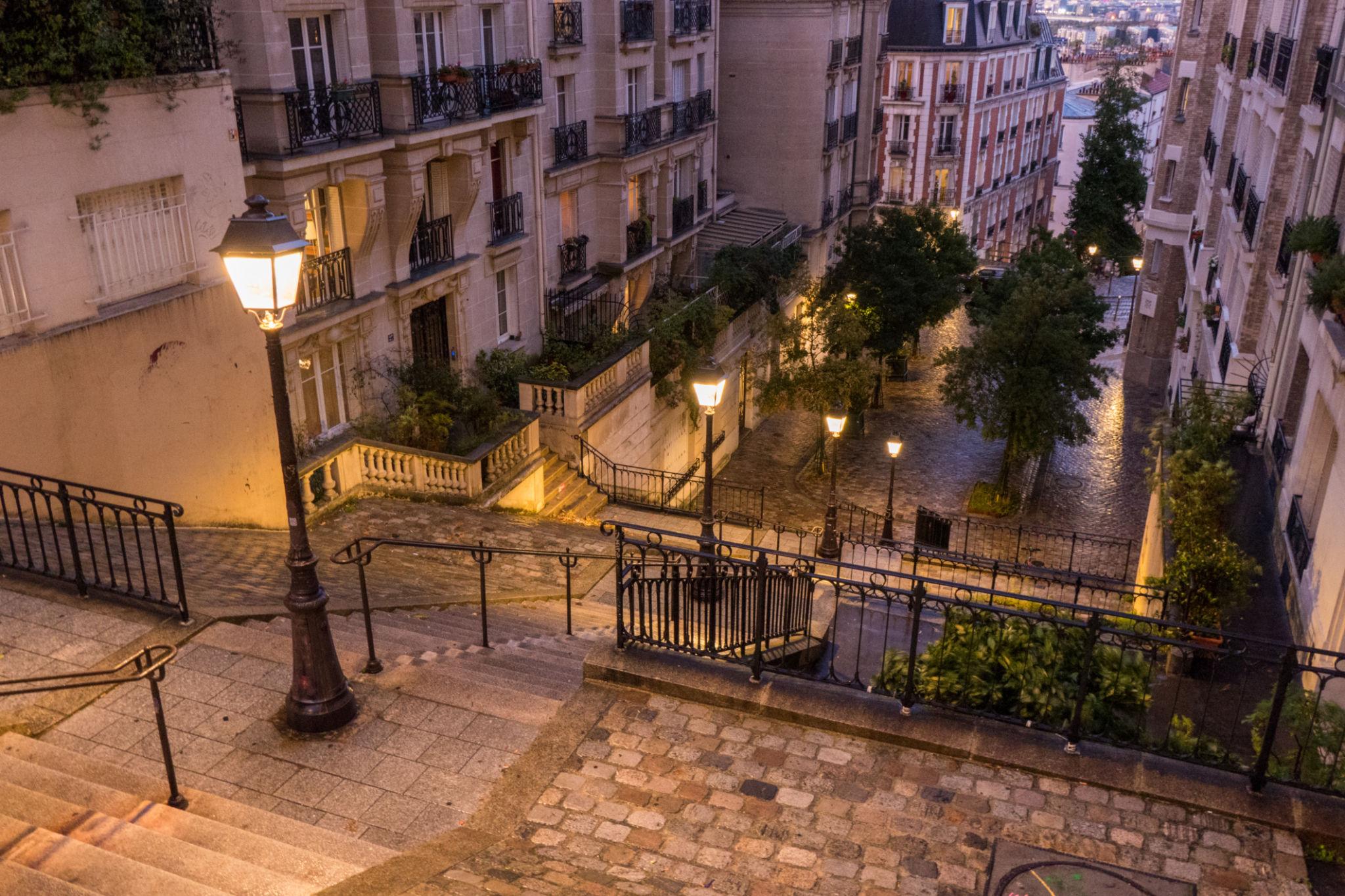
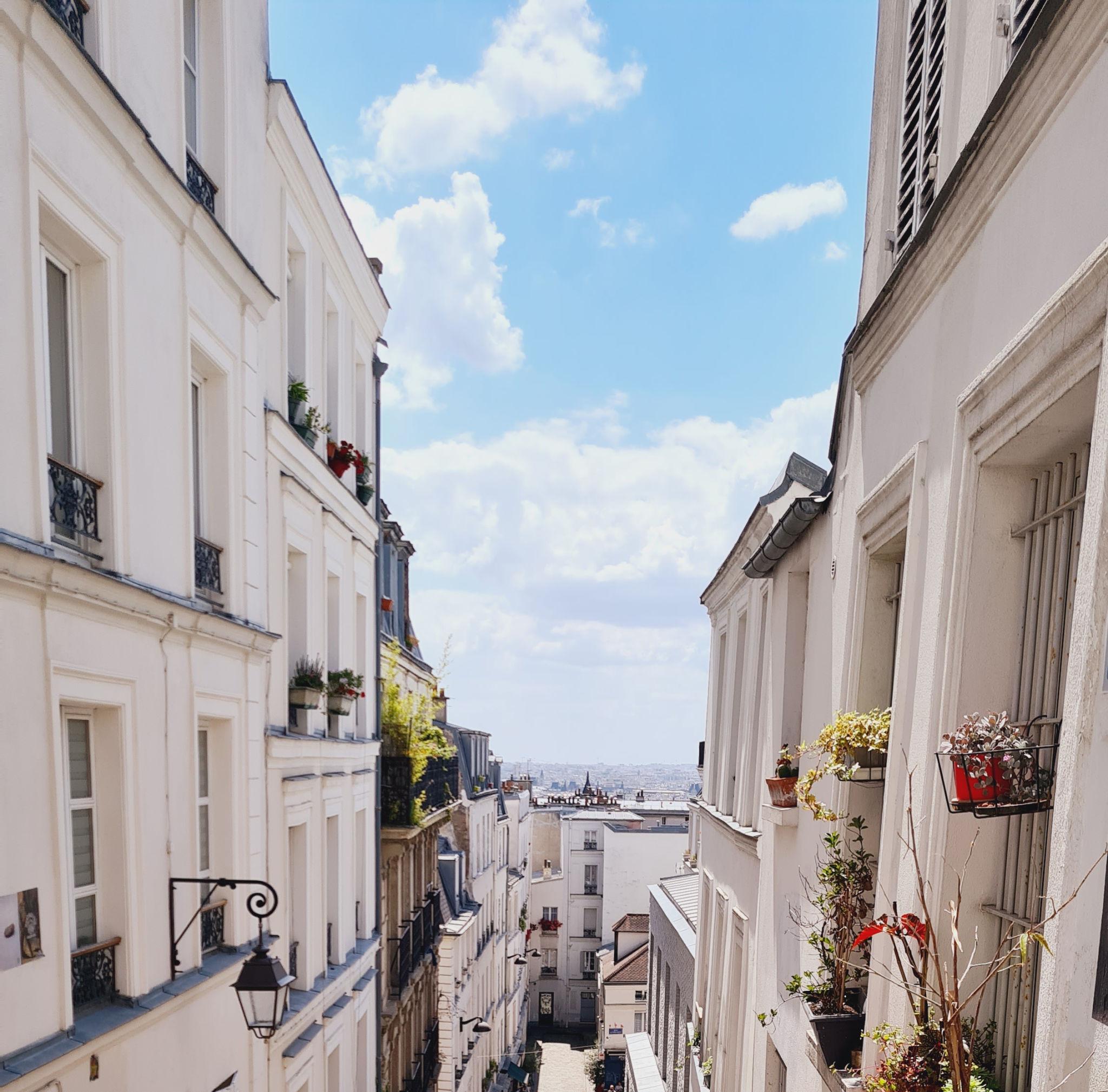
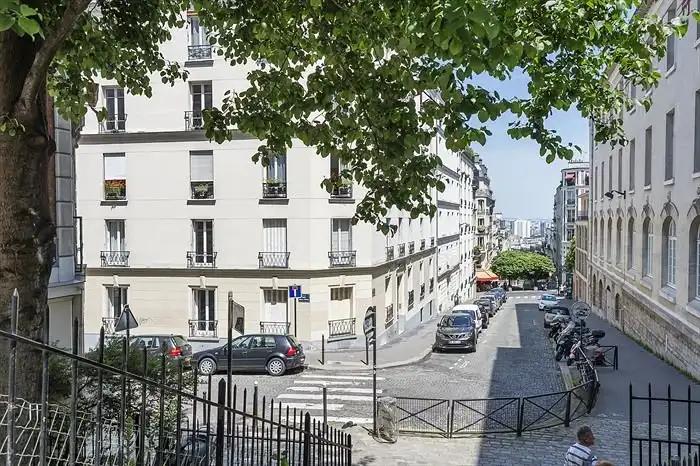
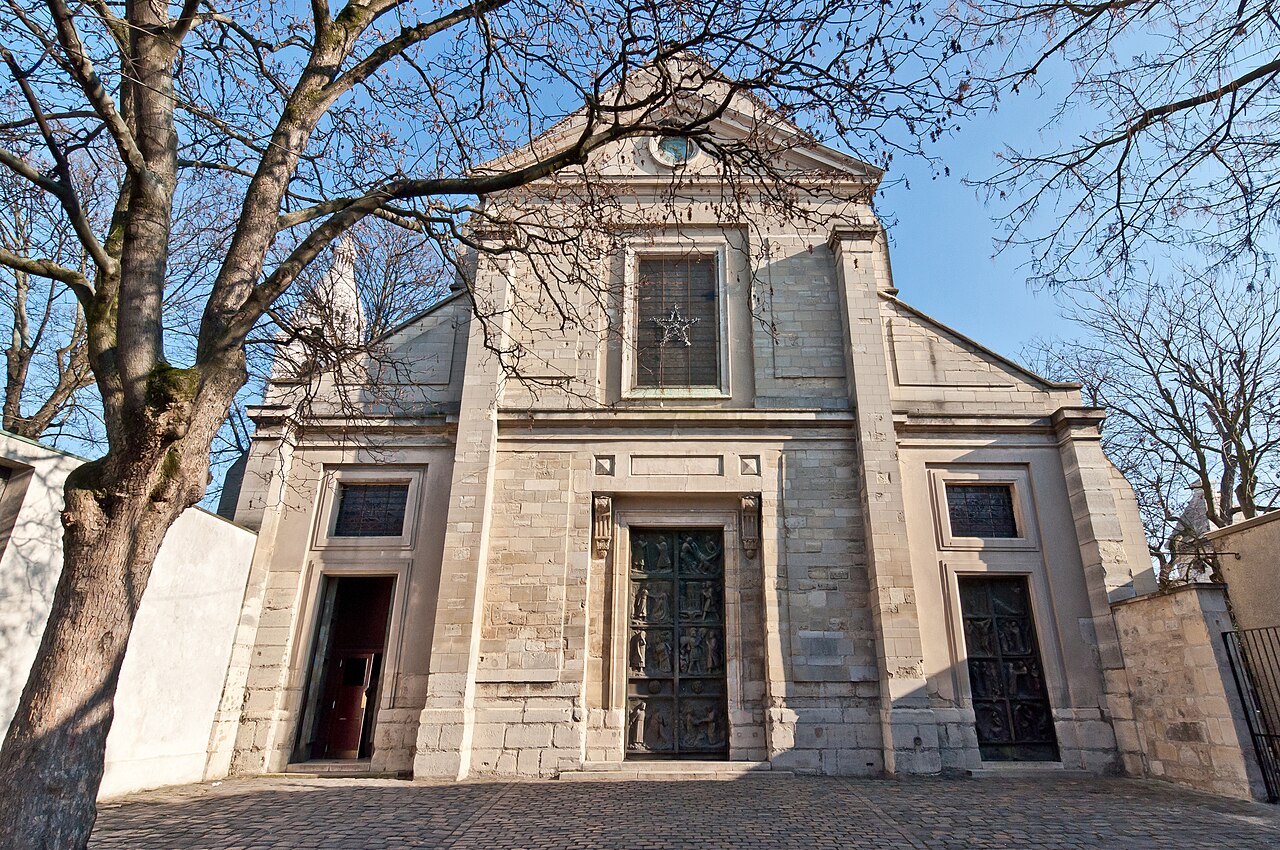
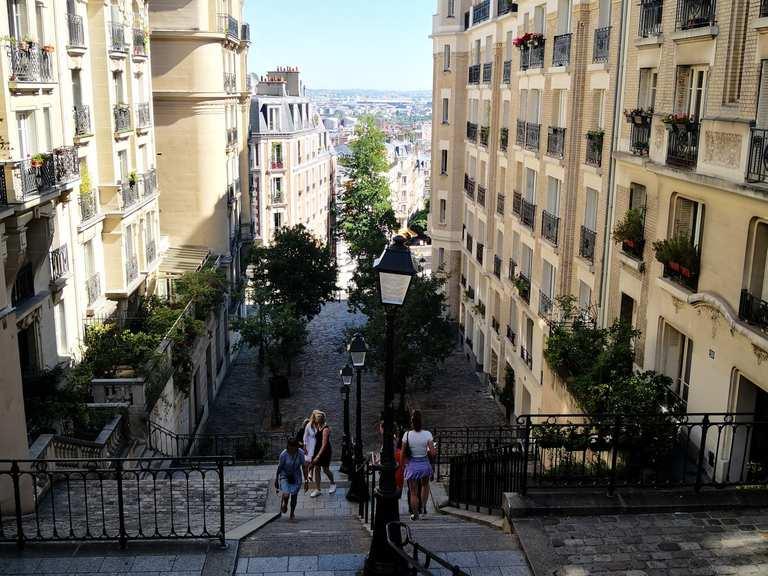
The rue du Mont-Cenis in Montmartre is a steeply sloping street, 1,304 meters long and 12 meters wide. It begins at the intersection of rue Saint-Éleuthère and rue Azaïs, in the Montmartre district. It then runs alongside the Saint-Pierre de Montmartre church near place du Tertre. It continues past rue Saint-Vincent, rue Lamarck, place Jules-Joffrin, rue Marcadet, rue Ordener, rue Championnet, and boulevard Ornano. It ends at rue Belliard.
The rue du Mont-Cenis is one of the most interesting streets in Montmartre for those looking to rediscover the old village of the Butte, away from the usual routes around Sacré-Cœur.
Note : You will find at the end of the article
1/ A photo gallery
2/ Places to visit nearby and self-guided walks
3/ Your Bonus: 5 essential tips to help you plan and make the most of your stay in Paris
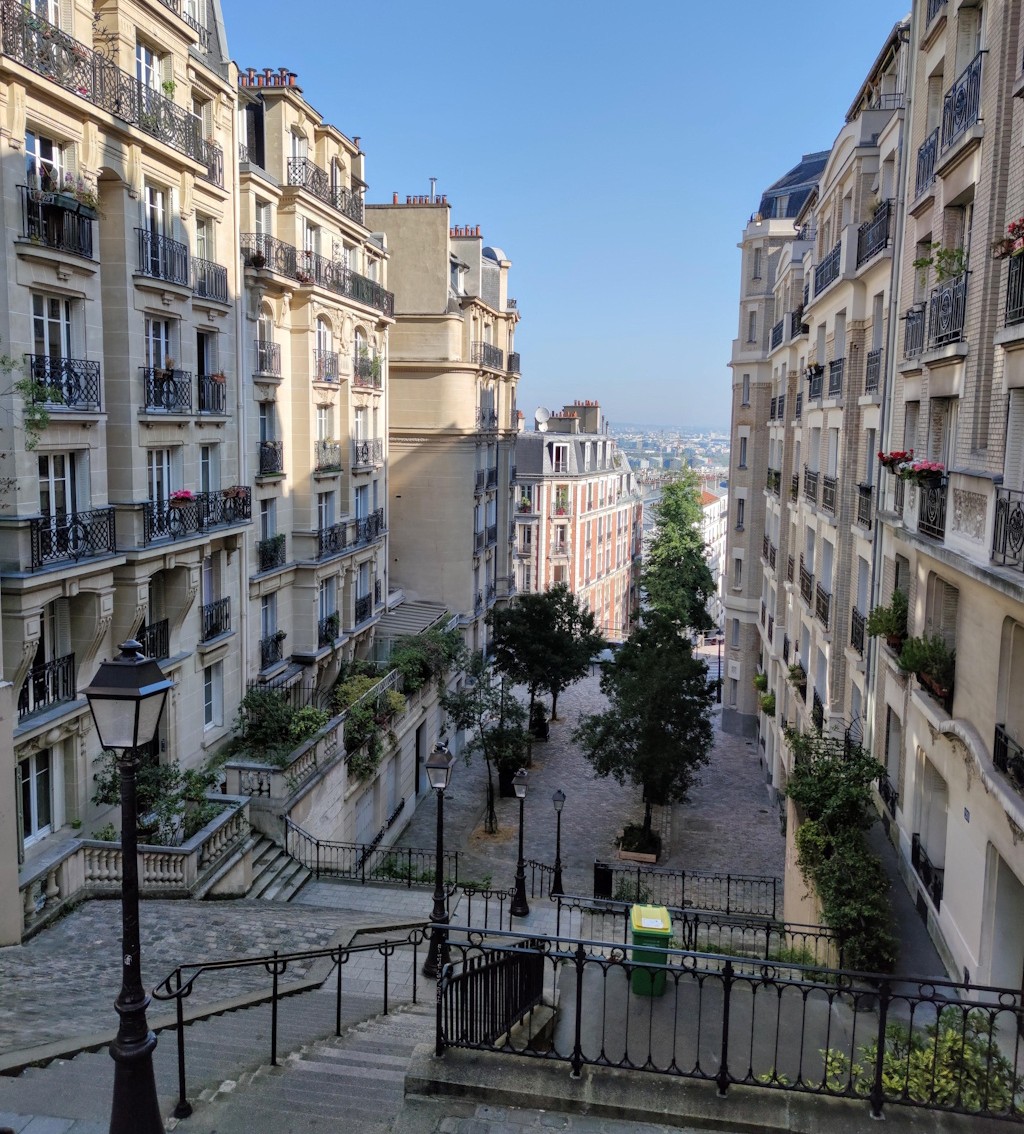
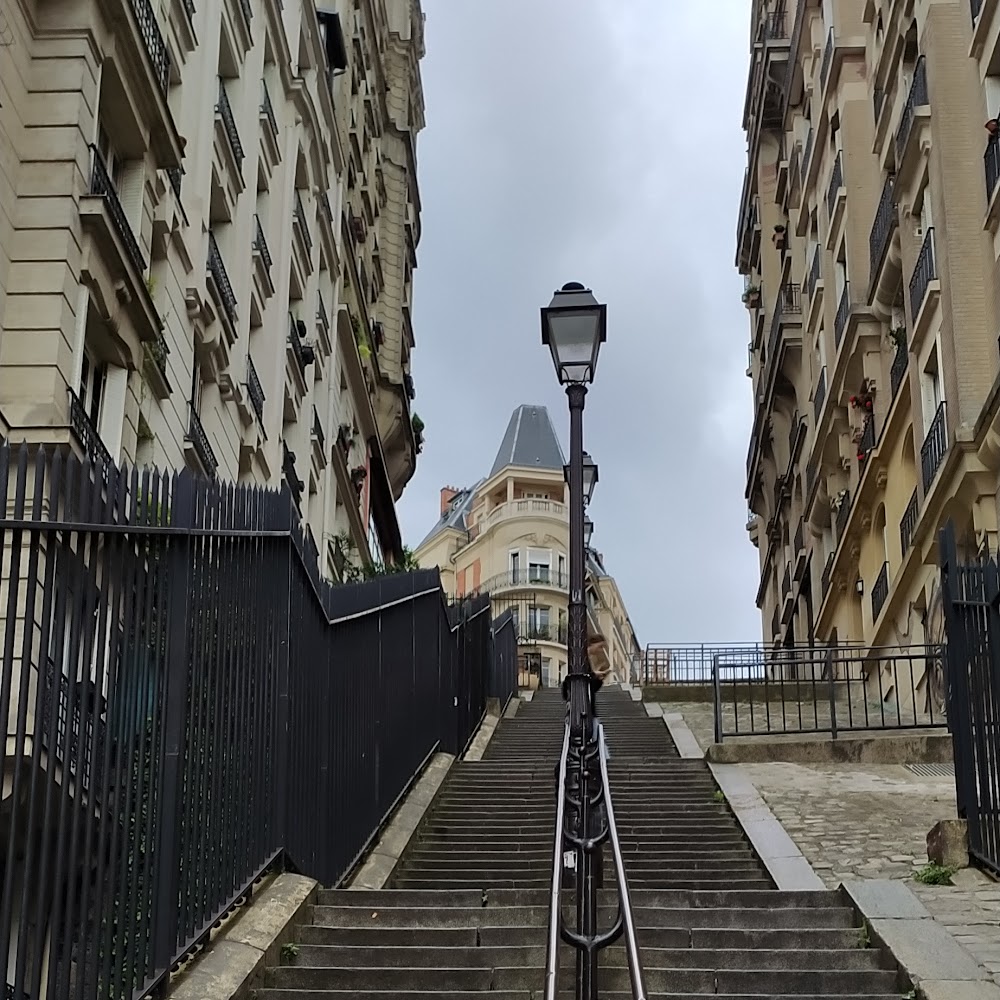
A street—and also a staircase
It features numerous staircases along its route. Fifty-two steps between rue Custine and rue Lamarck, 54 between rue Paul-Féval and rue Saint-Vincent, and 81 between the latter and rue Cortot.
The street that evokes a rocky massif in the Alps
Its very steep layout has borne this name since 1868, in reference to Mont Cenis, a rugged massif in the Northern Alps.
The recent history: the April 1944 bombing
On the night of 20 to 21 April 1944, during the Occupation of the Second World War, the nearby La Chapelle railway depot was bombed by Allied aircraft. These also targeted a German anti-aircraft defence unit on the Montmartre hill. The surrounding area was hit.
A witness recalled: « We were walking up the stairs of rue du Mont-Cenis, at the corner of rue Cortot. From there, we could see the flames rising towards Saint-Denis, and on our way back along rue des Saules, it was the plain of Saint-Denis that was burning. »
Rue du Mont-Cenis, much older than modern Paris
Its history dates back to the Middle Ages. It was then called the “Procession Path” and linked the abbey of Saint-Denis to the abbey on the Montmartre hill. Today, it is represented notably by the church of Saint-Pierre. This path was used during the great processions held every seven years, until 1784.
Every seven years, at the site of the current Jules-Joffrin metro station, representatives of the abbess of Montmartre would meet the monks from the abbey of Saint-Denis. They would accompany them to the top of the hill. This path was known as the “Procession Path”, then as the “Petite rue Saint-Denis” between rue Norvins and rue Marcadet, and later as the “Chaussée Saint-Denis”.
The street officially takes the name of Mont-Cenis in 1868. For a long time, however, it retains the appearance of a village path crossing Montmartre. A major modernization in 1925 partly explains the differences between the historic street and the one we see today.
A street that tells the story of old Montmartre
Its charm lies precisely in not being a typical Parisian street.
Depending on the section, it preserves a succession of slopes, staircases, small houses, walls, passages and irregular perspectives. These elements recall that Montmartre was once a hilltop commune/village before its annexation by Paris in 1860.
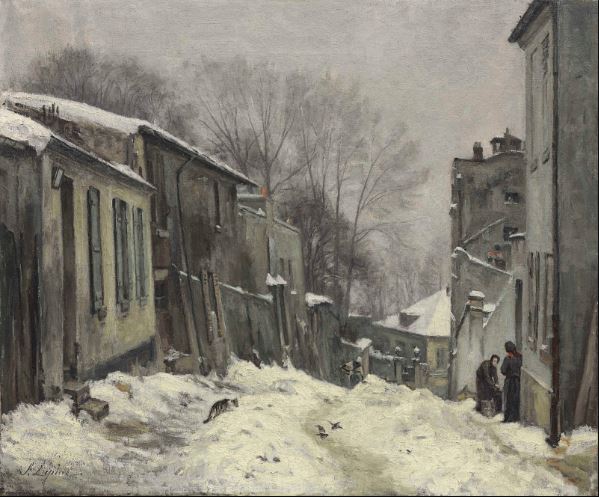
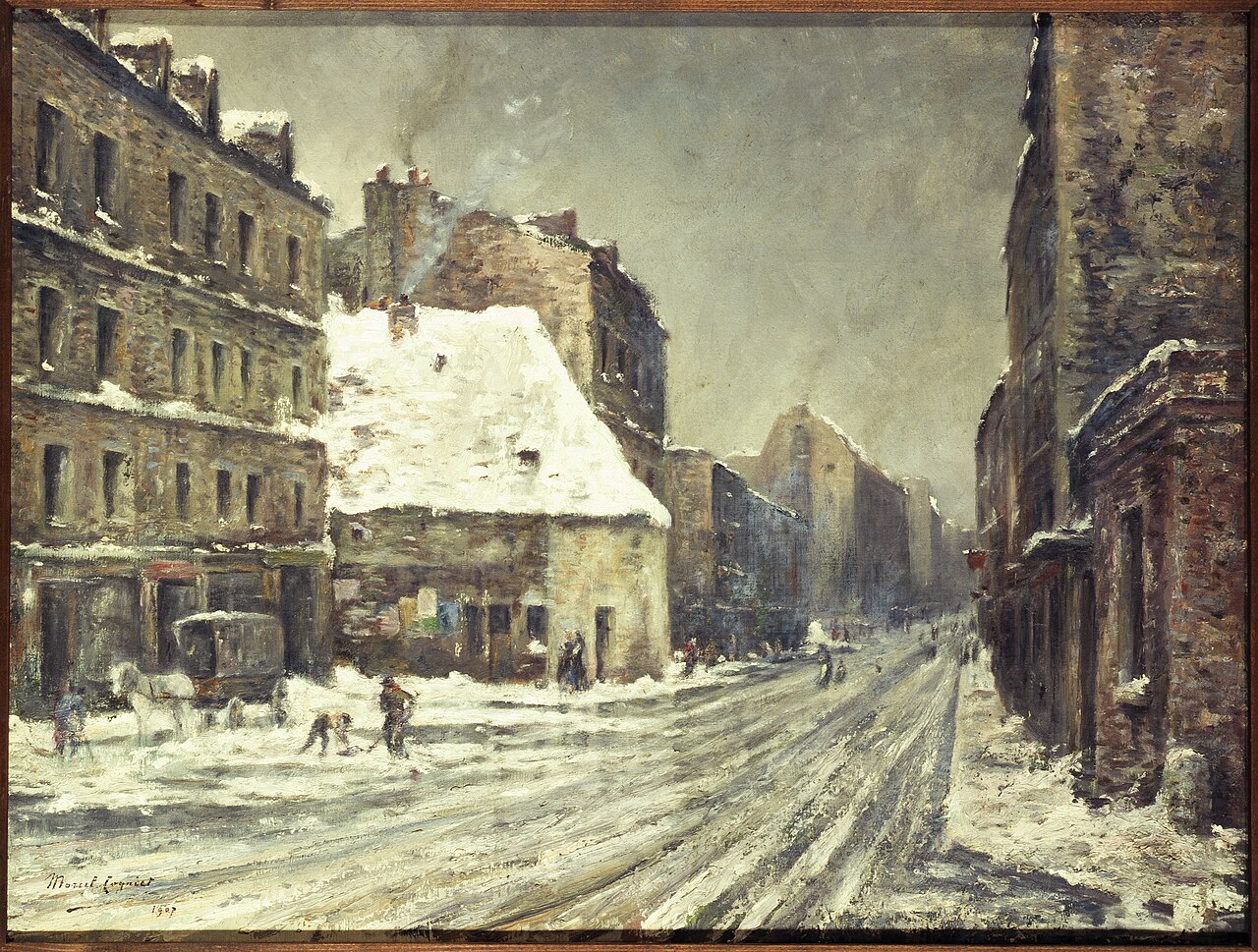
In the 19th century, its picturesque character was already pronounced enough to attract painters. The Carnavalet Museum holds several paintings depicting the rue du Mont-Cenis around 1875, including works by Louis Hista and Jules Pétillion.
One of these paintings shows the street as a very steep thoroughfare, with a still-rural architecture and figures moving about.
Why is it unique?
Above all, it is a street to explore, rather than a monument to admire.
It offers a physical understanding of Montmartre’s geography:
plain → slope → hill → village → church → artist studios.
This topography explains much of Montmartre’s character.
The street is also interesting because it allows you to escape the very concentrated tourist route Abbesses → Sacré-Cœur → Place du Tertre.
What a tourist can see on Rue du Mont-Cenis
This is a recommended walk featuring the following route:
Musée de Montmartre → rue Cortot → rue du Mont-Cenis → Saint-Vincent → rue des Saules → Clos Montmartre → Sacré-Cœur.
The Musée de Montmartre is particularly relevant as a starting point: it provides an understanding of the artistic and village history of the neighborhood before experiencing it directly in the streets.
Its true tourist appeal lies in its authenticity. Visitors don’t come to see “a monument”: they come to walk through a piece of old Montmartre, along a route whose medieval origins are well-documented.
To see nearby
You can enjoy exploring Butte Montmartre with our 3 self-guided walks dedicated to it:
Walk from Pigalle to Sacré-Cœur via the southern side of Montmartre hill
Walk from the Musée de Montmartre to Pigalle via the Moulin-Rouge
Alternatively, you can also see or visit (and book online when available) the following points of interest:
Bonus: 5 key tips to help you organize and enjoy your stay in Paris
Have you noticed that our site provides you with tools to help you easily plan your trip to Paris so that your stay is a stress-free success?
1. Phrasebook Translator for those who don’t speak French fluently
Are you struggling to find the right word or phrase in French? Click here on PHRASEBOOK – or in the top right corner of your screen. It’s a glossary of 100 useful words and/or expressions for a tourist visiting Paris. You’ll feel at ease in restaurants, hotels, shopping, the metro, greetings, asking for directions, and more. Eight languages are available. And guess what? You can also listen to each word and phrase in French.
2. The VPBY Stay Generator
There are many interesting and educational things to see in Paris. We strongly recommend organizing your stay well. To help you, we offer you FREE OF CHARGE our Stay Generator.
In just 5 minutes and 5 clicks, you’ll get your half-day-by-half-day sightseeing itinerary. Plus, all reservations—if you want, with no obligation—for the sites you’d like to visit. Flight, train or car transport, and accommodation bookings are also included. Even thoughtful gift suggestions for you, your friends and your family.
How does it work?
Click on the Paris Trip Organizer—completely free—that will save you the hassle of cramming in as much as possible in the shortest time. Then you’ll need to choose:
1/ Select your "general interests" by clicking on the list (Museums, Churches, Monuments, Parks, etc.);
2/ The VPBY Stay Generator then suggests all relevant listings;
3/ You select by clicking on the names of the museums, monuments, parks, or activities you wish to include;
4/ The organizer returns a day-by-day itinerary for your stay;
5/ with geographically optimized daily visits—if you so choose—to avoid tiring and tedious travel.
It takes just 5 clicks and 3 minutes. And it’s completely free. To use it, click on "Paris Stay Organizer"
Note: Want to see what users of the VPBY Stay Generator think of their experience? Click on "They planned their trip with VPBY"
3. List of Reservations to Make
You have free access to our database to "get to know" Paris (Click on Paris Guide) and discover Paris (Click on Places to Visit). And to avoid wasting time queuing, we recommend making your reservations directly online a few days in advance. All official reservations are available and accessible on our website:
Reservations to enter museums, monuments, shows, Seine cruises
Reservations for your arrival in France: flights, trains, cars
Reservations for your accommodation: hotels, apartments, guesthouses – in Paris or nearby
You will find links to all these reservations directly in the articles about the tours that interest you or in the self-guided itineraries of our walks. By clicking on "Reservations" in the header bar, you will have access to all the reservations you need during your stay. For example:
Notre-Dame de Paris entry reservation (Free entry but reservation recommended to avoid queues)
Book tickets for Château de Versailles: Entry + Gardens Access + Trianon Estate
4. Bring Home Paris Souvenir Photos from Our Collection
These are high-definition collectible photos available in digital format or as long-lasting prints (75 to 100 years). Sizes range from postcard to large format (up to 1 meter or more). A timeless keepsake to adorn your home. Quality souvenirs (unlike cheap plastic Eiffel Towers or snow globes). At very affordable prices. Click on:
5. Return with a personalized photo report of your stay in Paris
Reportage by professional photographers in Paris at locations of your choice or suggested by us. A "family" reportage, wedding, or other events. From 1 hour to a full day. The best quality-to-price ratio. Click on: