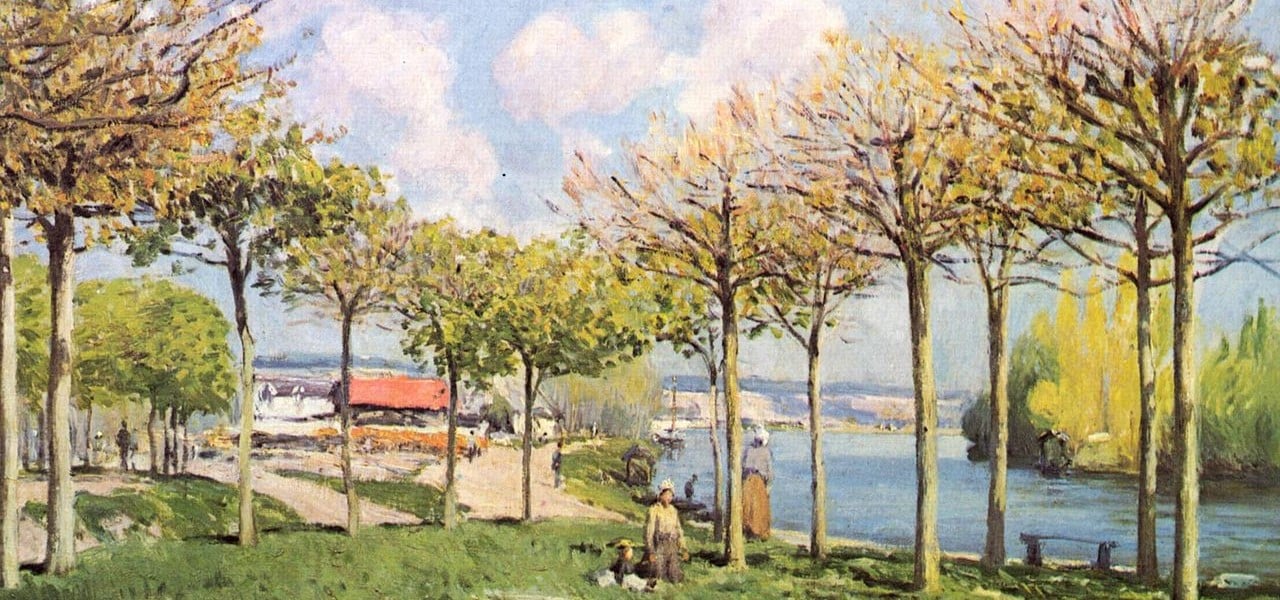
The Impressionists movement took place 150 years ago. It revolutionized painting in the late 19th century by capturing the fleeting moments of everyday life with an emphasis on light, color, and brushstroke. The city became the creative hub for the Impressionists, who were drawn to its bustling streets, gardens, and cafés. Here’s an overview of how the Impressionists influenced and were influenced by Paris, along with some of the city’s key sites linked to the movement.
Note on visiting the Impressionist museums
These museums, of which there are 5 in Paris, are in great demand, and the flow of visitors is regulated. To avoid potentially long queues, it’s a good idea to make a reservation in advance. Below, we’ve provided direct access to the museum(s) you’ve chosen to visit with also options for cheaper combined tickets:
Booking Museum Orsay
Booking Orangerie Museum
Booking Rodin Museum
Booking Marmottan Monet Museum
Booking Petit Palais Museum
Origins of the Impressionisms movement
The Salon and Academic Art
In the 1860s and 1870s, academic art, dictated by the prestigious Salon de Paris, was highly conventional. It favored historical, mythological, and biblical themes painted in a highly polished, realistic style.
Breaking Away
A group of young painters, dissatisfied with the constraints of the Salon, sought a new way to depict life. They focused on scenes from contemporary Paris and nature, experimenting with loose brushstrokes and vibrant colors. This group included Claude Monet, Edgar Degas, Pierre-Auguste Renoir, Camille Pissarro, and Alfred Sisley.
Exhibition of the “Refused”
In 1863, when the Salon rejected many of their works, Emperor Napoleon III allowed a separate “Salon des Refusés” (Exhibition of the Refused) to show their art to the public. This event helped launch the movement.
The first Impressionists movement exhibition
It took place in 1874 in photographer Nadar’s studio, alongside the official Salon. It brought together some thirty artists, including Berthe Morisot, Eugène Boudin, Paul Cézanne, Edgar Degas, Camille Pissarro, Pierre Auguste Renoir and Alfred Sisley. Claude Monet’s Impression soleil levant is exhibited: It was the critic Louis Leroy who christened the group “Impressionists”, inspired by the title of Monet’s painting.
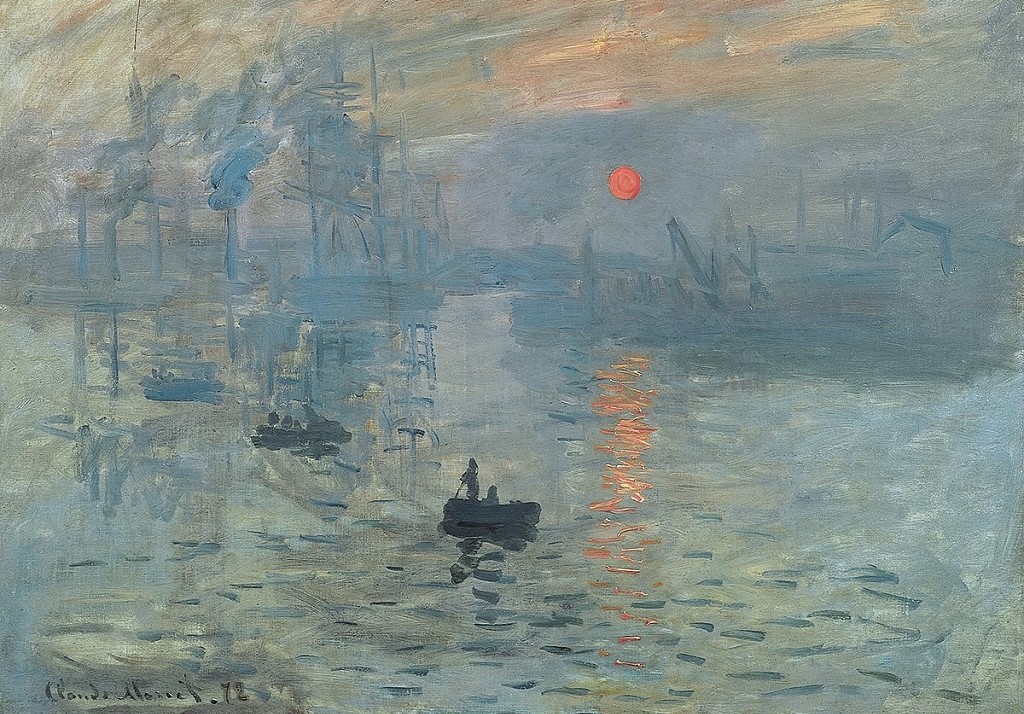
Soleil levant (Rising Sun), the painting that gave the Impressionists their name – Claude Monet
The Impressionists movement: free spirits painters who exported their work … after a turbulent beginning
The works of the Impressionist painters are appreciated the world over.
But it wasn’t always so: when they were first presented, these works were mocked and their creators virulently criticized. It took the persistence of Paul Durand-Ruel, an outstanding art dealer, to gain recognition for the genius of painters such as Monet, Pissarro, Renoir and Degas.
Until 1886, they exhibited eight times together.
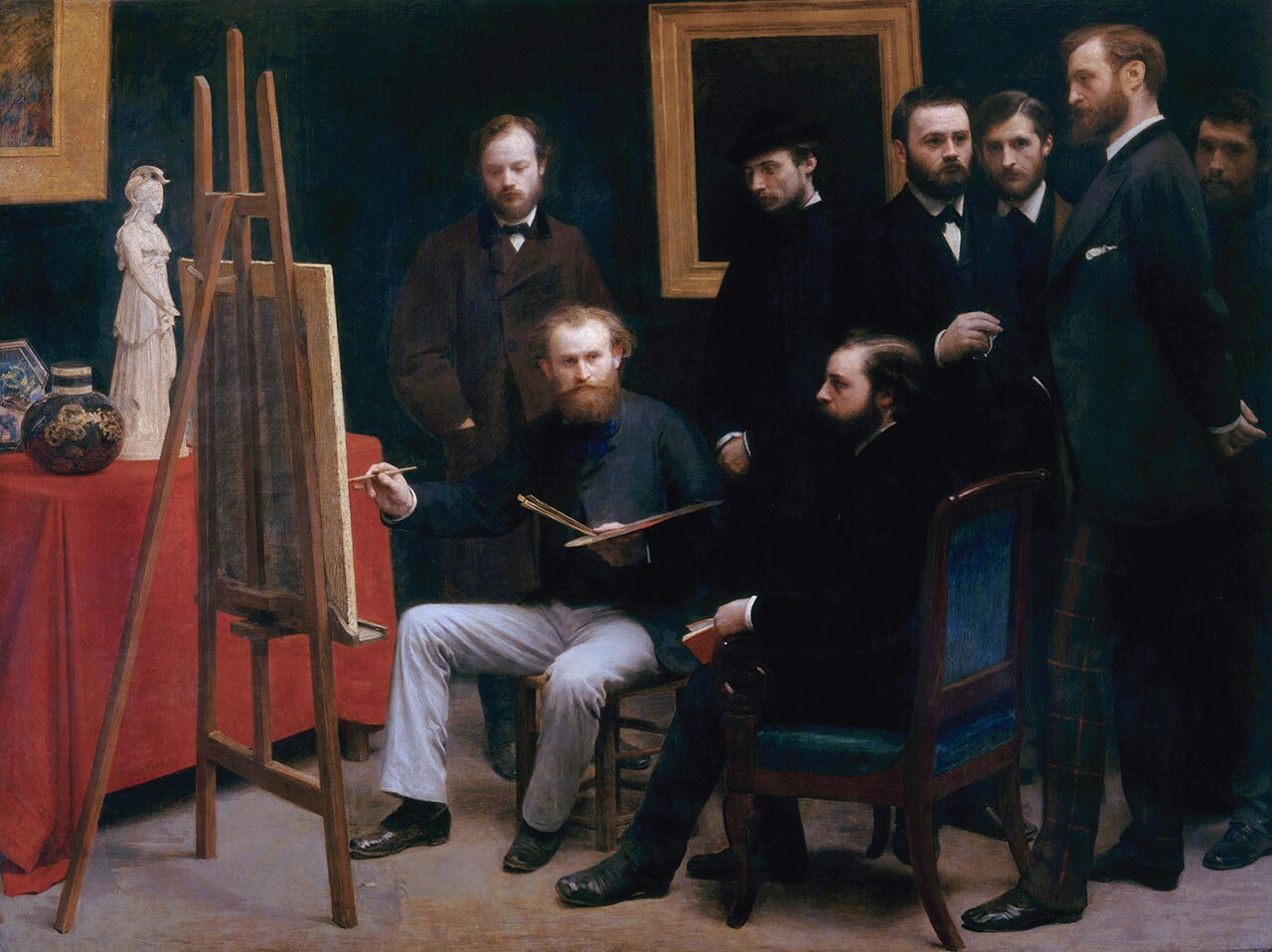
Édouard Manet, who is often considered the movement’s precursor and leader, did not take part in any of these exhibitions. After twelve years of collective adventures, Manet’s pictorial research became more personal, and the role of dealers and collectors, such as Durand-Ruel, was crucial.
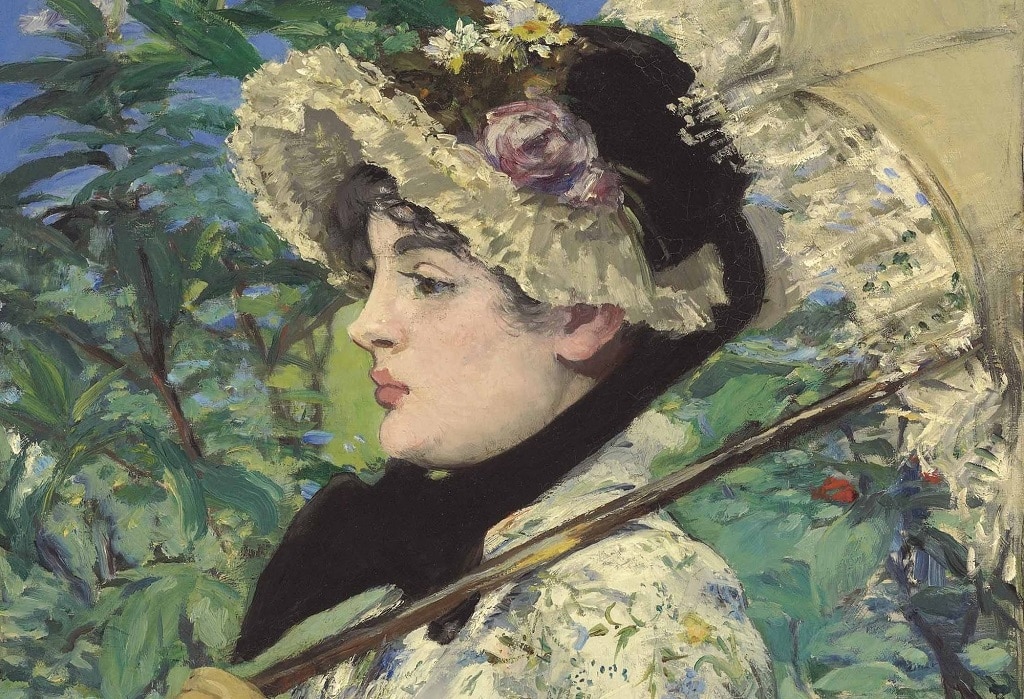
Le Printemps by Edgar Manet
Impressionism was exported to the United States dès 1886
Thanks to the painter Mary Cassatt. The movement was a great success there, and contributed to Monet’s consecration and the development of Impressionist schools outside France in the 1890s. This decade saw the deaths of Morisot, Caillebotte and Sisley and the dispersal of the group, while new avant-gardes developed, to which some Impressionists, such as Cézanne and Pissarro, adhered.
Characteristics of Impressionists movement
Rejection of academic painting
Painting en plein air, on the ground
Juxtaposition of small, visible, free and rapid brushstrokes
Palette of light colors to “paint the light”, pure tones
Colored shadows
No precise contours, few details
Sometimes unfinished appearance (“non finito”)
Representation of the transience of the moment
Landscape painting, water, sky, reflections, etc.
Representation of modern life
Key Sites in Paris Linked to the Impressionisms movement
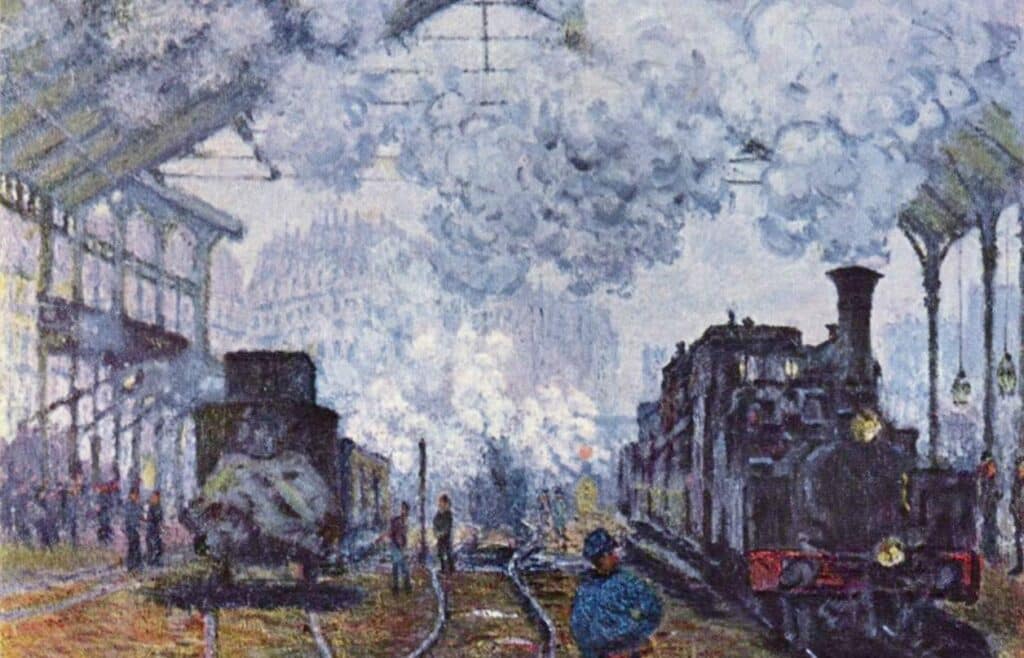
Gare Saint Lazare – Claude Monet
Montmartre
Known for its bohemian lifestyle, Montmartre was home to many Impressionist painters. They lived, worked, and socialized there, inspired by the vibrant culture.Café Guerbois and La Nouvelle Athènes were key meeting places where artists like Édouard Manet, Degas, and Renoir gathered to discuss art and philosophy.
Moulin de la Galette: The famous dance hall and outdoor café in Montmartre inspired Renoir’s celebrated painting Bal du Moulin de la Galette.
The Seine and Its Bridges
The river and its bridges, particularly around Île de la Cité and Pont Neuf, were popular subjects for Monet, Sisley, and Pissarro, who captured reflections and shifting light in these urban landscapes.
The Gare Saint-Lazare
Monet painted this bustling train station in a series of works in 1877, fascinated by the interplay of steam, light, and movement.
Tuileries Gardens and Bois de Boulogne
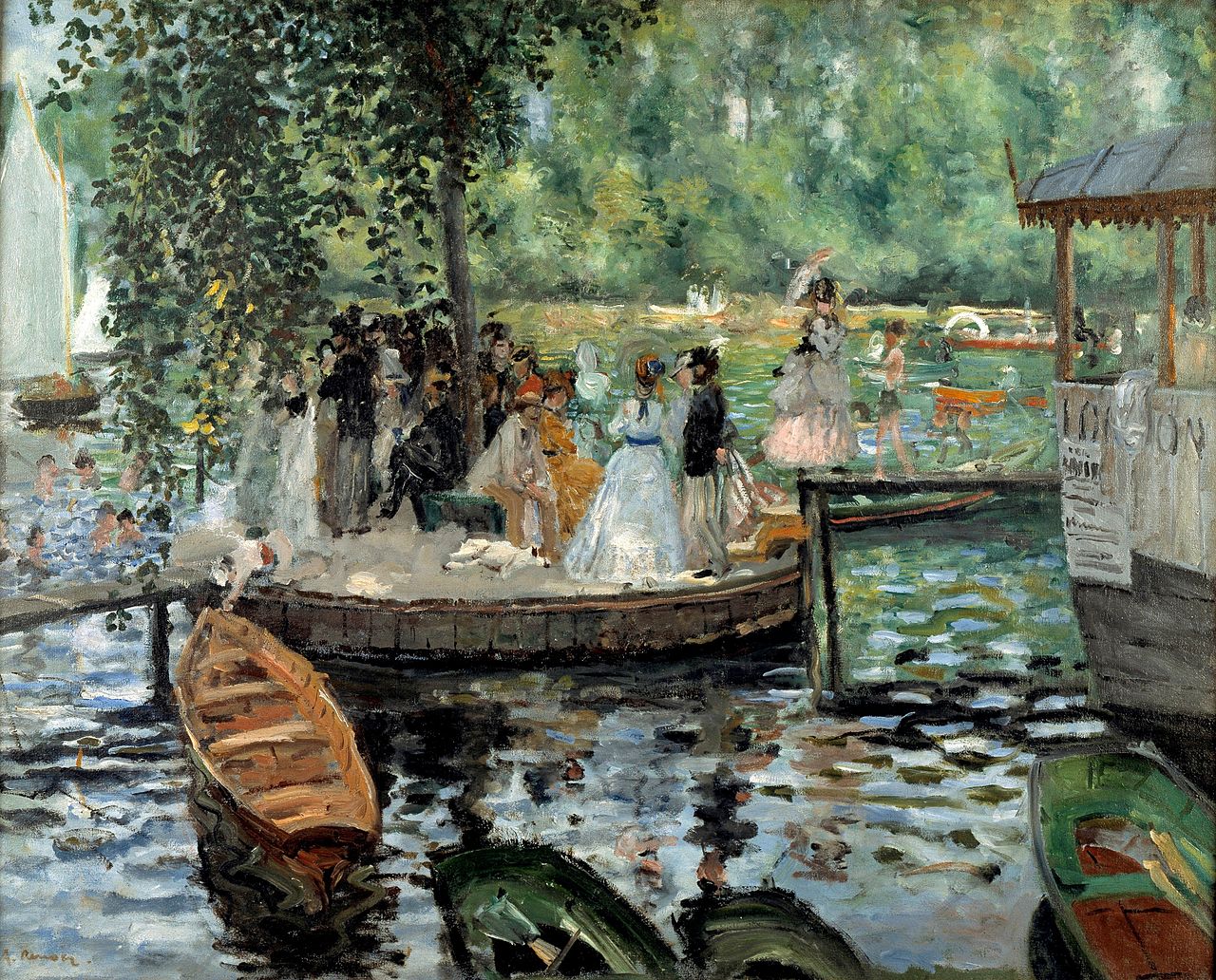
Popular with Parisians, these parks provided a natural setting within the city for scenes of leisure. Both Renoir and Manet painted scenes of Parisians enjoying these spaces, reflecting the social changes of the time.
Café de la Paix and Opera Garnier
Degas often painted Parisian nightlife and social scenes, capturing the elegant gatherings in and around the Opéra Garnier and its surrounding cafés.
The Role of Light and Atmosphere
Plein Air Painting
Many Impressionists worked outdoors (en plein air), using natural light to capture changing atmospheric conditions in real-time. This approach led to looser brushwork and vibrant colors, techniques that conveyed the spontaneity of urban life.
Color Theory and Innovation
Inspired by scientific color theories, Impressionists used complementary colors and avoided black, opting for mixed colors to create shadow and depth. This innovation brought Paris’s lively settings to life in entirely new ways.
Major Works and Series
Monet’s Water Lilies and Cathedral of Rouen Series
Though not created in Paris, these series were inspired by the same fascination with light and atmosphere that he honed in the city.
Caillebotte’s Paris Street; Rainy Day
This monumental work captures a typical Paris street scene with realistic detail and an Impressionist play of light on wet pavement.
Degas’ Ballet and Opera Paintings
Degas often portrayed the Paris Opera, providing a glimpse into both the glamor of the performances and the private world of the dancers behind the scenes.
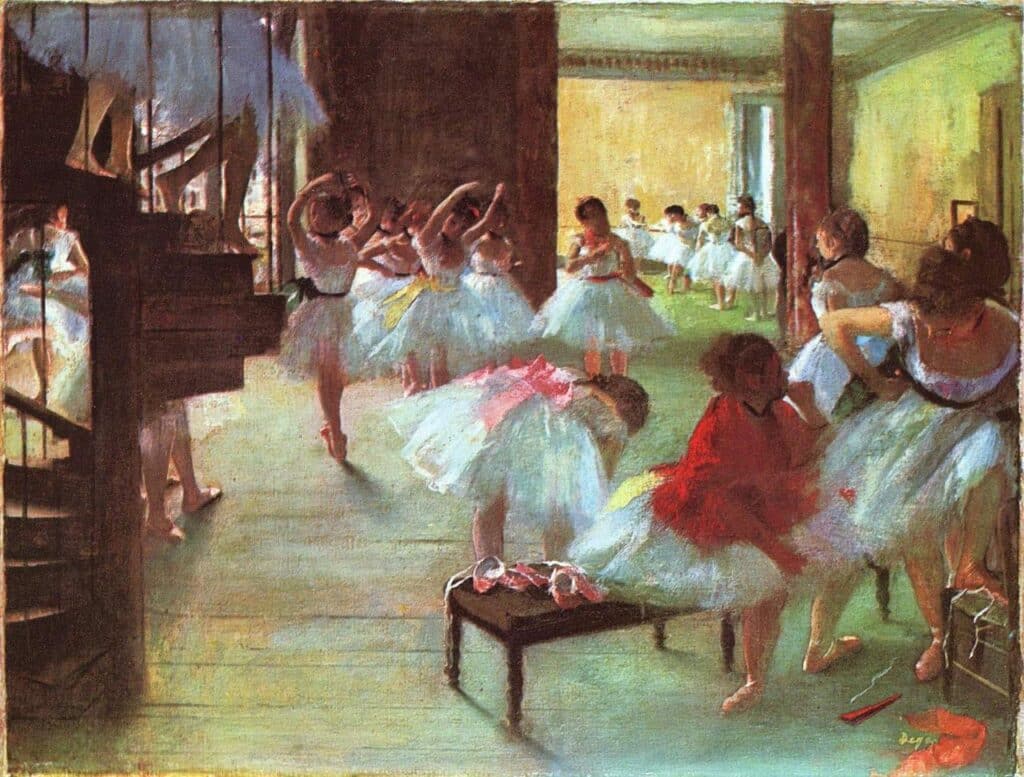
Edgar Degas – L’Ecole de Danse
Where to see Impressionists paintings : Museums and Collections in Paris
Ce qui suit est un résumé de notre Post “The Impressionists in Paris : where to see their works”
Musée d’Orsay
The Musée d’Orsay in Paris, formerly a railway station, is home to one of the world’s greatest collections of Impressionist paintings. The museum highlights the transformative works of late 19th-century artists, each of whom reshaped art by focusing on light, movement, and daily scenes.
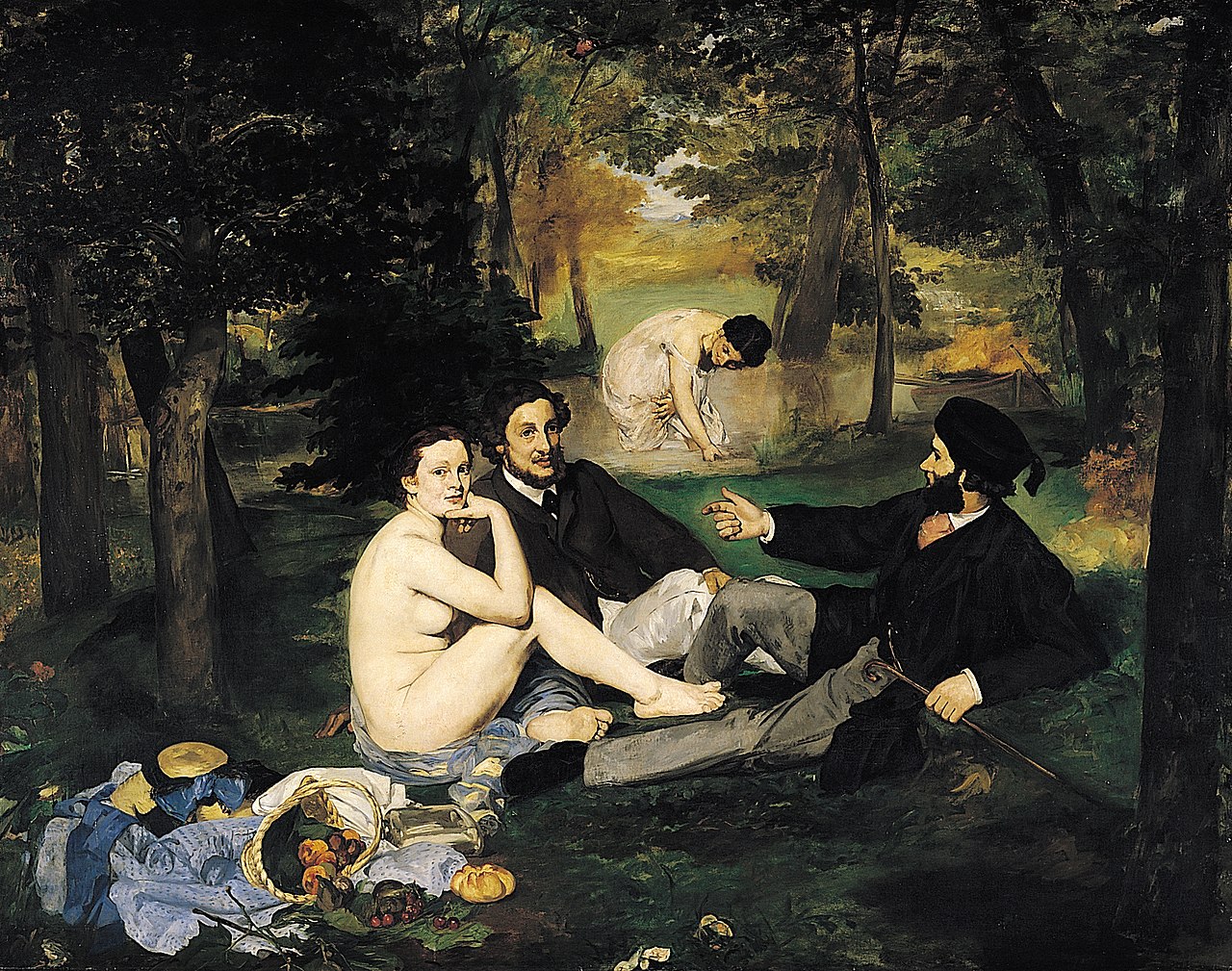
Among its collection, Claude Monet stands out with The Gare Saint-Lazare, capturing a lively train station, and Poppy Field, a serene countryside scene. Pierre-Auguste Renoir contributes with Dance at Le Moulin de la Galette, portraying a lively outdoor gathering, and Édouard Manet with groundbreaking works like The Luncheon on the Grass, a blend of classical and modern themes.
The collection also features Camille Pissarro’s urban and rural scenes, Alfred Sisley’s atmospheric landscapes, and Berthe Morisot’s intimate portrayals of women, like The Cradle. Gustave Caillebotte adds depth with works such as Paris Street, Rainy Day, showcasing his precise realism. Though leaning toward Post-Impressionism, Paul Cézanne is represented with early works that hint at his later, structured style. The collection illustrates Impressionism’s evolution and its crucial role in bridging traditional art with modern movements like Post-Impressionism and Modernism.
Orangerie Museum
The Musée de l’Orangerie is an essential destination for appreciating the immersive, large-format Water Lilies cycle by Monet and understanding the trajectory of French art from Impressionism through Post-Impressionism and into early modernism. The museum’s unique layout and intimate setting allow visitors to experience these iconic pieces up close, creating an unforgettable artistic experience.
The Musée de l’Orangerie in Paris is celebrated for its extensive collection of Impressionist and Post-Impressionist art, with a primary highlight being Claude Monet’s Water Lilies. This series, displayed in specially designed oval rooms, immerses visitors in Monet’s vision of his Giverny garden, capturing light and reflection across large, panoramic panels. The museum also houses key works by other Impressionists, including Pierre-Auguste Renoir’s Young Girls at the Piano and Gabrielle and Jean, showcasing his warm, vibrant style, and Alfred Sisley’s The Flood at Port-Marly, a masterful depiction of light and reflection.
Paul Cézanne’s The Bathers, a link between Impressionism and Post-Impressionism, also features in the collection, along with Marie Laurencin’s delicate portraits and Maurice Utrillo’s Paris street scenes. Additionally, the Jean Walter and Paul Guillaume Collection includes modern works by Matisse, Modigliani, and Picasso, marking the evolution from Impressionism to early modernism. This intimate museum offers a unique experience in understanding French art’s transformation.rgettable artistic experience.
Musée Marmottan Monet
The Musée Marmottan Monet in Paris is a must-see for Impressionist enthusiasts, housing the largest collection of Claude Monet’s works. This former mansion offers an intimate experience of Monet’s evolution, featuring pieces like Impression, Sunrise (1872), which gave the movement its name, capturing the port of Le Havre in a hazy morning light. The Water Lilies series and Japanese Bridge showcase his late-career focus on light and nature in his Giverny garden.
Other Impressionist highlights include Berthe Morisot’s The Cradle, a delicate portrait of maternal care, and Edgar Degas’s ballet scenes, which capture movement with innovative techniques. Pierre-Auguste Renoir is represented by warm portraits like Portrait of Julie Manet, while Camille Pissarro’s landscapes like The Climbing Path showcase his dedication to rural French life.
The museum also features pieces by Caillebotte, Sisley, and occasionally Manet, bridging Impressionism with modern art. This rich collection illuminates the development of Impressionism and Monet’s lasting impact.
Petit Palais Museum
The Petit Palais in Paris, known as the City of Paris Museum of Fine Arts, houses a distinguished Impressionist and Post-Impressionist collection within a broader showcase of French art. Key highlights include Claude Monet’s Sunset on the Seine at Lavacourt, capturing the serene effects of light on water, and Camille Pissarro’s The Roofs of Old Rouen, with its atmospheric depiction of urban rooftops. Alfred Sisley’s The Road from Versailles to Saint-Germain illustrates his skill in portraying peaceful rural scenes, while Gustave Caillebotte’s Portrait of Richard Gallo showcases his blend of realism with Impressionist light and shadow.
The collection also includes Paul Cézanne’s still lifes, like Still Life with Onions, bridging Impressionism and modern art with structured compositions, and Édouard Manet’s The Spring, embodying Impressionism’s essence with loose brushwork. Berthe Morisot’s The Fable reflects her delicate style and introspective focus. The Petit Palais provides a unique Impressionist experience within a diverse art historical context, housed in a stunning Beaux-Arts building.
Musée Rodin Museum
The Musée Rodin in Paris is primarily focused on the works of sculptor Auguste Rodin, showcasing his sculptures, drawings, and personal art collection.
Although it lacks an extensive Impressionist collection, the museum features select works influenced by the movement, reflecting Rodin’s admiration for its artists. Notable pieces include Pierre-Auguste Renoir’s Young Girl with a Red Hair Ribbon, which exemplifies the tender portrayal of form and light that Rodin appreciated.
Temporary exhibitions have also highlighted Claude Monet’s works, such as Water Lilies, linking Rodin’s fascination with nature and light to Monet’s landscapes. Edgar Degas’s Dancer at Rest fits well within Rodin’s exploration of dynamic forms, while Camille Pissarro’s pastoral scenes, shown in special exhibitions, align with Rodin’s love for capturing life’s nuances. Overall, the Musée Rodin provides insight into how Impressionist values influenced Rodin’s sculptures, showcasing the interplay between Impressionism and sculpture.
Emblematic artists of the Impressionists movement
The most famous painters of the Impressionists movement are :
Famous Impressionist works of the Impressionists movement
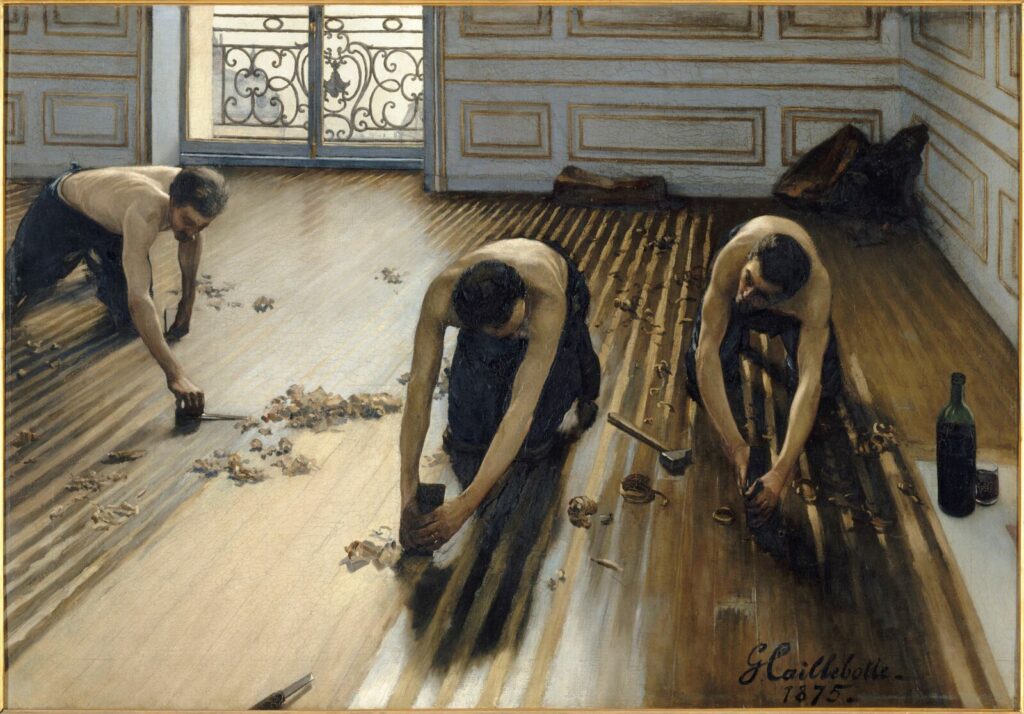
Les Racleurs de parquets – Gustave Caillebotte
Impression soleil levant (1872) is the most famous painting of Impressionism: it gives the movement its name.
Le Berceau (1872): one of nine canvases presented by Berthe Morisot at the first Impressionist exhibition held in 1874 at the photographer Nadar’s.
Paul Cézanne’s La Maison du pendu (1873) was one of three paintings presented by Cézanne at the first Impressionist exhibition in 1874.
Edgar Degas’ Dance Class (1873-1876) is emblematic of his research into movement.
Gustave Caillebotte’s Les Raboteurs de parquet (1875) is an early depiction of the urban proletariat.
Rue de Paris, temps de pluie (1877) is one of Gustave Caillebotte’s most famous paintings and a key element of Impressionism.
Auguste Renoir’s The Swing (1876) is typical of the Impressionists’ treatment of light: light, colorful brushstrokes capture the play of light through the foliage of the trees.
Le Bal du Moulin de la Galette by Auguste Renoir (1876): conveys the joie de vivre and gaiety of the period’s leisure activities. This is undoubtedly one of the paintings that earned Renoir the title of “painter of happiness”.
Dans un café, also known as L’Absinthe by Edgar Degas (between 1875 and 1876) is often seen as a denunciation of the evils of absinthe and alcohol.
L’Inondation à Port-Marly (1876): Port-Marly was the subject of numerous paintings by Alfred Sisley, some of which were shown at the first Impressionist exhibition in 1874.
Les boulevards extérieurs, effets de neige, 1879 is one of Camille Pissarro’s first paintings of Paris.
Boulevard Montmartre series (1897): it was not until 1893 that Pissarro really made Paris a subject, notably through his Boulevard Montmartre series.
Claude Monet’s Water Lilies (series from 1914 to 1926) are a series of around 250 paintings of widely varying sizes, including the large mural ensemble in the Musée de l’Orangerie.
Legacy of the Impressionists movement in Paris
A new Art and Paris synonymous with art and innovation
The Impressionists movement redefined the art world, with Paris as their backdrop. Their focus on modern urban scenes, fleeting moments, and atmospheric effects left an indelible mark on art history. They paved the way for future movements, including Post-Impressionism and Cubism and transformed Paris itself into a city synonymous with art and innovation.
Influence on Parisian Culture and Identity of the Impressionists movement
The Impressionists captured the vibrancy of 19th-century Parisian life, painting bustling streets, cafés, dance halls, and public gardens. Works like Renoir’s Le Moulin de la Galette or Monet’s Boulevard des Capucines immortalized scenes of urban Paris, blending art with the spirit of the city. This created a lasting association between Paris and the idea of artistic freedom and modernity helping shape the perception of Paris as a city where art is deeply connected to the life and experience of its inhabitants.
Legacy in Parisian Museums and impact on tourists
Musée d’Orsay, housed in a former railway station on the Seine, is home to one of the world’s largest collections of Impressionist and Post-Impressionist masterpieces. L’Orangerie Museum in the Tuileries Garden is also known for Monet’s monumental Water Lilies series. Musée Marmottan Monet houses the largest collection of Monet’s works, including Impression, Sunrise, the painting that inspired the term “Impressionism.”
The Impressionists movement has made Paris a global hub for art tourism, attracting millions of visitors who come to see the works of these groundbreaking artists. Walking tours, art exhibitions, and gallery shows dedicated to Impressionism contribute significantly to the city’s cultural economy. The movement has cemented Paris’s status as a birthplace of modern art and a beacon of creativity, encouraging international artists and art students to study and create in the city.
Impressionism’s legacy is also evident in the aesthetics of Paris itself: the city’s art galleries, its picturesque Seine River views, and the dedication to maintaining parks and public spaces echo the natural and urban scenes that the Impressionists celebrated.
This alignment between urban renewal at the time of Baron Haussmann and artistic innovation created a synergy that still defines the today visual and cultural character of Paris.
In Summary
The Impressionists movement left a legacy that extends far beyond their paintings. They redefined Paris as a global capital of modern art, bridging tradition and innovation, and embodying the values of freedom, modernity, and artistic experimentation. Their contributions to art and culture continue to shape the identity of Paris, making the city synonymous with creativity and a rich appreciation for beauty in everyday life.