Château de La Roche-Guyon: Rommel's WWII Headquarters
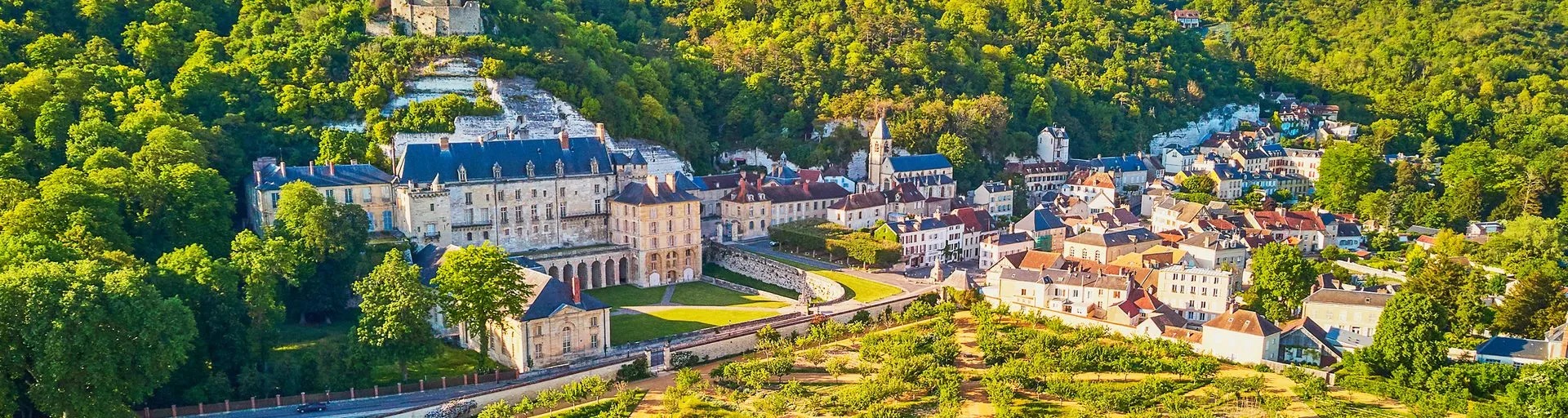
A hidden gem on the outskirts of Paris where history and nature meet
Nestled in the lush landscapes of the Vexin Regional Natural Park, just an hour from Paris, Château de La Roche-Guyon is one of France’s most fascinating yet lesser-known historical sites. This medieval fortress, carved into an imposing chalk cliff, blends seamlessly with its natural surroundings, giving the impression of emerging straight from a fantasy novel.
Yet behind its fairy-tale appearance lies a dark and captivating chapter in World War II history. In 1944, the château became the headquarters of Field Marshal Erwin Rommel, the legendary “Desert Fox,” as the Allies prepared for the D-Day landings. Today, visitors can explore the same underground tunnels where Rommel planned his defenses, wander through centuries-old halls, and admire breathtaking views over the Seine Valley.
If you're looking for a day trip from Paris or L’Isle-Adam, combining history, nature and adventure, the Château de La Roche-Guyon should be at the top of your list. Here’s everything you need to know before visiting.
Note: The Duke of La Rochefoucault-Liancourt, founder of what later became the École supérieure des Arts et Métiers ParisTech, was born in this château on 11 January 1747. See the life of the Duke of La Rochefoucault-Liancourt.
Why visit the Château de La Roche-Guyon?
A unique blend of nature and architecture
Unlike traditional castles entirely built by man, the Château de La Roche-Guyon is a troglodytic fortress – meaning it was partially carved into the rock. Its foundations date back to the 12th century, but its most striking feature lies in its integration into the 80-metre-high chalk cliff overlooking the Seine.
The upper castle, perched on the edge of the cliff, offers panoramic views of the surrounding countryside, while the lower levels descend into labyrinthine galleries that once served as storage spaces, escape routes and even secret meeting rooms. This harmonious blend of human craftsmanship and nature makes it one of France’s most spectacular castles.
An important historical site of the Second World War
While the castle’s medieval origins are impressive, its role during the Second World War is what truly sets it apart. In March 1944, just three months before D-Day, Field Marshal Erwin Rommel chose La Roche-Guyon as the command centre for Army Group B, tasked with defending Normandy against the Allied invasion.
Rommel believed that the underground tunnels of the castle would protect him from Allied bombings. Today, visitors can stand in the very rooms where he devised his defensive strategies, including the infamous Atlantic Wall. The castle’s exhibition dedicated to World War II features documents, maps, and period photographs, providing a striking glimpse into the final months of Nazi occupation.
An ideal getaway from Paris
Just 75 km (47 miles) from Paris and 65 km from L’Isle-Adam, La Roche-Guyon is an easy day trip by car or train. Unlike crowded tourist sites like Versailles or Fontainebleau, this castle remains relatively unknown, allowing you to explore its halls and gardens in peace.
The surrounding Vexin Regional Natural Park is perfect for hiking, cycling or a picnic by the Seine. If you love history, nature and off-the-beaten-path destinations, it’s one of the best hidden gems near Paris.
Exploring La Roche-Guyon Castle: What to See
The Upper Castle: Medieval Grandeur with a View
Your visit begins at the **upper castle**, where the **main courtyard** greets you with a blend of Renaissance and medieval architecture. The **keep**, built in the 12th century, is the oldest part of the castle and offers **breathtaking views** over the Seine Valley.
Inside, you’ll discover:
– **The Great Hall (Guard Room)**: A vast medieval banquet hall featuring a **monumental fireplace** and original stone vaults.
– **The Chapel**: A small 15th-century chapel, exquisitely preserved, with **Gothic vaults** and stained glass.
– **The Duchess’s Apartment**: A richly decorated Renaissance residence adorned with **tapestries, portraits and period furniture.
Don’t miss the **terrace**, from which you can enjoy sweeping views over the **lush green hills of the Vexin** – the very landscapes that once allowed defenders to spot approaching enemies.
The Troglodyte Galleries: Rommel’s WWII Bunker
The most **unique and evocative** part of the château is its **underground network**. Carved directly into the chalk cliffside, these galleries served as **storage spaces, defensive positions and even emergency exits** in times of siege.
During the Second World War, Rommel **reinforced these galleries** to turn them into an **armored command post resistant to bombing**. Today, you can explore:
– **The War Room**: Where Rommel and his staff **analysed Allied movements** and planned counterattacks.
– **The Radio Room**: A cramped, dimly lit space from which **encrypted messages** were sent to Berlin.
– **The Escape Tunnel**: A narrow passage plunging deep into the cliffside – it is said to have served as an escape route for the castle’s inhabitants during medieval sieges.
The **World War II exhibition** in the galleries features **original German military maps, photographs of Rommel at the castle, and firsthand accounts** from locals who lived through the Occupation. A moving yet gripping dive into one of the most pivotal moments of modern history.
The Gardens: A peaceful haven with a dark past
Across the road, opposite the castle, stretches a historic 3-hectare garden, the “Fruit Orchard”, as it was in the 17th century to supply the lords with fruit and vegetables, offering a fine view of the Seine. The French-style terraces, orchards, and flowerbeds provide a striking contrast to the castle’s military history.
One of the most remarkable features is the “English Garden”, a romantic park with winding paths, hidden grottos, and a small lake. During World War II, this area was off-limits to locals, as the Germans used it for military exercises and vehicle storage.
Today, it’s a peaceful spot for a stroll, with benches offering views of the Seine and shaded trees perfect for a picnic.
The Village of La Roche-Guyon
Before or after your visit to the château, take time to explore the charming village at the foot of the cliff. With its half-timbered houses, cobbled streets and riverside promenade, it feels like stepping back in time.
The Église Saint-Samson: A 12th-century Romanesque church with a serene interior.
The Seine Banks: An ideal spot for a leisurely walk or a boat ride (rentals available in summer).
Cafés & Local Shops: Sample traditional Norman specialties like Camembert, cider and apple tarts in one of the village’s cozy bistros.
Prepare Your Visit: Practical Information
How to Get to La Roche-Guyon from Paris
By car (recommended – ~1h15 from Paris)
Take the A13 motorway toward Rouen, then follow signs for Vernon/Giverny.
Exit at Vernon and take D913 toward La Roche-Guyon.
Parking: Free parking is available near the château entrance.
By train + bus (~2h)
Take a **TER train from Paris Saint-Lazare** to **Vernon (Eure)** (~45 min).
From Vernon, take **Bus Line 27** (direction Les Andelys) to **La Roche-Guyon** (~20 min).
**Check the timetables** on [Transdev Normandie](https://www.transdev-idf.com/) as buses run infrequently.
By bike (~3h from Paris)
If you love adventure, follow the **bike path along the Seine** (Avenue Verte) from Paris to La Roche-Guyon.
Opening Hours & Tickets (2024)
Open daily from April to November (closed on Tuesdays in low season).
Opening hours:
April–June & September–October: 10 am–6 pm
July–August: 10 am–7 pm
November–March: 10 am–5 pm (weekends only)
Prices:
Adults: €12
Students/Seniors: €10
Children (6–12 years): €6
Under 6 years: Free
Family Pass (2 adults + 2 children): €30
Guided tours: Available in French and English (advance booking recommended).
Best time to visit
Spring (April–June): The gardens are in full bloom and crowds are moderate.
**Summer (July–August)**: Ideal for **outdoor activities**, but more touristy.
**Autumn (September–October)**: The **autumn colours** make the château even more picturesque.
**Winter (November–March)**: The château is **less crowded**, but some areas may be closed.
Accessibility
The **upper château** is **not fully wheelchair accessible** due to steep stairs.
The **gardens and lower levels** are **more accessible**, with paved paths.
**Pushchairs** can be difficult to manoeuvre in the galleries.
Other sites to combine with your visit
If you’re taking a day trip from Paris, you can pair La Roche-Guyon with:
1. Giverny (20 min by car) – Discover **Monet’s house and gardens**, one of France’s most famous Impressionist sites.
2. Les Andelys (15 min by car) – A charming medieval town home to the **ruins of Château Gaillard**, built by Richard the Lionheart.
3. Vernon (15 min by car) – A picturesque riverside town with a **12th-century church** and **half-timbered houses**.
4. Parc naturel régional du Vexin – Perfect for hiking, cycling and nature walks.
The dark history of La Roche-Guyon during World War II
Why did Rommel choose this château?
In early 1944, as the Allies prepared **Operation Overlord (the D-Day landings)**, the Germans knew an invasion was imminent—but they didn’t know **where or when**. Field Marshal **Erwin Rommel**, one of Hitler’s most brilliant strategists, was tasked with **fortifying the Atlantic Wall**.
Rommel needed a **secure headquarters, safe from bombing**, close enough to Normandy to **respond quickly** in the event of an Allied landing. La Roche-Guyon was **ideal**:
**Natural protection**: The **thick chalk cliffs** made it resistant to bombing.
**Strategic location**: Just **100 km from the Normandy beaches**, allowing rapid deployment.
**Secrecy**: The château was **far enough from major cities** to avoid intense Allied reconnaissance.
Life at Rommel’s HQ
From **March to July 1944**, Rommel and his staff worked tirelessly from the **underground bunker** beneath the château. Life here blended **military discipline with an eerie sense of normalcy**:
**Daily meetings**: Rommel reviewed **intelligence reports, aerial photographs and coastal defences**.
**Inspections**: He frequently travelled to Normandy to **oversee in person** the construction of the **Atlantic Wall**.
**Leisure time**: Officers sometimes relaxed **in the gardens** or dined in the castle’s grand hall.
Locals recall seeing **German soldiers patrolling the village** and **military trucks parked in the courtyards**. The castle’s **underground galleries** were converted to house **rest quarters, a radio room and a war operations room**.
The aftermath: Rommel’s fate and the castle’s liberation
On **6 June 1944 (D-Day)**, Rommel was not in La Roche-Guyon: he was in Germany celebrating his wife’s birthday. When he returned, **the Allied invasion was in full swing**.
As **the Battle of Normandy raged**, Rommel grew increasingly **pessimistic** about Germany’s chances. He was **wounded in an air attack** on 17 July 1944, then **forced to commit suicide** after being implicated in the **20 July plot** to assassinate Hitler.
The château was liberated by British forces in late August 1944, just days before the liberation of Paris. Today, you can still see bullet holes in some of the château’s walls—a silent testament to its recent wartime past.
Tips for the best visit
1. Choose a guided tour (especially for World War II history)
While you can explore the château on your own, the guided tour (in English) offers fascinating insights into Rommel’s stay. The guides share little-known stories, such as how locals smuggled food to resistance fighters right under the noses of the Germans.
2. Wear comfortable shoes
The château features many staircases, uneven paths, and narrow tunnels. Leave the heels and flip-flops at home—sturdy walking shoes are a must.
3. Visit early or late in the day to avoid crowds
The château is at its most peaceful in the morning (right at opening) or late afternoon. If you’re visiting in summer, weekdays are less crowded than weekends.
4. Pack a picnic
The **gardens and banks of the Seine** are perfect for a **lunch in the great outdoors**. Pick up some **local cheese, bread and cider** at the market in Vernon before you arrive.
5. Check for special events
In summer, the château hosts **medieval festivals, World War II reenactments and nighttime light shows**. Check their [official website](https://www.chateaudelarocheguyon.fr/) for updates.
6. Pair your visit with a trip to the Arboretum de La Roche-Guyon
The entrance is on the D37 departmental road, 2.5 km from the château. Set in the heart of a 350-hectare forest – the **Forêt de La Roche-Guyon** – this 13-hectare arboretum was designed to represent the Île-de-France region, both in its shape (visible from the sky, it mirrors each department) and its flora.
7. Pair your visit with a day trip to Giverny
Since **Giverny (Monet’s gardens) is just 20 minutes away**, many visitors combine the two sites. **Book your tickets to Giverny in advance** to skip the queues.
In conclusion: why La Roche-Guyon should be part of your Paris itinerary
La Roche-Guyon Castle is not just a beautiful medieval fortress – it’s a living piece of history where centuries of conflicts, royal intrigues, and military strategies intersect. Whether you’re a history enthusiast, nature lover, or simply seeking an original getaway from Paris, this hidden gem promises an unforgettable experience.
From walking in Rommel’s footsteps through the underground galleries to soaking in the views from the cliffside terrace, every part of the castle tells a story. And with its proximity to Giverny, Les Andelys, and the Seine Valley, it’s the perfect base for exploring the French countryside.
If you’re tired of Paris’s overcrowded tourist hotspots, La Roche-Guyon offers adventure, history, and beauty – all just an hour from the capital. Don’t miss it.
FAQ about La Roche-Guyon Castle
Is La Roche-Guyon Castle worth visiting?
Absolutely! It’s one of France’s most unique castles, blending medieval architecture, troglodyte galleries, and World War II history in a breathtaking natural setting.
How much time should I plan for the visit?
Plan 2 to 3 hours to explore the castle, the galleries, and the gardens. If you choose a guided tour or a picnic, allow 3 to 4 hours.
Can you visit the Second World War bunker?
Yes! The underground galleries, including the war room and Rommel’s radio room, are accessible to visitors with the standard ticket.
Is the castle suitable for children?
Yes, but young children might find the dark galleries a little frightening. The gardens and the upper castle are more child-friendly.
Are there restaurants near the castle?
The village has a few cafés and bistros, but for a full meal, consider dining in Vernon or Giverny before or after your visit.
Can you take photos inside the castle?
Yes, photography is permitted (without flash) in most areas, including the Second World War exhibition.
Is the castle haunted?
Locals love sharing tales of ghostly soldiers and medieval spirits, but no official hauntings have been recorded. The atmospheric galleries certainly make it easy to imagine!


