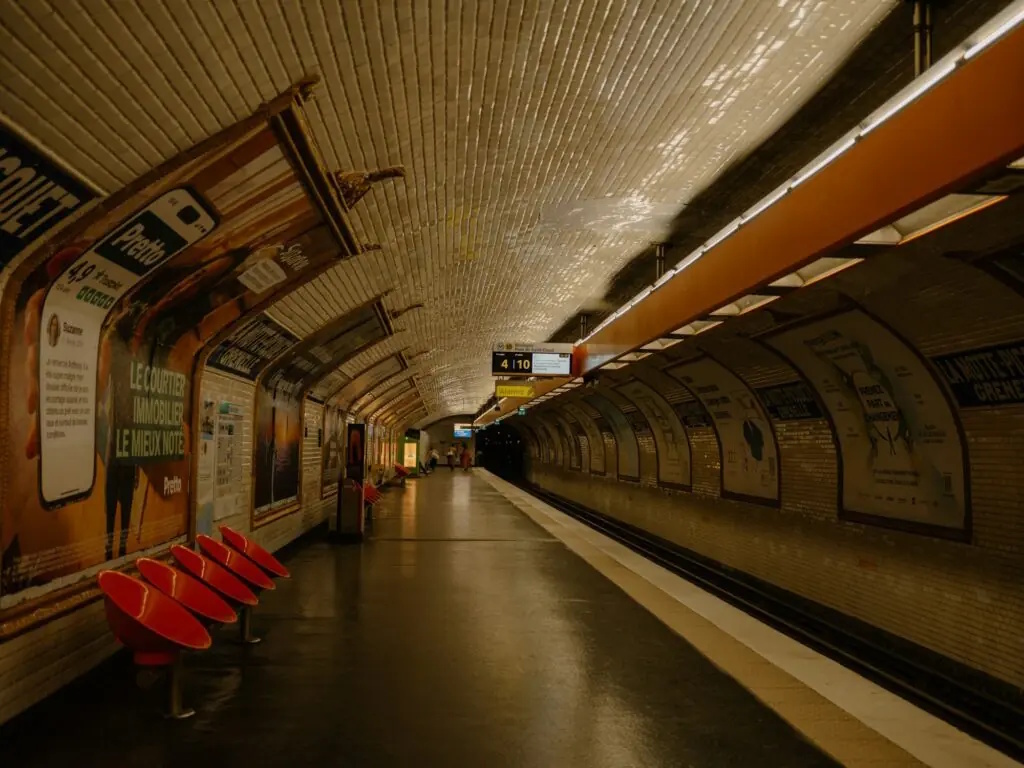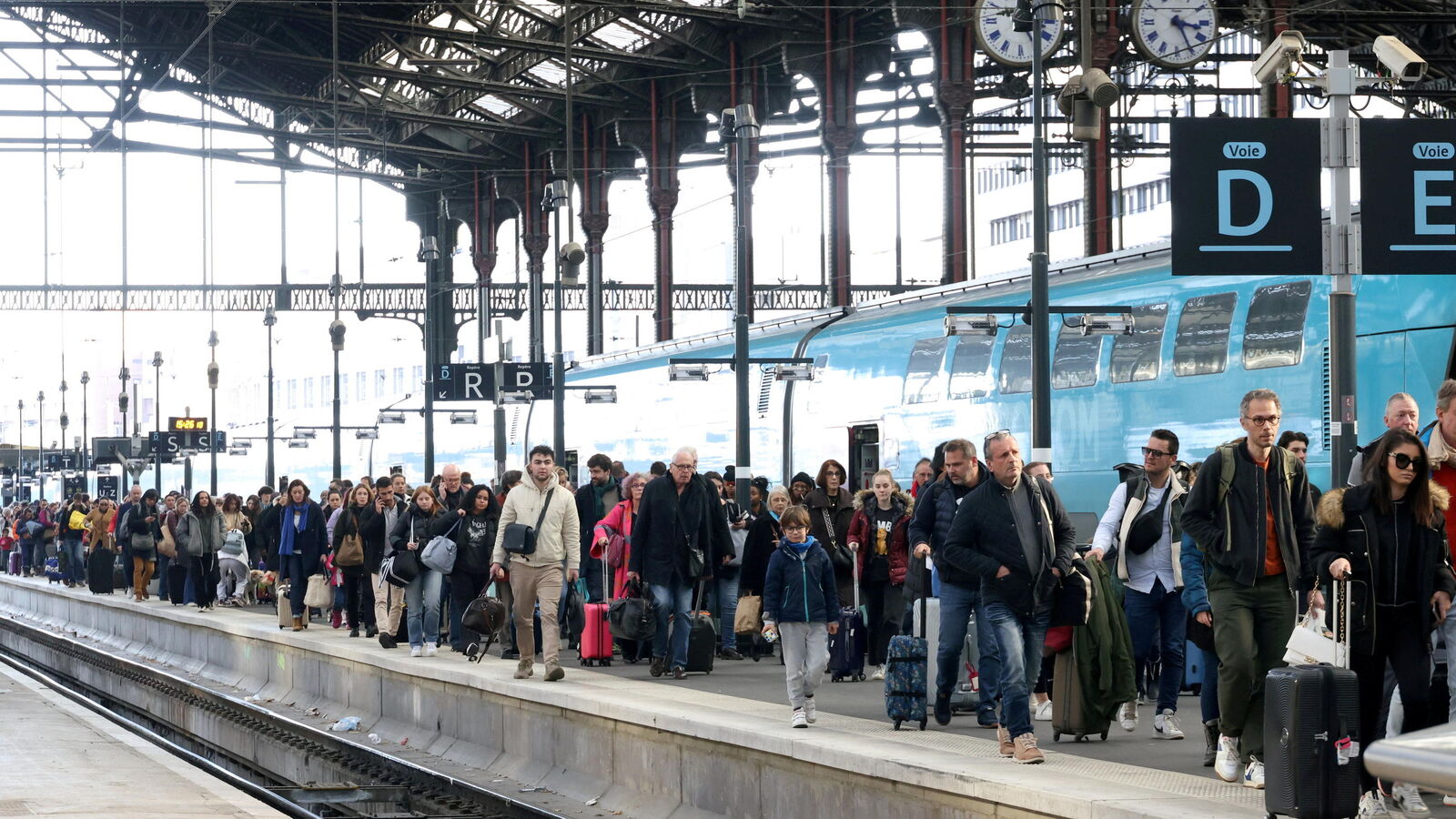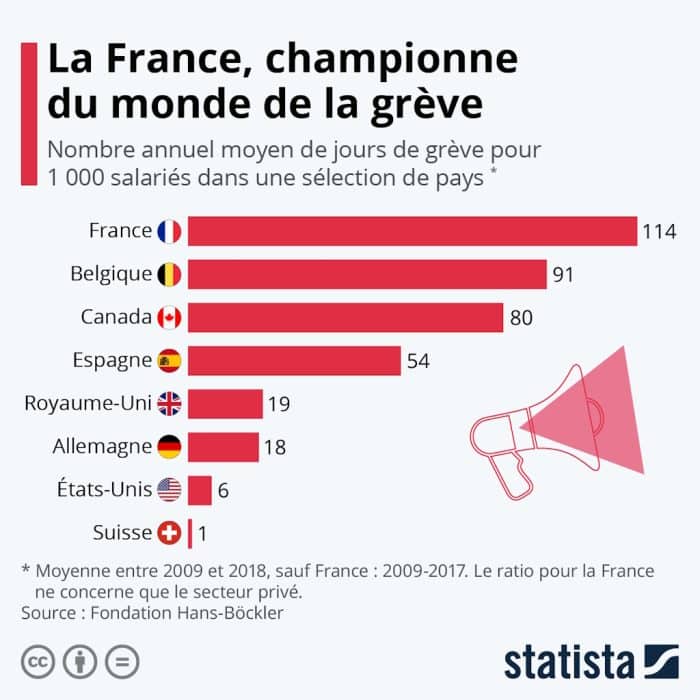
Strikes at the end of 2026 are possible in Paris and the Paris region.
Strikes could disrupt your stay in the capital. Métros, trains, buses, museums, and even airports may be affected. A situation to anticipate, especially if you plan to visit the Tuileries Christmas Market or attend the New Year’s Eve fireworks.
This article aims to assess the situation and provide recommendations.
Note : at the end of the text you will find
1/ A photo gallery related to the article
2/ Your Bonus: 5 valuable tips to help you organize and enjoy your stay in Paris
Why these strikes at the end of 2026?
Salary demands, pension reforms, working conditions… The reasons are numerous and often conflicting. Trade unions are preparing targeted actions. Some dates could coincide with major events. It’s best to prepare for this.
This article gives you the keys to adjust your trip. Dates to watch, alternative transport options, areas to avoid… We help you organize your stay despite the disruptions. Discover our tips for a stress-free stay.
Strike calendar for late 2026: key dates to watch and forecasts
Late 2026 looks set to be potentially turbulent in Paris. But it’s far from certain that even if strikes do occur, they will disrupt tourists visiting Paris. Here are the periods to anticipate.
The 5 November 2026 marks the start of tensions. An interprofessional strike is planned. Public transport will be heavily affected. Check out our practical solutions for this day.
In mid-November, SNCF unions are calling for mobilisation. The exact dates are yet to be confirmed. Plan alternatives if you’re travelling between 15 and 20 November. The latest information suggests the final date will be 17 November 2026.
December may not be spared either. The end-of-year holidays often coincide with strike calls, as it’s a stronger pressure tactic for unions. The 10 December and 17 December are high-risk dates. Partial disruptions in transport could last a day or two, but never until 24 December. The risk for unions would then be alienating public opinion.
To organise your stay despite these uncertainties, check out our tips for a stress-free trip. Stay updated via the official transport websites.
Key reasons behind the late 2026 strikes: demands and key players
The late 2026 strikes in Paris could be large-scale, though mostly sector-specific, without paralysing the country. Several unions are preparing actions to defend their rights. The demands cover a range of issues, but three themes stand out.
Pension reform
This is a topic that has been debated for years and remains highly contentious. Unions like the CGT and FO are demanding its withdrawal. They denounce a deterioration in working conditions. Public and private sector employees are both affected.
The goal is to lower the retirement age (currently set to rise from 62 to 64). It’s hard to grasp when employees work 35 hours a week (but self-employed workers put in 45 to 60 hours) and retirement ages are rising to 67 in most surrounding European countries.
Wages and purchasing power are also at the heart of the debate.
Inflation is weighing on households. Strikers are demanding pay raises and bonuses. The transport and energy sectors are particularly mobilized.
In recent months, rising oil prices have severely disrupted purchasing power. Especially since the media seem to take pleasure in highlighting price increases, rarely the decreases.
But coupled with the average French worker’s lack of motivation—which could offset some of the impact—it’s clear that the average standard of living in France is declining in absolute terms and, above all, compared to neighboring countries.
Working conditions
In Parisian transport, tensions are running high. Metro drivers and RATP staff are denouncing the grueling working conditions. They are demanding more human and technical resources. To prepare for disruptions, check out our tips for organizing your stay.
In reality, tensions often stem from passenger behavior on buses. In some neighborhoods, passengers have even attacked drivers for not paying, for example. As for RATP train drivers (Metro or RER), the official average working time of 35 hours per week is theoretical. Actual driving time is between 3 and 4.5 hours per day on the RER. The rest of the shift is spent on tasks like preparing and testing trains at the depot, turning around at terminals, deadheading trips, and mandatory vigilance breaks.
Impacts on the SNCF network: disruptions and rail alternatives
Strikes at the end of 2026, if they go ahead, could heavily impact the SNCF network. However, the number of TGVs is usually reduced to two-thirds, leading to disrupted schedules and overcrowded trains.
Other Intercités trains are often the most disrupted. As for TER trains (from the suburbs to Paris), they face massive cancellations during the day but not during peak hours. Expect significant delays, even on trains that are still running.
International services like Thalys or Eurostar will not be spared, though they are usually less affected. Some drivers are not French and therefore have no personal reason to strike, unless it’s a European-wide strike. Check real-time schedules on the SNCF website. In these strike conditions, Paris stations (Montparnasse, Nord, Lyon) will likely be overwhelmed (with passengers waiting for trains).
To bypass these disruptions, consider alternatives. Long-distance coaches (BlaBlaCar Bus, FlixBus) offer budget-friendly options. Regional trips can be replaced by carpooling.
If you're visiting Paris, explore the self-guided walks to discover the city in a different way. To plan your stay despite the strikes, check out our practical tips. And finally, choose to Visit Paris on Foot: it's very easy and effortless.
Travellers arriving from airports should plan ahead. Orly and Roissy-CDG remain accessible via RER B (from Charles de Gaulle Airport) and Métro Line 14 (from Orly Airport), but with reduced frequencies. Allow extra time for your transfers.
RATP strike: affected metros, buses and RER, solutions for users
A strike at RATP heavily disrupts travel in Paris. Métros, buses and RER lines face delays or cancellations. The busiest lines, such as Line 1, 14 or RER A, are often the most affected. Be prepared for longer wait times.
To avoid any inconvenience, opt for alternatives. Self-service bikes, such as Vélib’, remain a practical choice. Electric scooters and shared taxis can also come in handy. Be sure to check real-time disruptions on the RATP app or the city’s website.
If you’re visiting Paris during this period, explore the neighborhoods on foot. A stroll from the Louvre to the Concorde offers a great alternative. To plan your stay despite the strikes, check out our practical tips. --> URL Visiter paris à pied
Crowded train stations and metro stops can be risky areas. Stay alert for pickpockets. Opt for off-peak hours for your travels. A strike can also be an opportunity to discover Paris in a different way!
Museums and monuments: moderate strike risks
Tourists may also be affected by strikes at museums. In these public places, strikes may be localized to a single museum for specific demands. However, they could also be part of a broader interprofessional social movement, with national notices covering the entire public sector (museums are often state-run).
1. Upcoming protest schedule (November – December 2026)
National notice in effect until the end of December. The Union fédérale des syndicats de l'État (UFSE-CGT) has filed a strike notice covering the period from 1 November to 31 December 2026. National museum staff are therefore legally covered to strike at any time during this period. No impact if the strike does not escalate nationwide.
Action day on Tuesday, 17 November 2026. The inter-union public sector alliance and the CGT-Culture have called for a general strike in both the public and private sectors on this Tuesday. Total or partial closures of galleries are expected in major national museums and monuments that day. The impact should be limited.
Weekly and student protests. Regular calls for mobilization, particularly from SUD Culture Solidaires, along with an active student and high school movement since September, are causing occasional disruptions. Preventive closures may also be enforced on Saturdays during downtown demonstrations to protect museums from damage.
2. Overview by major institutions
Louvre Museum. After eleven months of industrial action over security and infrastructure, the inter-union committee (CFDT-CGT-SUD) and management signed a crisis resolution protocol on 29 October 2026. The museum remains affected by national protest days, such as 5 November when several rooms had to close.
Château de Versailles and national monuments. Sites under the Centre des monuments nationaux (Panthéon, Arc de Triomphe, Sainte-Chapelle) and the Château de Versailles remain highly sensitive to nationwide strike calls. During the strike on November 5, Versailles had to warn of a significant risk of total closure.
Musée d'Orsay and municipal museums. The Musée d'Orsay regularly adjusts its opening hours, for example canceling evening openings on strike days. Paris municipal museums (Carnavalet, Petit Palais, Catacombs) generally maintain their usual opening hours better, except in cases of major nearby demonstrations.
Centre Pompidou. The institution is closed to the public for major renovation work until 2030, regardless of the social context.
3. Practical tips for your visits
Check on the day before traveling. Staff general meetings often take place early in the morning (around 8:30 or 9:00) to decide whether to keep the venues open or close them. Consult the official social media accounts (X/Twitter) or museum websites starting at 9:30.
Book online whenever possible. If a strike leads to a total closure, national institutions like the Louvre or Versailles usually automatically refund timed tickets.
Air travel in Paris: risks of disruptions and advice for travelers
Strikes at the end of 2026 could also affect Parisian airports. Air traffic controllers and ground staff are often the first to be impacted. However, nothing has been announced yet.
The airports of Orly and Roissy-Charles de Gaulle are the most exposed. Check for updates on the airlines’ websites. Consider taking out travel insurance that covers disruptions.
To reach Paris from the airports, opt for alternatives such as private shuttles if the RER B (from Charles de Gaulle Airport) or the metro (Line 14 from Orly) are severely disrupted. Taxis and ride-hailing services remain available, but expect higher fares. Check our guide for planning your stay in Paris despite the strikes.
If your flight is canceled, contact your airline immediately. Some offer refunds or re-routing options. Avoid connections in Paris if possible.
To pass the time while waiting, explore the surroundings. The Louvre to Concorde walk offers a lovely cultural escape.
Finally, plan your trips in advance by booking your transfers early. Regional train services (Transilien) may be an option, but check their availability.
Protests and demonstrations: likely routes and areas to avoid in Paris
Strikes in general, and those at the end of 2026 in particular, will involve processions through Paris. However, the routes are not at the discretion of the unions. They must be authorized by the Ministry of the Interior, which typically approves them in the eastern districts of central Paris rather than in tourist areas.
Classic routes run between Place de la Bastille and Place de la République, or between Place de la Bastille and Place de la Nation. However, the Champs-Élysées and Place de la Concorde—though outside the protest zones—are often blocked by police to prevent incidents like those during the "Yellow Vests" protests in November 2018. In short, avoid the République and Bastille districts.
See map below for the districts that may be affected by demonstrations (highlighted in red) and all other districts with minimal disruption risk (i.e., most of the arrondissements). Markers on a red background indicate the location of major museums and monuments, while those on a blue background show the arrondissement numbers.
Public transport will be disrupted near protest routes. This is true even if the RATP is not on strike, as commuters often switch to other lines to get home. For short trips, opt for bikes or walking. And of course, stay away from tense areas.
Consequences for your accommodation: choose your hotel district wisely
The upshot is that if you want to visit museums without too much walking (if taking the metro is unreliable – see map above), the solution is to choose a hotel
Far from districts where protests will take place. That means avoiding the 3rd, 4th, 10th, 11th and 20th arrondissements
Close to major monuments and museums, i.e. the 1st, 2nd, 5th, 6th, 7th, 8th, 9th and 18th arrondissements
Below, you’ll find hotels by arrondissement “away from strikers” with additional information on the Points of Interest in each of these districts that you can visit.
Hotels by arrondissement in unaffected areas: direct online booking
1st arrondissement (Hotel booking and Points of Interest)
To find out what you can see in this arrondissement, click on "1st arrondissement, history, parks, gastronomy"
2nd arrondissement (Hotel bookings and Points of interest)
To find out what you can see in this arrondissement, click on "2nd arrondissement, the smallest between history and modernity"
5th arrondissement (Hotel bookings and Points of interest)
To find out what you can see in this district, click on "5th arrondissement of Paris, the Latin Quarter, everything to see"
6th arrondissement (Hotel bookings and Points of interest)
To find out what you can see in this district, click on "6th arrondissement, Saint-Germain-des-Prés and Luxembourg"
7th arrondissement (Hotel bookings and Points of interest)
To find out what you can see in this district, click on "7th arrondissement, elegance, art, history and prestige"
8e arrondissement (Hotel reservations and Points of interest)
To discover what you can see in this arrondissement, click on "8e arrondissement of Paris, the very essence of elegant Paris"
9e arrondissement (Hotel reservations and Points of interest)
To discover what you can see in this arrondissement, click on "9e arrondissement: theaters, shopping, covered passages"