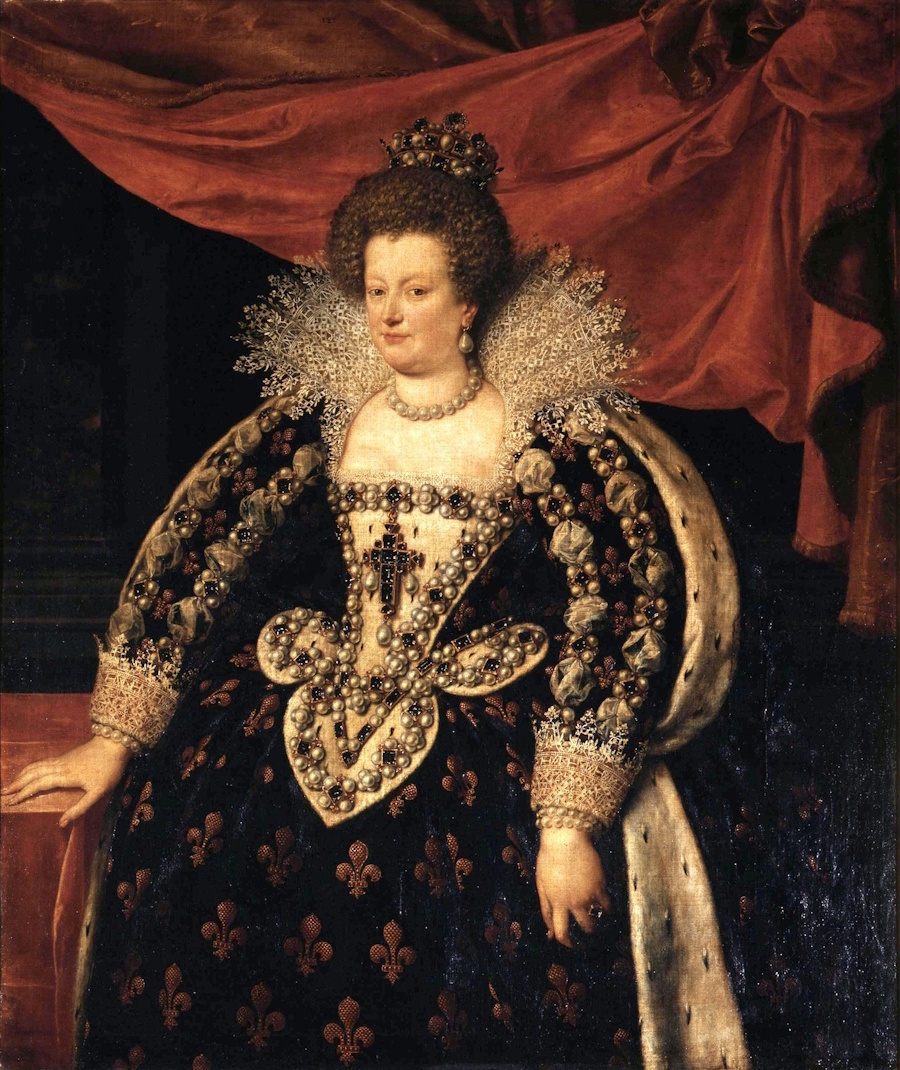
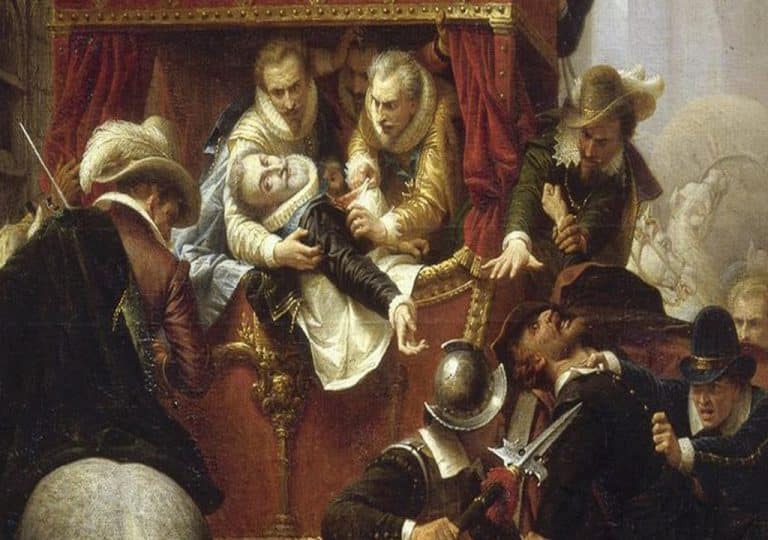
Henri IV up to his assassination and current controversy follows our article Henri IV and the reconquest of the throne, a fantastic epic. The next article about Henri IV is titled: Ravaillac, Henri IV’s assassin: the end of a dangerously lived life.
Note: At the end of the text you will find:
1/ A photo gallery related to this article
2/ Your Bonus: 5 essential tips to help you organize and enjoy your stay in Paris
Reconstruction and pacification of the kingdom
After the Wars of Religion, Henri IV, up until his assassination, undertakes the reconstruction of France. At the king’s death in 1610, agricultural production had returned to its 1560 levels. A widespread desire for peace fosters economic recovery, particularly in Languedoc and the northern regions.
Henri IV and his minister Sully see the arts as an essential lever for economic revival:
Tapestry workshops are established to reduce costly Flemish imports—this gives rise to what will become the Manufacture des Gobelins.
Artists and craftsmen settle in the Louvre, transformed into a major artistic hub.
Development of the silk industry: With the support of figures like Laffemas and Traucat, inspired by the agronomist Olivier de Serres, millions of mulberry trees are planted in the Cévennes and other regions to boost silk production.
Major infrastructure works: The Briare Canal, linking the Seine to the Loire, is France’s first major inland canal to connect two rivers. Designed by Hugues Cosnier in 1604, it would serve as a model for later canals, including the Panama Canal.
Symbol of prosperity: The Poulet au Pot. Henri IV became known for his ideal that every peasant should have a chicken in the pot on Sundays—a symbol of prosperity and well-being.
Financial reforms:
Sully reduced the national debt by declaring partial bankruptcies and renegotiating debts (for example, the one owed to the Swiss, reduced from 36 to 16 million livres).
The tax on the “paulette” (1604) made administrative offices hereditary in exchange for an annual payment.
A crackdown on false nobles was launched as early as 1598.
Persistent social violence
Demobilized soldiers formed armed bands that pillaged the countryside.
Noble violence remained high: 4,000 deaths from duels were recorded in 1607.
The abduction of young women of marriageable age sparked private wars requiring royal intervention.
Henri IV up to his assassination: intelligent governance and policy
To govern, Henri IV relied on competent ministers and advisors such as the Baron de Rosny, future Duke of Sully, the Catholic Villeroy, and economist Barthélemy de Laffemas.
The years of peace filled the state’s coffers. Henri IV commissioned the construction of the Louvre’s grand gallery, linking the palace to the Tuileries. He launched several campaigns to expand and adorn the great royal châteaux of Fontainebleau and Saint-Germain-en-Laye. He enlisted the talents of numerous sculptors (Pierre Biard the Elder, Pierre Franqueville, Mathieu Jacquet, Barthélemy Prieur, Jean Mansart) and French and Flemish painters (Toussaint Dubreuil, Ambroise Dubois, Jacob Bunel, Martin Fréminet).
He implemented a modern urban planning policy. He continued the construction of the Pont Neuf, begun under his predecessor. He had two new squares built in Paris: the Place Royale (now the Place des Vosges) and the Place Dauphine, on l’île de la Cité. He also planned the creation of a semi-circular square, the “Place de France”, to the north of the Marais, but this project was never realized.
To reassure the former supporters of the League, Henri IV also facilitated the entry of the Jesuits into France—who, during the war, had called for the king’s assassination—and established a "conversion fund" in 1598. He reconciled with Charles III, Duke of Lorraine, and married his sister Catherine de Bourbon to the duke’s son. Henri IV was a devout Catholic—though not particularly pious—and encouraged his sister as well as his minister Sully to convert, but neither did.
Before the assassination of King Henri IV and succession
Convinced that his army was ready to resume the conflict that had ended a decade earlier, Henri IV allied himself with the German Protestants of the Evangelical Union.
The outbreak of a European war pleased neither the pope, concerned with peace among Christian princes, nor the French subjects, worried about their own tranquility. They were unable to accept an alliance with Protestant princes against a Catholic sovereign.
Some priests stoked the spirits of the former Leaguers with their sermons. Henri IV also noted the existence, within the very circle of the queen, of a faction opposed to his policies. The king found himself in a precarious position, all the more so as the Protestants sought to preserve their political privileges under the terms of the Edict of Nantes.
War that never happened
The final years of Henri IV’s reign were marked by tensions with the Habsburgs and the resumption of hostilities against Spain. Henri IV intervened in the succession dispute pitting the Catholic emperor against the German Protestant princes. He supported their cause in the succession of Cleves and Jülich. On April 25, 1610, François de Bonne de Lesdiguières, Henri IV’s representative in France, signed the Treaty of Bruzolo with Charles Emmanuel I, Duke of Savoy, in the Bruzolo castle in the Susa Valley.
The rift between Henri IV and the first prince of the blood, Henri II de Condé (married to Charlotte-Marguerite de Montmorency, whom Henri IV had sought to make his mistress), drove the latter to take refuge in Brussels. He could thus shield his wife from the king’s persistent advances. These tensions served as leverage and could provide a pretext for French intervention against Spain (the House of Habsburg), which controlled Brussels.
Up until his assassination, Henri IV remained master of his own fate. The campaign was set to begin on 17 May, and as the king planned to lead his troops himself, he decided to have his wife, Marie de Médicis, crowned.
The coronation of Marie de Médicis and the assassination of Henri IV
To ensure government stability in his absence, Henri IV officially crowned Marie de Médicis at Saint-Denis on 13 May 1610. The following day, 14 May, with Sully indisposed, the king decided to cross Paris to visit him at the Arsenal (near the Bastille).
As the royal carriage passed rue de la Ferronnerie, at numbers 8 to 10, the king was stabbed three times by François Ravaillac, a fanatical Catholic. Henri IV was rushed back to the Louvre Palace, where he died from his wounds. He was 57 years old. The investigation concluded that it was the isolated act of a madman. The Flanders campaign against the Habsburgs was canceled.
Ravaillac was sentenced to death by the Parliament of Paris for the king’s murder. He was drawn and quartered on May 27, 1610, at the Place de Grève (Place de la Concorde), in Paris. Evisceration was the punishment reserved for regicides.
After an autopsy and the embalming of the deceased king, his royal remains were transferred as promised to the Jesuit college in La Flèche. His heart was placed in a lead urn housed in a silver reliquary sent to the church of Saint-Louis in La Flèche. His body was then displayed in a ceremonial hall at the Louvre, followed by his effigy in the Salle des Cariatides.
Henri IV (his body) was buried at the Basilica of Saint-Denis on July 1, 1610. This followed several weeks of funeral ceremonies that had already begun to forge the legend of the good King Henri. During the lit de justice on May 15, 1610, his eldest son, the young King Louis XIII, then nine years old, proclaimed the regency of Queen Marie de’ Medici, Henri IV’s widow.
Henri IV after his death: facts and a legend that spans the centuries
During his lifetime, Henri IV lived through crises and difficult periods. His life reads like a swashbuckling novel, filled with intrigues from which he escaped thanks to his intelligence and determination. But even his death was not enough to leave him in peace, as to this day, he remains the subject of unresolved questions.
The opening of the royal tombs at Saint-Denis during the Revolution in 1793
The decision regarding the fate of the royal tombs and bodies at Saint-Denis (on the northern edge of Paris) was made during the Reign of Terror. It was during the session of July 31, 1793, of the National Convention, presided over by Barère, to celebrate the storming of the Tuileries on August 10, 1792. The goal was to attack the "impure ashes" of tyrants under the pretext of reclaiming the lead from the coffins.
This desecration took place in August, September, and October 1793. It concluded on January 18, 1794. The revolutionaries tossed the ashes or what remained of the bodies "between beds of lime." This occurred in mass graves located in the former monks' cemetery, north of the basilica. The Basilica of Saint-Denis housed forty-two kings, thirty-two queens, sixty-three princes, ten state servants, as well as around thirty abbots and various religious figures.
On October 12, 1793, the oak coffin of Henri IV was shattered with hammers, and his lead coffin was opened with a chisel. According to witnesses: "His body was well preserved, and his features perfectly recognizable."
He remained in the passage of the lower chapels, wrapped in his equally well-preserved shroud. Everyone could see him until Monday morning, October 14, when he was moved to the choir, at the foot of the sanctuary steps. He stayed there until two in the afternoon before being buried in the Valois cemetery. Several people took small “relics” (a nail, a lock of beard).
The rumor spread that a delegate of the Commune had taken a cast of his face. The fact that it served as a model for future death masks of the king is likely a legend. Similarly, no document or archive confirms that the king’s head was severed and stolen. On the contrary, all witnesses describe Henri IV’s body being thrown whole into a mass grave, then covered by those of his descendants.
The reparation by Louis XVIII
During the Restoration, Louis XVIII (brother of Louis XVI) had the remains of his predecessors exhumed. This took place on January 19, 1817, after a week of searching. They were found on January 18, thanks to the stonemason François-Joseph Scellier. These remains were placed together (the lime having prevented their individual identification) in an ossuary in the crypt of the Basilica of Saint-Denis. They were arranged in about ten coffins sealed with marble plaques bearing the names of the monarchs.
King Louis XVIII also had the remains of his brother Louis XVI and Marie-Antoinette transferred from the Madeleine cemetery. They had been buried there after being guillotined at Place de la Concorde on 21 January 1793 and 16 October 1793. He had them interred at Saint-Denis during a grand funeral ceremony on 21 January 1815 (the anniversary of Louis XVI’s death).
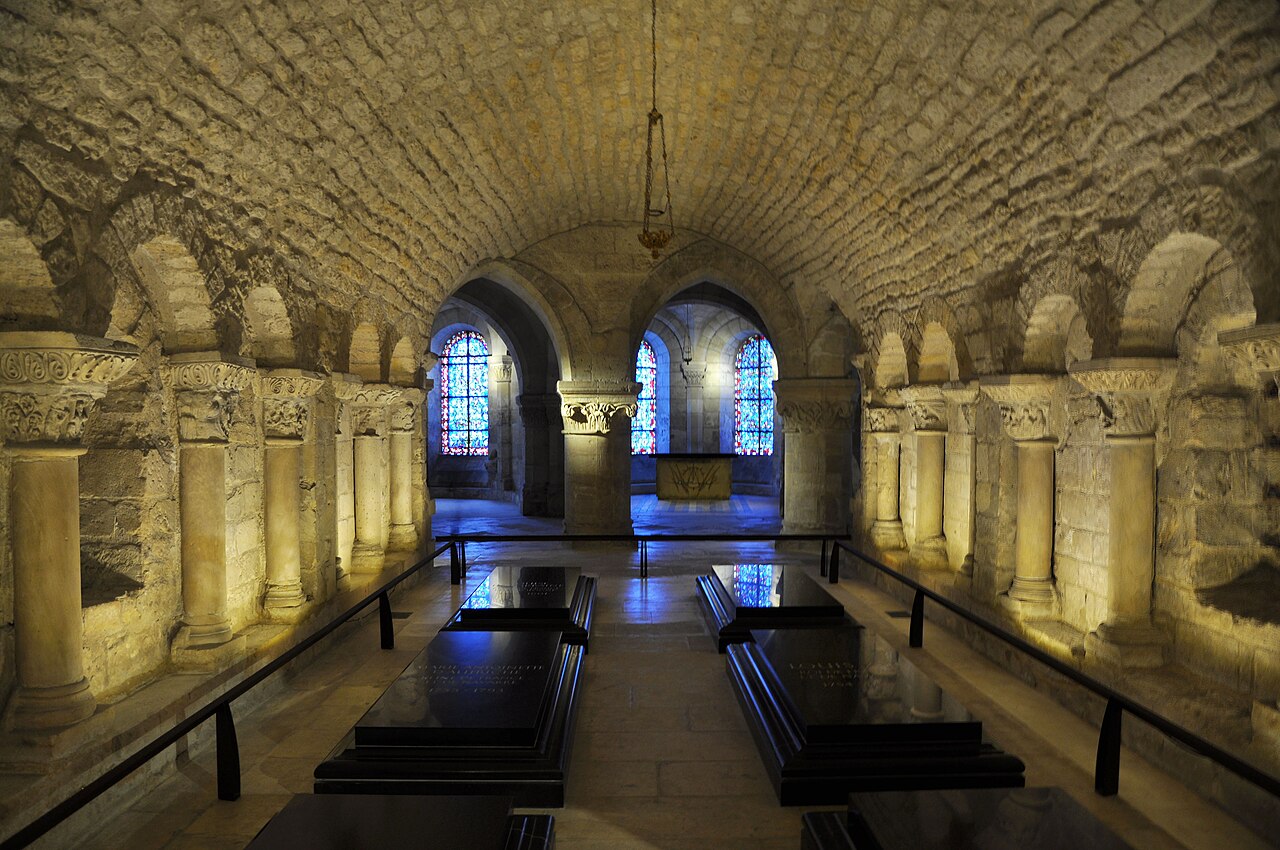
The royal hearts cabinet in the Bourbon vault, which holds, in lead and vermeil boxes, more or less authentic fragments of royal bodies.
The controversy surrounding Henri IV’s skull (2010–2013)
In 2010 and 2012, a team of scientists led by forensic pathologist Philippe Charlier managed to authenticate the mummified head of the king. It is believed to have been separated from his body during the desecration of the Basilica of Saint-Denis in October 1793 by revolutionaries. It should be noted that no archival documents support this claim. According to the reliable information available at the time, Henri IV’s body, which had been displayed to the public for two days, was later thrown into a mass grave with those of the other kings.
At the beginning of the 20th century, a collector claimed to possess the mummified head of the sovereign. It was not until the quadricentennial of the king’s assassination in 2010 that scientific analyses were conducted on this supposed relic.
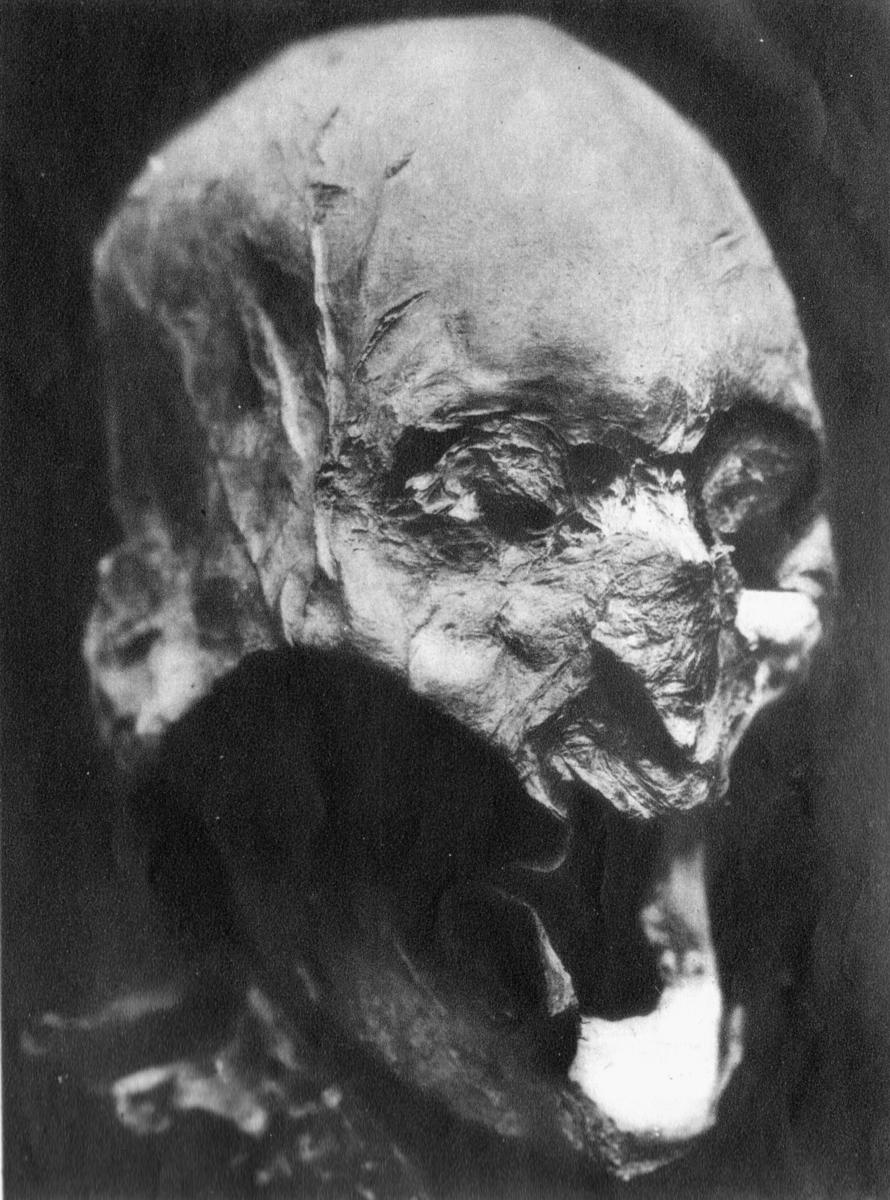
A first study revealed thirty points of concordance confirming that the embalmed head was indeed that of King Henry IV. According to the study’s authors, “a 99.99% certainty.” This conclusion was confirmed in 2012 by a second study conducted at the Institute of Evolutionary Biology in Barcelona. They managed to extract DNA and compare it with the presumed DNA of Louis XVI. The “reference” was a piece of fabric said to have been soaked in the king’s blood during his execution.
Upon the announcement of the results, a 3D virtual reconstruction of the royal face was presented to the public.
Naturally, this study sparked controversy. This authentication is disputed by numerous historians, geneticists, forensic doctors, archaeologists, paleoanthropologists, and journalists, including Joël Cornette, Jean-Jacques Cassiman, Maarten Larmuseau, Geoffroy Lorin de la Grandmaison, Yves de Kisch, Franck Ferrand, Gino Fornaciari, and Philippe Delorme.
In December 2010, Prince Louis de Bourbon (1) approached President Nicolas Sarkozy to request the reburial of his ancestor’s presumed head in the royal necropolis of the Basilica of Saint-Denis. According to Jean-Pierre Babelon, Nicolas Sarkozy initially planned a ceremony for May 2012. However, the controversy surrounding the relic and the presidential campaign led to the event being postponed. The project was ultimately abandoned by President François Hollande, who succeeded Nicolas Sarkozy as President of the Republic.
On 9 October 2013, a scientific article was published in the European Journal of Human Genetics, co-authored by geneticists Maarten Larmuseau and Jean-Jacques Cassiman from the Catholic University of Leuven, along with several historians.
It revealed that the Y chromosome of three current princes of the House of Bourbon differed radically from the DNA signature found in the head and blood samples analyzed in the 2012 study. The article hypothesizes that the samples may have been contaminated, and that an analysis of the Y chromosome from the heart of Louis XVII (2), son of Louis XVI—already identified—could resolve any doubts. However, no steps have been taken in this direction.
(1) Direct descendant of Hugh Capet, Saint Louis, Henri IV and Louis XIV, he is the eldest of the Capetians and the current head of the House of Bourbon
(2)Son of Louis XVI and Marie Antoinette. He died in captivity at the Temple prison on June 18, 1795, at the age of ten.
Bonus: 5 essential tips to help you plan and enjoy your stay in Paris
Have you noticed that our website provides tools to help you easily organize your trip to Paris so that your stay is a stress-free success?
1. Phrasebook Translator for those who don’t speak French fluently
Do you struggle to find the right word or phrase in French? Click here on PHRASEBOOK – or in the top right corner of your screen. It’s a glossary of 100 useful words and/or phrases for a tourist visiting Paris. You’ll feel at ease in restaurants, hotels, while shopping, on the metro, during greetings, asking for directions, and more. Eight languages are available. And guess what? You can also listen to each word and phrase in French.
2. The VPBY Stay Generator
There are many interesting and educational things to see in Paris. We strongly recommend organizing your stay well. To help you, we offer you FREE of charge our Stay Generator.
In just 5 minutes and 5 clicks, you’ll get your half-day-by-half-day itinerary. Plus, all reservations—if you wish, with no obligation—for the sites you want to visit. You can also book your transportation (plane, train, or car) and your accommodation. Even suggestions for valuable souvenirs for you, your friends, and your family.
How does it work?
Click on "Paris Stay Organizer"—completely free—which will save you the hassle of trying to see as much as possible in the least amount of time. Then you’ll need to make your choices:
1/ You choose your "general preferences" by clicking on the list (Museums, Churches, Monuments, Parks, etc.);
2/ The VPBY Stay Generator then provides you with all relevant listings;
3/ You select by clicking on the names of the museums, monuments, parks, or activities you wish to include;
4/ The organizer returns the itinerary for each day of your stay;
5/ with geographical optimization of daily visits—if you so desire—to avoid tedious and tiring travel.
This is done in 5 clicks and just 3 minutes. And it’s completely free. To use it, click on "Paris Stay Organizer".
Note: Want to know what users of the VPBY Stay Generator think of their experience? Click on "They planned their trip with VPBY".
3. List of Reservations to Make
You have free access to our database to "get to know" Paris (Click on Paris Guide) and discover Paris (Click on Places to Visit). And to avoid wasting time in lines, we recommend making your reservations directly online a few days in advance. All official reservations are available and useful on our website:
Reservations to enter museums, monuments, shows, Seine cruises
Reservations for your arrival in France: planes, trains, cars
Reservations for your accommodation: hotels, apartments, guesthouses – in Paris or nearby
You will find links for all these reservations directly in the articles about the tours that interest you or in the self-guided itineraries of our walks. By clicking on "Reservations" in the header bar, you will have access to all the reservations you need during your stay. For example:
Notre-Dame de Paris entry reservation (Free entry but reservation recommended to avoid queues)
Book Château de Versailles: Entry Ticket + Gardens Access + Trianon Estate
4. Bring home Paris Collection Souvenir Photos
These are high-definition collection photos available in digital format or as long-lasting prints (75 to 100 years). Their size ranges from postcard to large framed photos (1m or more on each side). A lifelong keepsake to decorate your home. A quality souvenir (unlike the typical snow globes or plastic Eiffel Towers). At very affordable prices. Click on:
5. Return with a personalized photo report of your stay in Paris
Professional photography reportage in Paris at locations of your choice or suggested by us. A "family" reportage, wedding, or other events. From 1 hour to a full day. The best quality-to-price ratio. Click on: