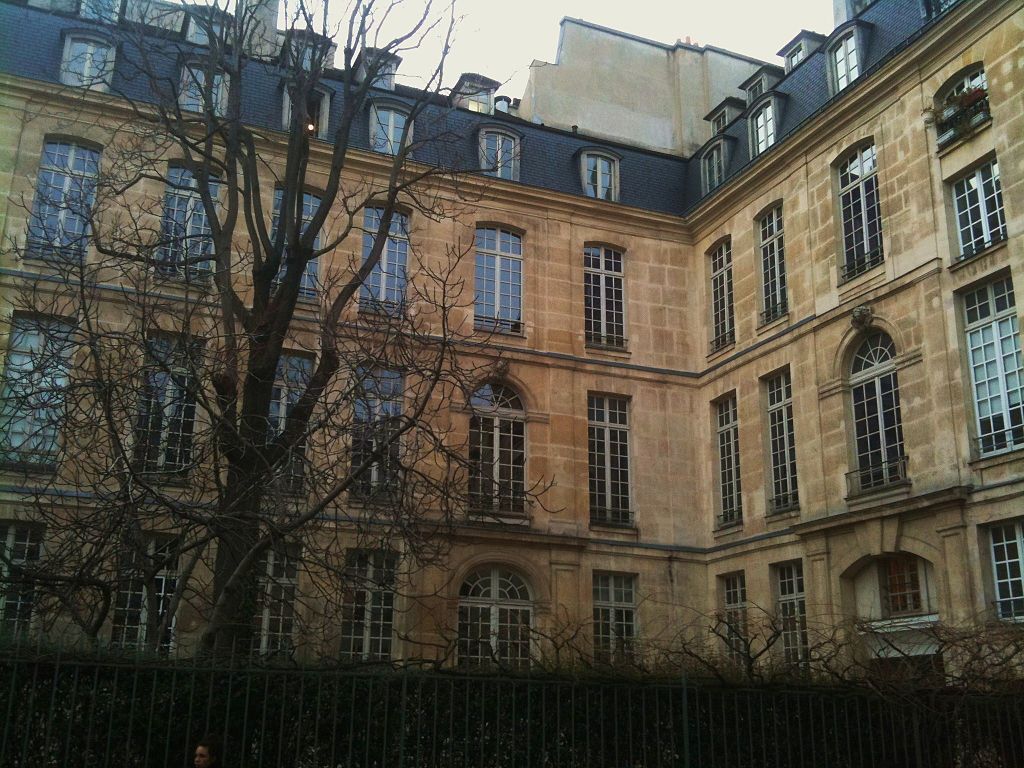
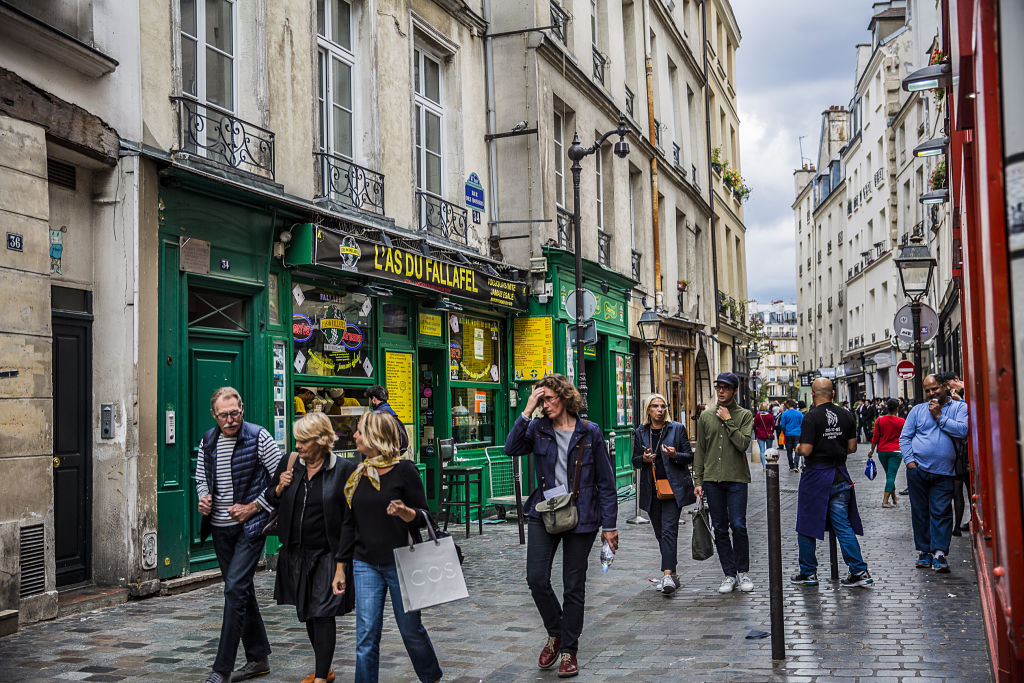
Cobblestone street in Le Marais, lined with former grand townhouses
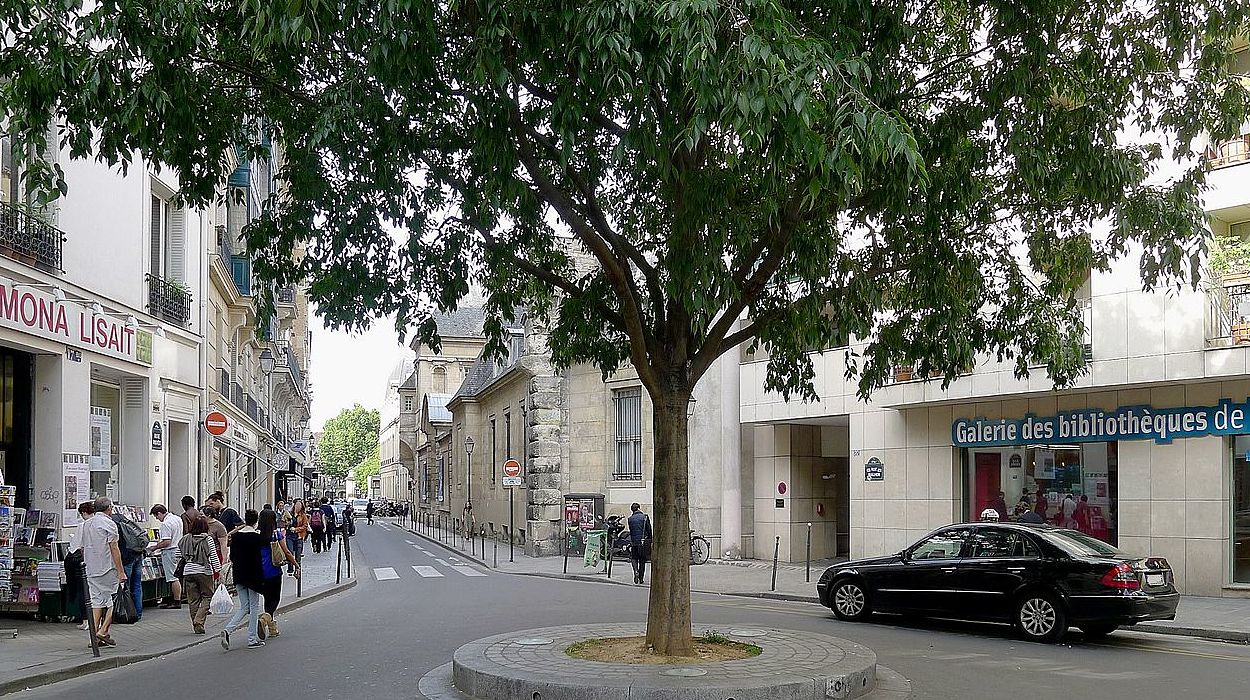
The Paved Street of the Marais is a thoroughfare located in the heart of the Marais district, in the 4th arrondissement of Paris. It connects Rue de Rivoli to Rue des Francs-Bourgeois, of which it is an extension via Rue Payenne. Also worth seeing in the Marais district are Rue des Rosiers and Place des Vosges, where the Victor Hugo House is located.
Origin of the Name of the Rue pavée du Marais
In 1235, the section between rue du Roi-de-Sicile and rue des Francs-Bourgeois already existed and was known as "rue du Petit-Marivaux."
Renamed in 1406 as "rue du Petit-Marais," then "rue Marivaux," its name was changed around 1450 to "rue Pavée-au-Marais," and later simply "rue Pavée." By the late 20th century, the inscription "Rue Pavée au Marais" could still be seen on the even-numbered side.
Other Parisian "rue pavées" share this name: on the Left Bank, for example, a "rue Pavée" existed as early as 1300 before becoming "rue Pavée-Saint-André-des-Arts."
Notable buildings and historic sites on rue Pavée du Marais
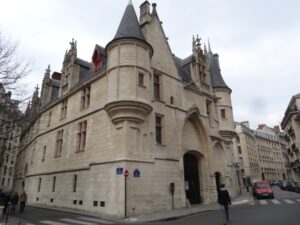
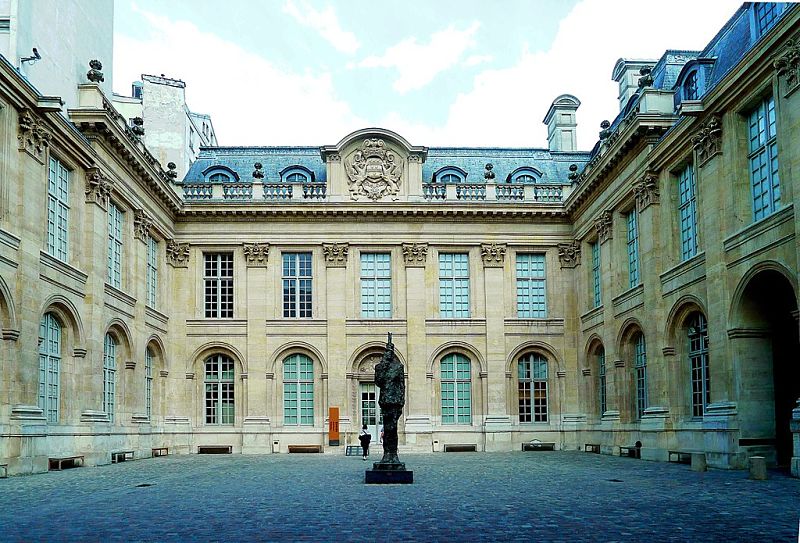
The street was once a fashionable thoroughfare lined with grand mansions (hôtel de Brienne, hôtel de Savoisy), of which only the hôtel d’Angoulême remains, located at No. 24 and now home to the Historical Library of the City of Paris.
At No. 10 stands a synagogue, built in 1913 by the Art Nouveau master architect Hector Guimard (famous for his Métro entrances). In 1941, the building was dynamited by antisemitic collaborators during the Nazi Occupation. Restored afterward, this non-consistorial Orthodox place of worship is not open to the public.
At numbers 11 and 13 stands a fine hôtel particulier (a Louis XIII-style door at No. 11 and a Louis XV-style door at No. 13), built by Mansart de Jouy (1737). Demolished in 1404 and then rebuilt in 1517 by Morlet de Museau, a royal advisor, it was once the residence of the Duke of Norfolk, English ambassador in 1533, and later of the Admiral de Brion (1543), a companion of Francis I during his captivity. The hôtel, then called "de Loiraine," belonged to Charles III, Duke of Lorraine.
Purchased by François Dauvet, President of the Parliament, it was divided into smaller properties. Today, the building houses a strictly observant Jewish religious school, the Yad Mordechai yeshiva, where the study of the Torah is practiced according to Halakha, requiring the wearing of a kippah and tzitzit.
No. 12 was once the Hôtel de Brienne, formerly known as the Hôtel de Chavigny, which became part of the Petite-Force prison during the ministry of Jacques Necker. François Denis Tronchet (1726–1806), President of the Senate and defense attorney of Louis XVI, lived and died here. The Union Compagnonnique, founded in 1875 by Agricol Perdiguier, established its headquarters here, bringing together, through a unique ritual, cooks, butchers, pastry chefs, gilders, sculptors, and others.
Nos. 16 to 22 on Rue Pavée du Marais stand on the site of the former Petite-Force prison. Its demolition in the early 19th century allowed for the creation of Rue Malher.
Madame Denis, née Marie Louise Mignot, Voltaire’s niece and his passionate lover, lived on Rue Pavée du Marais.
A convent for young women, known as the “Nouvelles Catholiques,” settled on the street in 1647 before moving to Rue Sainte-Anne and being disbanded in 1790.
Historical Library of the City of Paris at No. 24 Rue Pavée du Marais
At No. 24, the Hôtel d’Angoulême-Lamoignon (formerly the Hôtel d’Angoulême) houses the Historical Library of the City of Paris. Its plans were commissioned in 1559 by François de Pisseleu, abbot of Saint-Corneille near Compiègne. From 1584 onwards, Diane de France, daughter of King Henry II, became its new owner. The Duchess of Angoulême lived there until her death in 1619.
In 1650, the hôtel was sold to Guillaume de Lamoignon, first president of the Paris Parliament, who had it renovated by architect Robert de Cotte. The residence of Alphonse Daudet in 1867, it became a hub for literary social gatherings. The communist Marie La Cécilia lived there in the final years of her life in 1893.