Chantilly: castle, horses and must-see gem near Paris
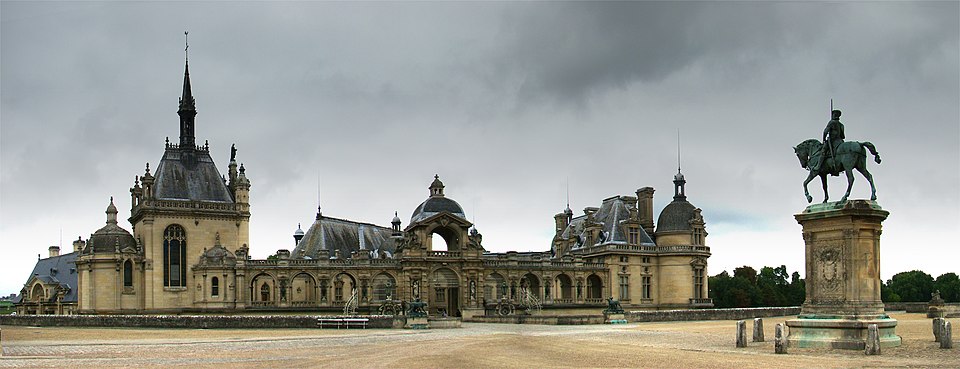
Why Chantilly Should Be Your Next Getaway from Paris
Just 50 kilometers north of Paris lies a true gem blending royal history, equestrian excellence, and gastronomic delights: Chantilly. Often overshadowed by Versailles, this elegant town offers a more intimate and less crowded alternative with its spectacular château, world-famous horse races, and its status as the birthplace of Chantilly cream.
Whether you're a history enthusiast, a horse racing fan, or simply seeking a picturesque escape from the hustle and bustle of Paris, Chantilly will captivate you. And with the recent renovations at the Domaine de Chantilly and the new exhibitions planned for 2024, there’s never been a better time to visit.
In this guide, we’ll help you explore:
The Château de Chantilly, its lavish interiors, and the Great Stables (the largest in Europe)
The Hippodrome de Chantilly, home to prestigious races like the Prix de Diane
The Musée Condé, housing one of France’s finest art collections after the Louvre
The Potager des Princes, a stunning 17th-century garden
Where to taste the famous Chantilly cream (and how it’s made)
Practical tips for getting there from Paris (by train, car, or guided tour)
Let’s dive in.
But first, read our site’s exclusive goldmine:
This site features a completely free "Paris Trip Organizer" that will save you the headache of trying to see the maximum in the minimum time.
1/ You enter your "general" wishes (Museums, Churches, Monuments, Parks, etc.),
2/ the organizer returns a set of relevant guides,
3/ you click on what you want to visit,
4/ the organizer provides a day-by-day itinerary for your stay,
5/ with optimized daily routes—if you wish—to avoid tedious and tiring travel.
It takes just 5 clicks and 3 minutes. And it’s truly free. To use it, click on "Paris Trip Organizer"
The Château de Chantilly: A Renaissance Royal Masterpiece
Brief History: From Medieval Fortress to Opulent Residence
Chantilly Castle was shaped by some of France’s most influential families. Originally a medieval fortress, it was transformed in the 16th century by Anne de Montmorency—a man whose name, though now often seen as feminine, was at the time a common mixed-gender given name in France. Constable of France, he turned the castle into a prestigious residence.
The domain’s golden age arrived in the 19th century under the initiative of Henri d’Orléans, Duke of Aumale and fifth son of King Louis-Philippe. A great art collector and passionate bibliophile, he inherited Chantilly in 1830 and spent decades restoring it.
Upon his death in 1897, he bequeathed the entire estate — including his priceless art collection — to the Institut de France, ensuring its preservation for future generations. The château remains under the ownership of this institution to this day.
Today, the château is a true 19th-century jewel box, perfectly preserved, whose recent restorations have revived all its former glory.
Highlights inside the Château
The Grand Apartments
The Grand Apartments form the heart of the château, adorned in the opulent style of the Second Empire. Among the must-see features:
The Painting Gallery, featuring works by Raphael, Botticelli, and Poussin.
The Tribune, a circular room designed to display the most precious paintings in natural light.
The duke’s private apartments, including his library (one of France’s most important private collections).
The Musée Condé: an underrated artistic treasure
The Musée Condé is often regarded as the second most important collection of Old Master art in France after the Louvre. It houses over 800 paintings, 2,500 drawings, and 2,500 prints.
Among the major works:
“The Three Graces” by Raphael (one of the two existing versions in the world)
“Autumn” by Botticelli
“The Source” by Jean-Auguste-Dominique Ingres
Unlike the Louvre, the visit takes place in a relatively calm atmosphere, allowing visitors to admire the masterpieces without the crowds.
The Great Stables: a palace for horses
Built in 1719 by Louis-Henri de Bourbon-Condé, the Great Stables are the largest in Europe and bear witness to Chantilly’s deep equestrian heritage. A horse enthusiast, the prince wanted a true palace for his mounts—and he got it.
Today, they house the Living Horse Museum, offering equestrian shows, interactive exhibitions, and dressage demonstrations.
Highlights of the Great Stables
The Dome: a 28-meter-high cupola, topped with a horse statue visible for several kilometers.
The Living Horse Museum: a 30-minute live show (included with admission) that tells the story of the bond between humans and horses through training, vaulting, and historical reenactments.
The Stables: original 18th-century stables that once housed up to 240 horses.
Anecdote: The Prince’s Last Wish
The Prince of Condé requested that his heart be placed in a silver urn and kept in the Great Stables of Chantilly so that he could “always hear his horses”. The urn is still there today!
Practical Information for Visiting the Château
Opening Hours
Château de Chantilly and Musée Condé: 10 am – 6 pm (last entry at 5 pm)
Great Stables of Chantilly: 10 am – 6 pm (shows at 11 am, 2:30 pm and 5 pm)
Ticket Prices (2024)
Full Access (Château + Stables + Gardens): €22
Château Only: €17
Great Stables Only: €12
Free for under-18s and EU residents under 26
Best time to visit: on weekdays in the morning to avoid crowds.
Guided tours: available in English (advance booking recommended on the official Domaine de Chantilly website).
A not-so-anecdote: Vatel’s suicide at the Château
One of the most famous episodes in Chantilly’s history is the suicide of François Vatel.
In 1671, as master of the household to the Prince of Condé, he organized a lavish reception in honor of King Louis XIV at the château. According to legend, fearing a delay in the delivery of the fish for the banquet and dreading dishonor, Vatel allegedly stabbed himself with his sword in his bedroom at the château. Tragic irony: the delivery arrived shortly after his death.
This dramatic episode helped forge the legend of Chantilly and associate the place with gastronomic excellence… and the extreme pressure that came with it.
Chantilly’s Equestrian Legacy: Horse Racing and the Hippodrome
Why Chantilly is the Heart of French Horse Racing
Chantilly is more than just its châteaux: it is also one of the major centers of horse racing in France. The town is home to:
The Chantilly Hippodrome, one of Europe’s most prestigious racecourses.
France Galop’s training center, where 2,500 racehorses train every day.
The Living Horse Museum, a unique interactive experience.
Chantilly Hippodrome: Where Legends Race
Inaugurated in 1834, the Chantilly Hippodrome hosts some of the world’s most prestigious races, including:
Prix de Diane: held each June, this is France’s most elegant race, often dubbed the “Longchamp of the North.” Women wear designer hats and dresses, and the event attracts celebrities and royalty.
Prix du Jockey Club: the most prestigious race for 3-year-old horses in France.
Preparatory races for the Prix de l’Arc de Triomphe, Europe’s greatest race.
Visiting the Hippodrome
Race Days: Check France Galop’s official calendar for 2024 dates.
Dress Code: smart casual attire (no shorts or flip-flops). For the Prix de Diane, elegant attire is required.
Tickets: from €10 (general admission) to over €100 (VIP boxes).
Best Seating:
the grandstands for a view of the track
the paddock to see the horses up close.
The Living Horse Museum: A Unique Equestrian Show
Located in the Grandes Écuries of Chantilly, the Living Horse Museum offers a one-of-a-kind experience blending:
A live 30-minute show featuring dressage, vaulting and historical reenactments.
Interactive exhibits on horse anatomy and training.
Behind-the-scenes access to the stables.
Showtimes and Tickets
Shows at 11 am, 2:30 pm and 5 pm (included with Grandes Écuries admission).
English audio guides available.
Horseback Riding in Chantilly
If you wish to ride a horse as the nobility once did, Chantilly offers:
Horseback rides through the forest in the Forêt de Chantilly (guided tours available).
Lessons at the French Racing School (École Équestre de France Galop).
Carriage rides around the estate.
Where to book
Centre Équestre de Chantilly
Les Écuries de la Forêt (for forest rides) 🐎
The gardens of Chantilly: from the French formal garden to wild romanticism
The Potager des Princes: a 17th-century kitchen garden
Designed in 1682 by André Le Nôtre (the same landscape architect behind the Palace of Versailles), the Potager des Princes is a masterpiece of French formal garden art. Unlike Versailles, however, it was conceived to be both aesthetic and functional, supplying the château’s kitchens with fresh produce.
What makes it unique
Seven terraced gardens, each with a different theme (medicinal plants, fruits, vegetables).
A maze inspired by Greek mythology.
Seasonal decorations: in spring, tulips and cherry blossoms; in autumn, pumpkins and gourds.
Practical information
Open from April to October, from 10 am to 6 pm.
Admission: €8 (included in the full Château de Chantilly ticket).
The Anglo-Chinese garden: a romantic getaway
Created in 1773 by the Duke of Bourbon, this English-style landscaped garden was one of the first of its kind in France. It notably includes:
A meandering river, the Nonette.
A Chinese bridge and a pagoda.
Hidden grottos and small waterfalls.
Best time to visit
Spring (April-May) for blooming rhododendrons.
Autumn (September-October) for golden foliage.
The Chantilly Forest: a hiker’s paradise
Spanning 6,300 hectares, the Chantilly Forest is ideal for:
Hiking (marked trails such as the Sentier des Peintres).
Cycling (bike rentals available in town).
Picnics near the Étangs de Commelles.
Observing wildlife
Keep your eyes peeled for:
Deer and wild boars (especially at dawn or dusk).
Birds of prey such as buzzards and kestrels.
Chantilly cream and where to taste it
The legend of Chantilly cream
According to tradition, Chantilly cream was allegedly invented in the 17th century by François Vatel, the head steward at the Château de Chantilly. Tasked with preparing a dessert for a royal banquet, he is said to have whipped cream with sugar and vanilla, giving birth to a true culinary legend.
The authentic Chantilly cream today must be:
Made with full-fat cream (35% fat content)
Sweetened with powdered sugar
Flavored with real vanilla (not artificial flavoring)
Where to taste the best Chantilly cream
1. La Maison du Chocolat
To order: their pastry “Chantilly”, featuring choux pastry, vanilla cream, and fresh whipped cream.
Address: 60 Rue du Connétable, 60500 Chantilly.
2. Le Hameau de Chantilly
A picturesque tearoom set in a thatched cottage near the château.
Not to be missed: the strawberries with Chantilly cream.
Address: 1 Rue du Hameau, 60500 Chantilly.
3. Le Jardin d’Hiver (at the château)
The château’s refined café, serving Chantilly cream with warm waffles.
Bonus: you can enjoy your dessert in a glass conservatory overlooking the gardens.
4. Fouquet’s Chantilly (luxury option)
The Chantilly outpost of the famous Parisian brasserie Fouquet’s.
Signature dessert: “Le Vatel”, a decadent dessert made with Chantilly cream and caramelized puff pastry.
Address: 1 Rue du Connétable, 60500 Chantilly.
How to make homemade Chantilly cream
Want to recreate this treat at home? Here’s the authentic recipe:
Ingredients
200 ml heavy liquid cream (35% fat)
30 g powdered sugar
1 tsp vanilla extract (or the seeds from 1 vanilla pod)
Instructions
Chill the cream and a metal bowl in the refrigerator for 15 minutes.
Whip the cream at medium speed until soft peaks form.
Gradually add the sugar and vanilla.
Continue whipping until the cream is firm but still smooth (about 2 to 3 minutes).
💡 Chef’s tip: If you whip it for too long, the cream will turn into butter. Stop as soon as the peaks hold their shape.
Beyond the castle: other hidden gems in Chantilly
The Chantilly Lace Museum
Chantilly is also famous for its delicate black lace, a handcraft from the 17th century still made today. The Chantilly Lace Museum showcases:
Historical lace pieces worn by Marie-Antoinette and Queen Victoria.
Live demonstrations of lace-making (check workshop schedules).
A shop selling authentic Chantilly lace.
Practical Information
Address: 34 Rue d’Aumale, 60500 Chantilly
Open: Wednesday to Monday, 10 am – 6 pm
Admission: €6
The Pavillon de Manse: a royal hunting pavilion
Built in 1675 for Louis II de Bourbon-Condé, the Pavillon de Manse is an octagonal pavilion once used for hunting parties in the forest. Today, it is a hidden gem that houses:
Original 17th-century frescoes
A small museum dedicated to the history of Chantilly
Stunning views over the forest
How to visit
Guided tours only (reservation at the Château de Chantilly ticket office)
Free with the château ticket
The Abbey of Chaalis: a medieval monastery nearby
Just 15 minutes from Chantilly, the Abbey of Chaalis is a 13th-century Cistercian abbey featuring:
The ruins of a royal chapel
A rose garden with over 1,000 varieties of roses
A small museum featuring works by Eugène Delacroix
Practical information
Address: Rue de l’Abbaye, 60300 Fontaine-Chaalis
Open: from April to November, 10 am – 6 pm
Admission: €8
The Royaumont Abbey
The Royaumont Abbey is another remarkable visit located near Chantilly. Founded in the 13th century by King Saint Louis, it is today one of the largest Cistercian abbeys in Île-de-France. It also hosts a cultural and artistic centre.
How to get to Chantilly from Paris (2026 Guide)
By train (fastest and easiest option)
From Gare du Nord: take the TER Hauts-de-France train to Gare de Chantilly-Gouvieux (25 to 30 minutes).
Frequency: trains run every 30 to 60 minutes.
Price: €7 to €10 one-way (book via SNCF Connect).
From the station: the castle is a 15-minute walk or 5-minute taxi ride away.
Tip
Buy a combined train + château entry ticket (available on the SNCF website).
Avoid peak hours (7am–9am and 5pm–7pm) to secure a seat.
By car (most flexible option)
Distance: ~50 km (40 to 50 minutes) via the A1 motorway.
Parking:
Château parking: €5/day.
Free parking near Hippodrome de Chantilly (10-minute walk from the château).
Tolls: ~€3 to €5 (depending on the route).
Best route
Take the A1 (North Ring Road) towards Lille.
Exit at Chantilly (Exit 7).
Follow signs for Domaine de Chantilly to reach the Château de Chantilly.
On a guided tour (stress-free)
If you prefer an organised experience, you can book a guided tour from Paris:
Half-day tours (4–5 hours) including transport and château entry.
Full-day tours including the hippodrome or the Chaalis Abbey.
Recommended companies:
Paris City Vision
Fat Tire Tours
Distance from Paris: ~60 km (4 to 5 hours) – 40 km from L’Isle-Adam
Route: follow the Seine to Cergy, then take the Véloroute du Val d’Oise.
Advantages: Blooming gardens, mild weather, Prix de Diane (June).
Disadvantages: Weekends can be very crowded.
To bring: a light jacket and comfortable shoes.
Advantages: Horse racing season, long daylight hours.
Disadvantages: Many visitors, sometimes heatwaves.
To bring: hat, sunscreen, water bottle.
Advantages: Fewer tourists, golden forest colors, harvest season (try the local cider).
Disadvantages: Some gardens close in November.
To bring: light sweater and scarf.
Advantages: Festive atmosphere, fewer visitors, Chantilly Castle decorated for Christmas.
Disadvantages: Some outdoor attractions closed, cold weather.
To bring: warm coat and gloves.
Prix de Diane (16 June 2024): the most glamorous racing day — book your tickets in advance!
Nuits de Feu (July – August): fireworks and nighttime shows at the castle.
Gastronomy Festival (September): culinary festivals celebrating Chantilly Cream.
By bike (for adventurous travelers)
If you enjoy scenic rides, the Avenue Verte route (a bike path linking Paris to London) passes near Chantilly.
Best time to visit Chantilly (Seasonal guide)
Spring (April – June)
Summer (July – August)
Autumn (September – November)
Winter (December – February)
Special events in 2024
Why Chantilly Outshines Versailles (Our Honest Opinion)
While Versailles impresses with its grandeur, Chantilly offers:
✔ Less crowded
✔ A more intimate and authentic atmosphere
✔ A unique equestrian culture
✔ Iconic gastronomy
✔ Nature at every turn with its forest and gardens
For history lovers, horse enthusiasts, and sweet-tooths alike, Chantilly is the perfect getaway from Paris—without the tourist traps.
Ready to Discover Chantilly?
With its fairytale castle, prestigious horse races, and legendary cream, Chantilly is a must-visit destination for exploring the Parisian outskirts. Whether you spend half a day or a full weekend, this royal retreat is sure to captivate you.
Have you already visited Chantilly? What was your favorite part? Share it with us in the comments!


