Saint-Gervais Church, frequented by historical figures since 1616
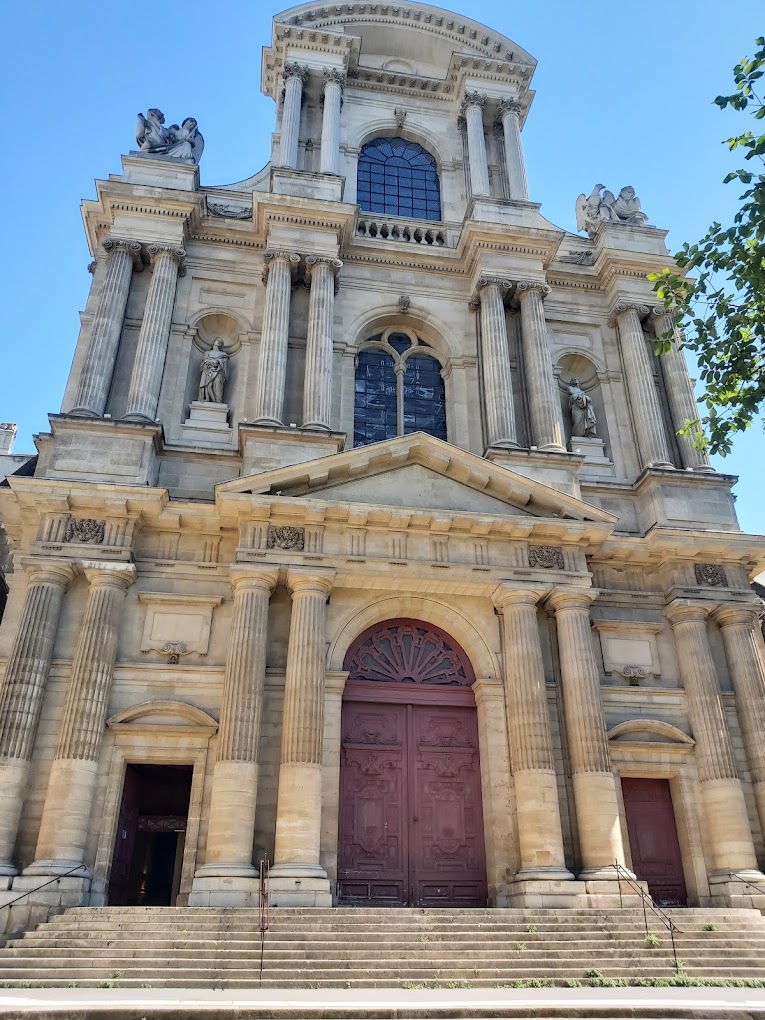
Église Saint-Gervais, Place Saint-Gervais
(Metro: Hôtel de Ville) (tel. 01 48 87 32 02, open from 5:30 am to 9 pm and all night from Thursday to Friday for services)
A linden tree graces Place Saint-Gervais. Replanted in 1912, it evokes the tradition of judges dispensing justice under a linden. Traces of this custom remain in the neighborhood: the balconies of the houses at numbers 2 to 14 on rue François-Miron, dating from 1732, are adorned with wrought-iron linden motifs, particularly at number 14. Built on the site of a 6th-century sanctuary dedicated to the martyr brothers Saint Gervais and Saint Protais, whose relics were brought from Milan, the current church dates from the 16th and 17th centuries. In July 1616, Louis XIII laid the first stone of the façade, which features the three classical orders—Doric, Ionic, and Corinthian at the top level. Marie de Rabutin-Chantal, Marquise de Sévigné, was married here in 1644.
Many notable figures, including Scarron and Philippe de Champaigne, were buried here. The organ, rebuilt in 1974 in its original style, once belonged to the Couperin family, a distinguished dynasty of 17th-century musicians. During the Revolution, the tombs were desecrated, statues destroyed, and the church transformed into a Temple of Youth. In the 19th century, the City of Paris had the chapels regilded, commissioned statues, and restored the stained glass. In 1918, a German shell caused over a hundred casualties when part of the vault collapsed. Since 1975, the church has been served by monks and nuns of the Monastic Fraternity of Jerusalem, whose services are held daily at 7 a.m., 12:30 p.m., and 6 p.m., and every Sunday at 11 a.m.