Père Lachaise Cemetery
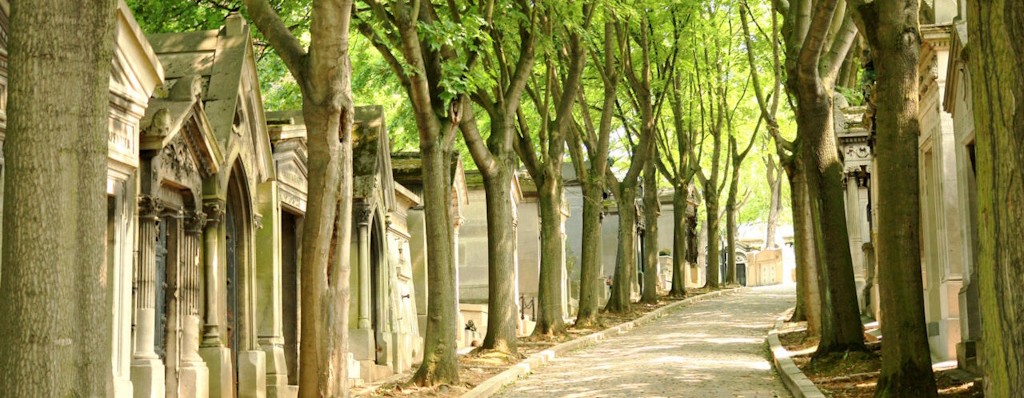
Welcome to Père Lachaise Cemetery, one of Paris’s most fascinating and moving sites. More than just a cemetery, it is a true open-air museum where history, art, and memory intertwine beneath the canopy of century-old trees. It welcomes over three and a half million visitors each year, making it the most visited cemetery in the world.
Ranked among the capital’s most popular attractions, it draws visitors from around the globe who come to pay tribute to legendary figures or simply wander its poetic pathways.
Located in the 20th arrondissement, between the lively neighborhoods of Ménilmontant and Belleville, Père Lachaise spans 44 hectares, making it Paris’s largest green space within the city limits. Its official address, 16 Rue du Repos, feels like an invitation to contemplation. Accessible by metro (lines 2 and 3, Père Lachaise station), this unique place combines tranquility and convenience, just minutes from the city center.
Why is this cemetery so famous? Because it holds the graves of more than 700 notable figures, including some of the most illustrious in history. Artists, writers, musicians, scientists, and revolutionaries rest here, turning every visit into a journey through the centuries. But Père-Lachaise is also a lush green sanctuary, a peaceful haven to recharge away from the bustle of Parisian life.
Also enjoy our NEW free exclusive offer on our website, which is worth its weight in gold
This site features a "Paris Trip Organizer"—completely free—that will save you the hassle of trying to see the maximum number of attractions in the minimum amount of time.
1/ You enter your "general" preferences (Museums, Churches, Monuments, Parks, etc.),
2/ the organizer returns a selection of relevant listings,
3/ you click on the attractions you wish to visit,
4/ the organizer generates a day-by-day itinerary for your stay,
5/ with optimized geographical routing—if you choose—to avoid tedious and tiring travel.
It takes just 5 clicks and 3 minutes. And it’s completely free. To use it, click on "Paris Trip Organizer"
The rich and eventful history of Père-Lachaise Cemetery
The Père-Lachaise Cemetery owes its name to the confessor of King Louis XIV, Father François d’Aix de La Chaise, known as Père Lachaise, who lived in a house on the heights of this hill. Originally, the land belonged to the Jesuits, who had established an estate there in the 17th century. It was not until 1804 that Napoléon Bonaparte, then First Consul, decided to create a cemetery here to alleviate the overcrowded and often unsanitary burial sites in Paris.
At first, Père-Lachaise struggled to attract Parisians, who found it too far from the city center. To draw families, the City of Paris transferred the remains of Héloïse and Abélard, two legendary 12th-century lovers, as well as those of Molière and La Fontaine in 1817. This strategy worked: the cemetery gradually became a sought-after place, where it was fashionable to be buried.
Today, Père-Lachaise is the final resting place of over a million deceased, making it the most densely populated cemetery in Paris. It is also the world’s first "park" cemetery, designed as a romantic garden where graves blend harmoniously with nature. Its winding paths, majestic trees, and funerary monuments make it a unique place, where people come not only to pay their respects but also to marvel at its beauty.
Famous figures buried in Père-Lachaise Cemetery: an open-air pantheon
Père-Lachaise is often nicknamed the "cemetery of celebrities", and for good reason: it holds the graves of some of history’s most influential figures. Here are some of the most visited tombs, making this a must-see for art, literature, and music lovers.
Writers and poets
Literature enthusiasts won’t miss paying their respects to Oscar Wilde, whose grave, adorned with a winged sphinx sculpted by Jacob Epstein, is one of the most photographed. Covered in lipstick marks—a tradition started by the writer’s admirers—it embodies the boldness and provocation that defined his life.
Nearby rests Marcel Proust, author of In Search of Lost Time, whose simple tomb contrasts with the complexity of his work. Honoré de Balzac, Alfred de Musset, and Colette (whose grave is often adorned with flowers) are also among the great names of French literature buried here.
Musicians and singers
Père-Lachaise is a pilgrimage site for music lovers. The grave of Jim Morrison, the legendary singer of The Doors, is undoubtedly the most visited. Since his death in 1971, thousands of fans have come to leave flowers, messages, or bottles of whisky, despite measures taken to preserve the site. The simple, unassuming tomb is surrounded by a fence to protect it from excessive devotion.
Other famous musicians rest here, such as Frédéric Chopin, whose heart is kept in Warsaw but whose body lies beneath a modest headstone. Maria Callas, the Greek diva, was buried here in 1977 before her ashes were scattered in the Aegean Sea. Finally, Édith Piaf, the "little sparrow," continues to draw visitors with her modest but perpetually flower-covered grave.
Artists and actors
Art enthusiasts will find their fill among the graves of Eugène Delacroix, the master of Romanticism, or Théodore Géricault, the painter of the famous Raft of the Medusa. Modigliani, the Italian painter, rests here beside his partner Jeanne Hébuterne, beneath a simple yet moving headstone.
Cinema is also represented here, with Max Ophüls, director of Lola Montès, and Simone Signoret, the Oscar-winning actress of Les Chemins de la haute ville, whose grave is often adorned with roses.
Scientists and revolutionaries
The Père-Lachaise Cemetery is also the final resting place of great minds. Auguste Comte, the father of sociology, lies here, as does Joseph-Louis Lagrange, the mathematician and astronomer. History enthusiasts will be moved by the grave of Jean Moulin, the Resistance hero, or that of Félix Éboué, the colonial governor who rallied French Equatorial Africa to the Free French Forces.
Finally, revolution admirers will discover the resting place of Adolphe Thiers, first president of the Third Republic, or that of Jean-Baptiste Clément, author of the famous Temps des cerises, the song symbolizing the Paris Commune.
A place of memory and religious diversity
The Père-Lachaise Cemetery is not just a resting place for the famous: it is also a reflection of Paris’s religious and cultural diversity. Its paths lead to dedicated sections for different faiths, bearing witness to the city’s multicultural history.
Christian sections
Most of the graves at Père-Lachaise are Christian, with a strong Catholic presence. Here you will find Neo-Gothic chapels, stone crosses, and sculpted angels, typical of 19th-century funerary art. The section for victims of the 1830 and 1848 revolutions commemorates the political struggles that shaped France.
The Jewish section
The Jewish section, one of the oldest in Paris, holds graves dating back to the 19th century. It features tombstones adorned with Stars of David and Hebrew inscriptions, as well as the burial site of Alfred Dreyfus, the captain unjustly convicted of treason in the scandal that divided France.
The Muslim section
The Muslim section, established in 1856, was one of the first dedicated spaces for Muslim deceased in Europe. The graves, oriented toward Mecca, are often topped with tombstones inscribed in Arabic. This section reflects the historical presence of the Muslim community in Paris.
Other faiths
Père-Lachaise also includes a Protestant section, with simple yet elegant graves, and a space dedicated to the Orthodox, identifiable by their distinctive crosses. Finally, a military section honors soldiers who died for France, featuring impressive memorial monuments.
Monuments and Memorials: Works of Art in Their Own Right
Père-Lachaise is a true museum of funerary sculptures, where art and death converge. Each tomb tells a story, and some are genuine masterpieces.
The Communards’ Wall
One of the most iconic monuments is the Communards’ Wall, located in Division 76. This wall commemorates the 147 Communards executed here in May 1871, during *La Semaine Sanglante*, which ended the Paris Commune. Every year, on the last Sunday in May, a ceremony honors these revolutionaries, symbols of the struggle for social justice.
The Monument to the Dead of 1914–1918
The Great War memorial, near the main entrance, is an impressive sculptural ensemble created by Paul Landowski, the artist behind Rio’s Christ the Redeemer. It depicts a grieving woman, symbolizing France mourning its lost children.
Notable Graves
Among the most striking graves is that of Victor Noir, a journalist killed in a duel in 1870. His bronze statue, sculpted by Jules Dalou, portrays him lying down with striking realism. Legend has it that touching certain parts of his body brings good luck, which explains why those areas are polished smooth by visitors’ hands.
The tomb of Allan Kardec, the father of spiritualism, is constantly covered in flowers and messages, a testament to the enduring enthusiasm for his theories. Finally, the Chapel of the Greffulhe family, in Neo-Gothic style, is an architectural gem well worth a visit.
The Père-Lachaise in culture
Père-Lachaise Cemetery has inspired countless artists, writers, and filmmakers. Its melancholic and mysterious atmosphere makes it an ideal setting for tales of love, death, and ghosts.
In literature
Several novels are set in Père-Lachaise. In Balzac’s Le Père Goriot, the cemetery is described as the place where Rastignac challenges Paris. More recently, Fred Vargas uses it as a backdrop in Pars vite et reviens tard, where Commissioner Adamsberg investigates a series of murders linked to the plague.
In film
Père-Lachaise has served as a filming location for many movies, such as Amélie Poulain (2001), where the heroine first meets Nino. Éric Rohmer’s Les Rendez-vous de Paris (1995) and Mathieu Kassovitz’s La Haine (1995) also feature it, showcasing the diverse moods this place can evoke.
In music
The cemetery has inspired songs, such as Le Père-Lachaise by Renaud, which humorously and tenderly evokes the celebrities resting there. Serge Gainsbourg also filmed the music video for Je suis venu te dire que je m’en vais here, adding a poetic touch to this already emotionally charged place.
Practical tips for your visit to Père-Lachaise Cemetery
To make the most of your visit to Père-Lachaise, here are some useful tips:
Plan enough time: the cemetery is vast, and a full visit can take several hours. It’s best to focus on a few iconic graves if you’re in a hurry.
Download a map: the official Paris City website offers interactive maps to help you find your way. You can also opt for a guided tour, which is often fascinating. Plan de la ville de Paris. Plan interactif CIMETIÈRE du PÈRE LACHAISE
Respect the place: Père-Lachaise is an active cemetery. Avoid touching the graves, speaking loudly, or having picnics on the tombs.
Visit early in the morning or on weekdays: the cemetery is less crowded at these times, allowing for a more peaceful visit.
Wear good shoes: the paths are sometimes steep or cobbled, and some graves are tucked away in less accessible corners.
Finally, don’t forget to look up: beyond the graves, Père-Lachaise offers stunning views of Paris, particularly from the hill where Jim Morrison rests. A magical moment to end your visit.
Why is Père-Lachaise a must-see?
The Père-Lachaise Cemetery is far more than just a burial ground: it’s a concentration of history, art, and emotion. Whether you’re a literature or music enthusiast, a history buff, or simply seeking tranquility, this unique place will captivate you.
Here, every grave tells a story, every path invites reflection, and every visitor leaves with a lasting impression. Père-Lachaise is Paris at its most poetic and profound: a city where past and present intertwine, where beauty vies with melancholy.


