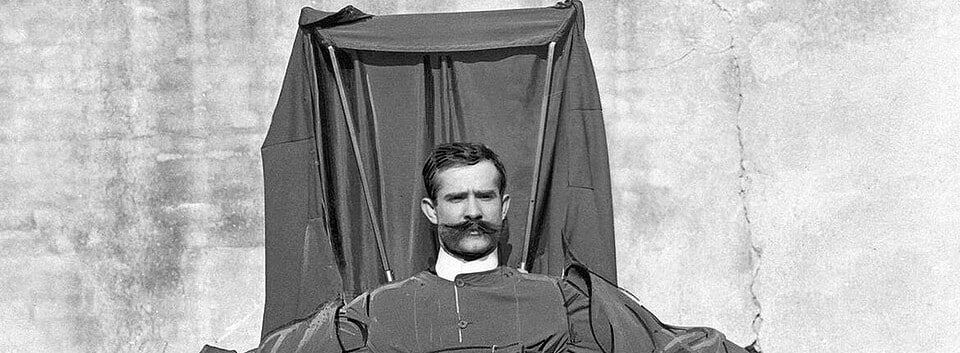
Franz Reichelt: The First Man Who Jumped from the Eiffel Tower to His Death
The 1st to Jump from the Eiffel-Tower —an experiment and a dream that ended in his death.
Paris has always been a city of dreams, innovation, and sometimes, tragic ambition. Among its many stories, few are as haunting as that of Franz Reichelt, the Austrian tailor who became infamous for his fatal leap from the Eiffel Tower in 1912. His experiment—testing a homemade parachute suit—ended in disaster, but his legacy lives on as a cautionary tale of human daring and the fine line between genius and folly.
Today, as Paris hosted the 2024 Olympic Games, Reichelt’s story resonates more than ever. The Eiffel-Tower, now a symbol of French ingenuity, was once the stage for one of history’s most shocking public experiments. Let’s dive into the life, the leap, and the lasting impact of Franz Reichelt, the first man to jump from the Eiffel-Tower to his death.
The 1st to Jump from the Eiffel-Tower : Franz Reichelt, a Man Behind the Myth
Franz Reichelt wasn’t just a reckless thrill-seeker—he was a skilled tailor with a passion for invention. Born in 1879 in Austria-Hungary (now part of the Czech Republic), he moved to Paris in the early 1900s, where he worked as a dressmaker.
But Reichelt had bigger dreams. Inspired by the rapid advancements in aviation—like the Wright brothers’ first flight in 1903—he became obsessed with creating a wearable parachute that could save pilots in emergencies.
At the time, aviation was in its infancy, and crashes were common. Reichelt believed his invention—a combination of a coat and a parachute—could revolutionize flight safety. He spent years testing prototypes, using dummies and even jumping from lower heights himself. But his experiments were far from scientific. Friends described him as secretive, refusing to share his designs or methods, even with fellow inventors.
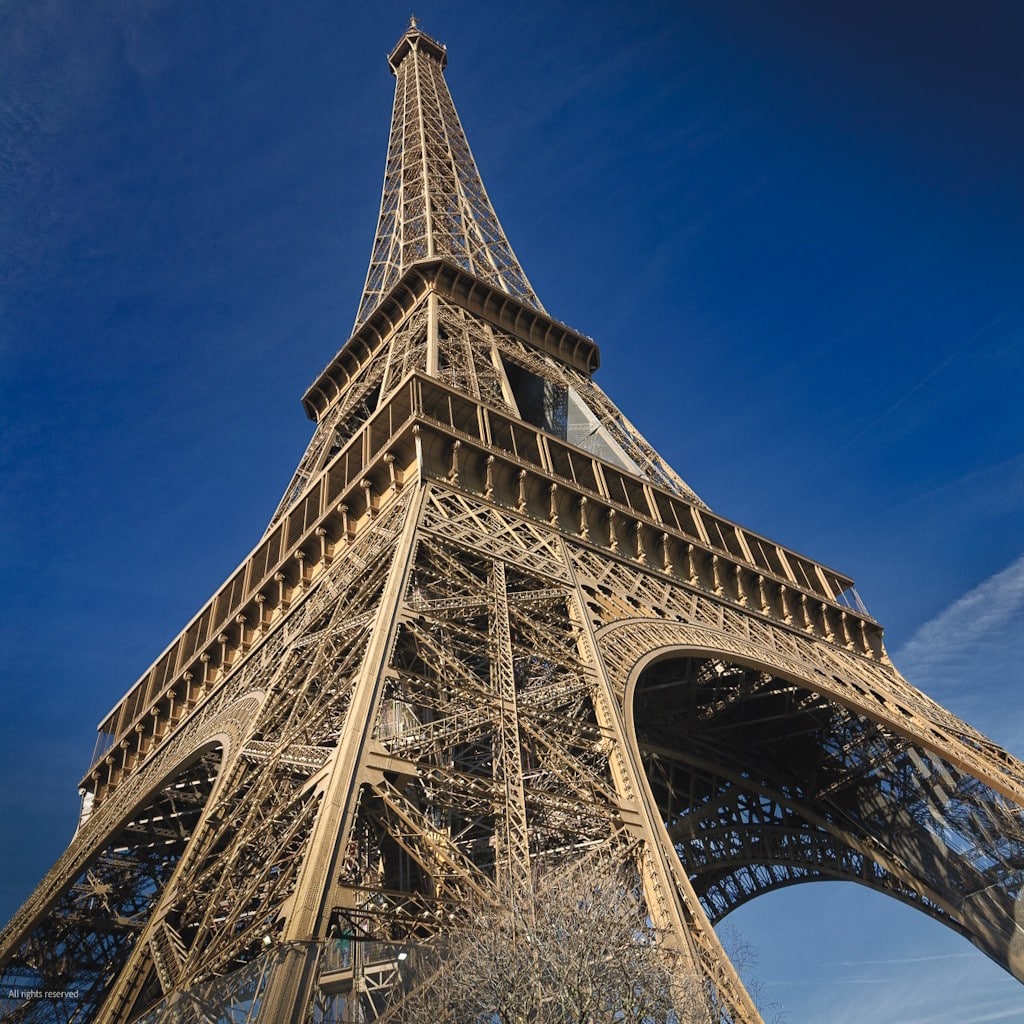
This photo by Olivier Ovaguimian – Available in HD photo format up to 80 cm wide – Click here
By 1912, Reichelt was convinced his “parachute suit” was ready for the ultimate test: a jump from the first deck of the Eiffel-Tower, 187 feet (57 meters) above the ground. He wrote to the Préfecture de Police de Paris, requesting permission for a public demonstration. Surprisingly, they agreed—under one condition: he had to use a dummy first. Reichelt refused. He insisted on testing it himself, claiming only a human could prove its effectiveness.
The 1st to Jump from the Eiffel-Tower: a Fatal Jump on February 4, 1912?
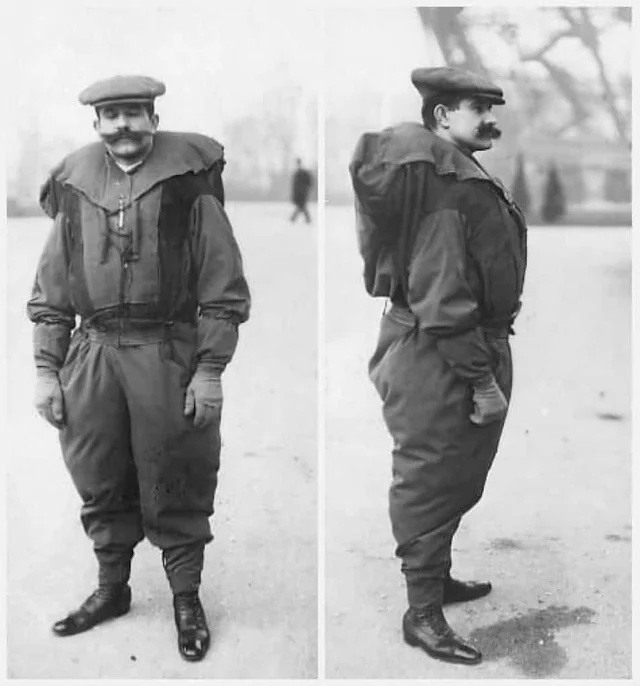
The day of the jump was cold and overcast, but that didn’t stop a crowd of spectators—including journalists and cameramen—from gathering at the Eiffel Tower. Reichelt arrived early, carrying his bulky invention: a long overcoat with a folded parachute sewn into the back. He had promised the press a spectacle, and they were eager to witness what he called the “greatest invention of the century.”
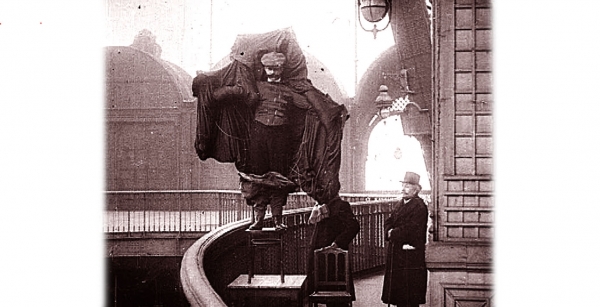
At around 8:20 AM, Reichelt climbed onto the railing of the first platform. Below, a team of firefighters stood by with a net, though it was more symbolic than practical—no net could have saved him from that height. Cameras rolled as he hesitated for a moment, then stepped into the void.
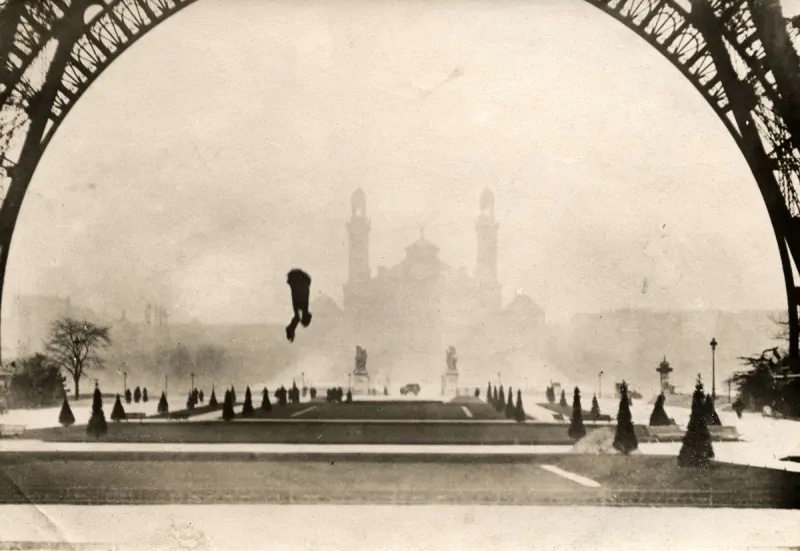
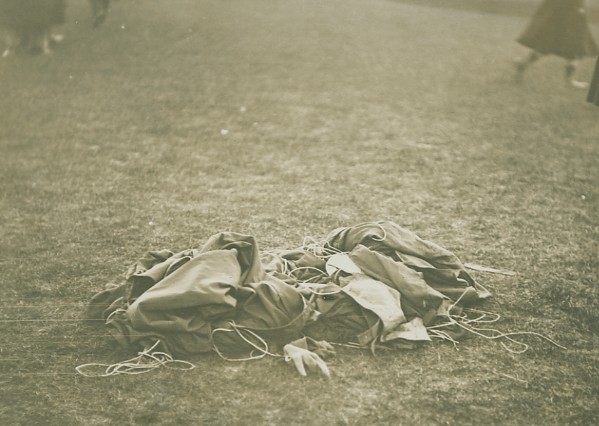
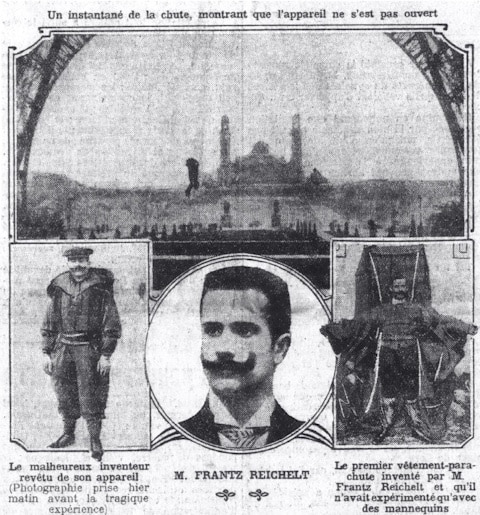
What happened next was captured in a chilling silent film that still circulates today. Instead of gliding gracefully to the ground, Reichelt plummeted like a stone. His parachute failed to deploy properly, and he hit the frozen earth at terminal velocity. The impact was so violent that it left a crater in the ground. He died instantly.
</p>
The crowd gasped in horror. Some fainted. Journalists rushed to file their stories, and by the next day, Reichelt’s death was front-page news worldwide. The New York Times called it a “tragic end to a foolhardy experiment.” French newspapers were more critical, blaming Reichelt’s arrogance and the authorities for allowing such a dangerous stunt.
An autopsy later revealed that Reichelt had suffered a fractured skull, broken spine, and multiple internal injuries. His parachute suit, it turned out, was fatally flawed—the fabric had tangled, and the weight distribution was completely off. Experts later said that even if it had worked, the design was fundamentally unsound.
Why the 1st to Jump from the Eiffel-Tower Failed ?
Reichelt’s death wasn’t just a personal tragedy—it was a failure of engineering and hubris. Modern parachutes rely on precise calculations of air resistance, weight distribution, and deployment mechanics. Reichelt’s design had none of these.
Here’s what went wrong:
Poor Aerodynamics: His suit was essentially a coat with a folded parachute attached to the back. When he jumped, the fabric didn’t catch enough air to slow his fall. Instead, it acted like a sail, making him spin uncontrollably.
No Harness System: Modern parachutes have a harness that distributes weight evenly. Reichelt’s suit had no such mechanism, meaning the force of the fall wasn’t absorbed properly.
Lack of Testing: While Reichelt claimed to have tested his invention, he never conducted a proper high-altitude trial. His earlier jumps were from much lower heights (around 30 feet), where even a flawed design might appear to work.
Overconfidence: Reichelt was so convinced of his genius that he ignored warnings from engineers and aviators. He even refused to use a dummy for the final test, believing only a human could prove its worth.
Ironically, the 1st to Jump from the Eiffel-Tower and Reichelt’s death accelerated parachute development. Within a few years, more reliable designs emerged, including the backpack parachute we know today. His failure became a lesson in the importance of rigorous testing and scientific validation.
The Eiffel Tower: A Stage for Daredevils and Tragedy
The Eiffel Tower has always been a magnet for daredevils. Since its completion in 1889, it has witnessed numerous stunts, some successful, others deadly. Reichelt’s jump was the first fatality, but not the last.
Here are a few other notable (and often tragic) incidents:
1923 – The “Human Fly” Stunt: A man named Pierre Labric attempted to cycle down the Eiffel Tower’s stairs. He lost control and fell, suffering serious injuries but surviving.
1926 – The Parachute Jump That Worked: Léon Colas became the first person to successfully parachute from the Eiffel-Tower, jumping from the first platform (the same height as Reichelt) but with a properly designed chute.
1984 – The Bungee Jumping Ban: In the 1980s, bungee jumping from the tower became a fad. After several near-disasters, the practice was banned.
2015 – The Drone Incident: A drone pilot was arrested for flying too close to the tower, highlighting modern safety concerns.
Today, jumping from the Eiffel Tower is strictly prohibited, and security measures are tight. Yet, the tower’s allure as a symbol of human ambition—and folly—remains. Reichelt’s story is a reminder that even the most iconic landmarks have dark chapters.
The 1st to Jump from the Eiffel-Tower or Franz Reichelt’s Legacy
More than a century after his death, Franz Reichelt is still remembered—but not as the inventor he hoped to be. Instead, he’s a cautionary tale, a symbol of what happens when ambition outpaces reason.
Here’s how his legacy lives on:
In Pop Culture: Reichelt’s fatal jump has been featured in documentaries, books, and even music. The band The Decemberists referenced him in their song “The Mariner’s Revenge Song.”
At the Eiffel-Tower: While there’s no official memorial, tour guides often mention Reichelt’s story when discussing the tower’s history. Some visitors even leave small tributes near the spot where he landed.
In Aviation History: Parachute designers study Reichelt’s failure as an example of what not to do. His story is taught in aeronautical engineering courses as a case study in poor testing methods.
In Parisian Lore: Locals sometimes joke that Reichelt’s ghost haunts the Eiffel-Tower, a reminder of the fine line between brilliance and madness.
In 2012, on the 100th anniversary of his death, a small exhibition in Paris revisited Reichelt’s life. It included his original sketches, newspaper clippings, and the famous film of his jump. The event sparked debates about risk-taking, innovation, and the ethics of public experiments.
Could The 1st to Jump from the Eiffel-Tower by Franz Reichelt be a Success ?
With today’s technology and modern parachute science , could Reichelt’s idea have worked? The short answer: no—not in the form he envisioned. But his core concept—a wearable parachute—wasn’t entirely flawed. Modern wingsuits and emergency parachutes for pilots prove that personal flight devices are possible. The difference? Science, testing, and iteration.
Here’s what Reichelt got wrong—and how modern parachutes get it right:
Material Science: Reichelt used heavy fabric that didn’t catch air efficiently. Today’s parachutes use lightweight, high-strength materials like nylon and Kevlar.
Deployment Mechanism: His parachute was fixed to his back with no reliable opening system. Modern parachutes use pilot chutes and static lines to ensure proper deployment.
Weight Distribution: Reichelt’s suit put all the stress on his back. Modern harnesses distribute weight across the shoulders, chest, and legs.
Testing Protocols: Today, parachutes undergo hundreds of test jumps—first with dummies, then with experienced skydivers—before being deemed safe.
In fact, the first successful parachute jump from the Eiffel-Tower happened just four years after Reichelt’s death, when Léon Colas used a traditional backpack parachute. The contrast between their fates underscores the importance of methodical development.
If Reichelt had collaborated with engineers, tested incrementally, and listened to critics, his story might have ended differently. Instead, his name is forever linked to failure—a reminder that innovation without caution can be deadly.
Visiting the Site of Reichelt’s Jump: A Dark Tourism Spot in Paris
For those fascinated by macabre history, the Eiffel-Tower offers a chance to walk in Reichelt’s final footsteps. While there’s no plaque marking the exact spot of his landing (near the tower’s southeast leg), you can stand where he once stood and imagine the fateful moment.
Here’s how to experience this piece of Parisian history:
Climb to the First Platform: This is where Reichelt made his jump. The view is stunning, but knowing the history adds a layer of solemnity.
Look Down: From the railing, you can see the area where Reichelt landed. It’s now a paved walkway, but in 1912, it was a patch of frozen ground.
Visit the Eiffel Tower’s Historical Exhibits: The tower’s museum includes displays on its construction and notable events—though Reichelt’s story is often glossed over in official narratives.
Watch the Footage: Before your visit, watch the original film of Reichelt’s jump (available on YouTube). Seeing it in the same location is chilling.
Nearby Dark Tourism Spots: If you’re interested in Paris’s darker side, consider visiting:
The Catacombs, where millions of bones lie beneath the city.
The Père Lachaise Cemetery, final resting place of Oscar Wilde, Jim Morrison, and many others.
The Conciergerie, a former prison where Marie Antoinette was held before her execution.
While Reichelt’s story is tragic, it’s also a fascinating window into early 20th-century Paris—a city where science, spectacle, and sometimes recklessness collided.
Lessons from Reichelt’s Story: Innovation, Risk, and Ethics
Franz Reichelt’s death raises important questions about the ethics of experimentation, the role of public spectacle in science, and the fine line between bravery and recklessness. Here are a few key takeaways:
The Danger of Overconfidence: Reichelt’s belief in his own genius blinded him to his design’s flaws. History is full of inventors who failed because they refused to listen to critics.
The Importance of Incremental Testing: Had Reichelt tested his suit from progressively higher altitudes, he might have discovered its flaws before the fatal jump.
Public vs. Private Experimentation: Today, dangerous experiments are conducted in controlled environments, not in front of crowds. Reichelt’s public stunt was as much about spectacle as science.
The Role of the Media: The press played a part in Reichelt’s tragedy by sensationalizing his claims. Responsible journalism today would likely question such a risky demonstration.
Ethics in Innovation: Reichelt’s death led to stricter regulations on public experiments. It’s a reminder that progress should never come at the cost of human life.
In many ways, Reichelt’s story is a microcosm of the early 20th century—a time when technology was advancing rapidly, but safety standards lagged behind. His fate serves as a warning to modern innovators: ambition must be tempered with caution.
Franz Reichelt in the Age of Social Media: Would He Go Viral Today?
If Franz Reichelt were alive today, there’s no doubt he’d be a social media sensation—at least until his fatal jump. His mix of showmanship, invention, and recklessness would make him a perfect fit for platforms like TikTok and YouTube.
Imagine the headlines:
“Tailor Claims He Invented a Flying Suit—Will Jump from Eiffel Tower LIVE!”
“Man vs. Gravity: Can This Parachute Coat Save Him?”
“Eiffel Tower Jump Goes Horribly Wrong—WATCH AT YOUR OWN RISK”
His story would likely unfold like this:
Teaser Videos: Reichelt would post clips of his “successful” low-altitude tests, building hype.
Crowdfunding: He might launch a Kickstarter to fund his invention, promising backers a revolution in flight safety.
Live Stream: The jump would be broadcast live, with millions tuning in to see if he’d succeed or fail spectacularly.
Aftermath: If he survived, he’d be a hero. Since he didn’t, his death would spark debates about influencer culture and the ethics of viral stunts.
In fact, Reichelt’s story isn’t so different from modern daredevils who push boundaries for online fame. The difference? Today’s stunts are (usually) better planned, with safety measures in place. Yet, the allure of viral fame still leads some to take deadly risks—proving that Reichelt’s spirit of reckless ambition lives on.
Final Thoughts: The Man Who Fell to Earth on February 4, 1912
Franz Reichelt’s jump from the Eiffel-Tower was more than just a failed experiment—it was a moment that captured the world’s imagination. His story is a mix of tragedy, hubris, and the timeless human desire to defy gravity, both literally and metaphorically.
Today, as we look up at the Eiffel-Tower, we see a symbol of Parisian elegance and engineering brilliance. But for those who know its history, it’s also a monument to the dreams—and delusions—of those who dared to leap into the unknown.
Reichelt’s final words before jumping were reportedly, “Vous allez voir comment on fait un parachute!” (“You’re going to see how a parachute is made!”). In a way, he was right. His death didn’t just show how not to make a parachute—it showed the world the cost of unchecked ambition.
Next time you visit the Eiffel-Tower, take a moment to remember Franz Reichelt. His story is a reminder that behind every great invention, there are failures—and sometimes, those failures are the most haunting lessons of all.
Would you dare to jump? Or is some ambition better left on the ground?